Perspectives · Opinion
Why Singapore's Financial Hub Must Bet Big Again
The city-state's hard-won stability risks becoming a trap. To remain relevant, it needs the same courage that built its financial sector decades ago.
KEY TAKEAWAYS
- ·Piyush Gupta warns Singapore's financial sector risks prioritizing stability over innovation as regional competitors advance in digital currency and market infrastructure.
- ·The S$6.5 billion Equity Market Development Programme and Global Listing Board signal willingness to experiment, but Singapore remains reactive rather than agenda-setting.
- ·Hong Kong's lead in fiat-backed digital currencies and emerging competition from Shanghai and ASEAN centers narrow Singapore's historical advantage in balancing innovation and prudence.
- ·Launching a Singapore dollar stablecoin and deepening climate finance markets would require accepting higher risk but could position the city at the center of next-generation infrastructure.
The Stability Trap
Singapore has spent half a century building one of the world's most trusted financial systems. That success is now its greatest vulnerability.
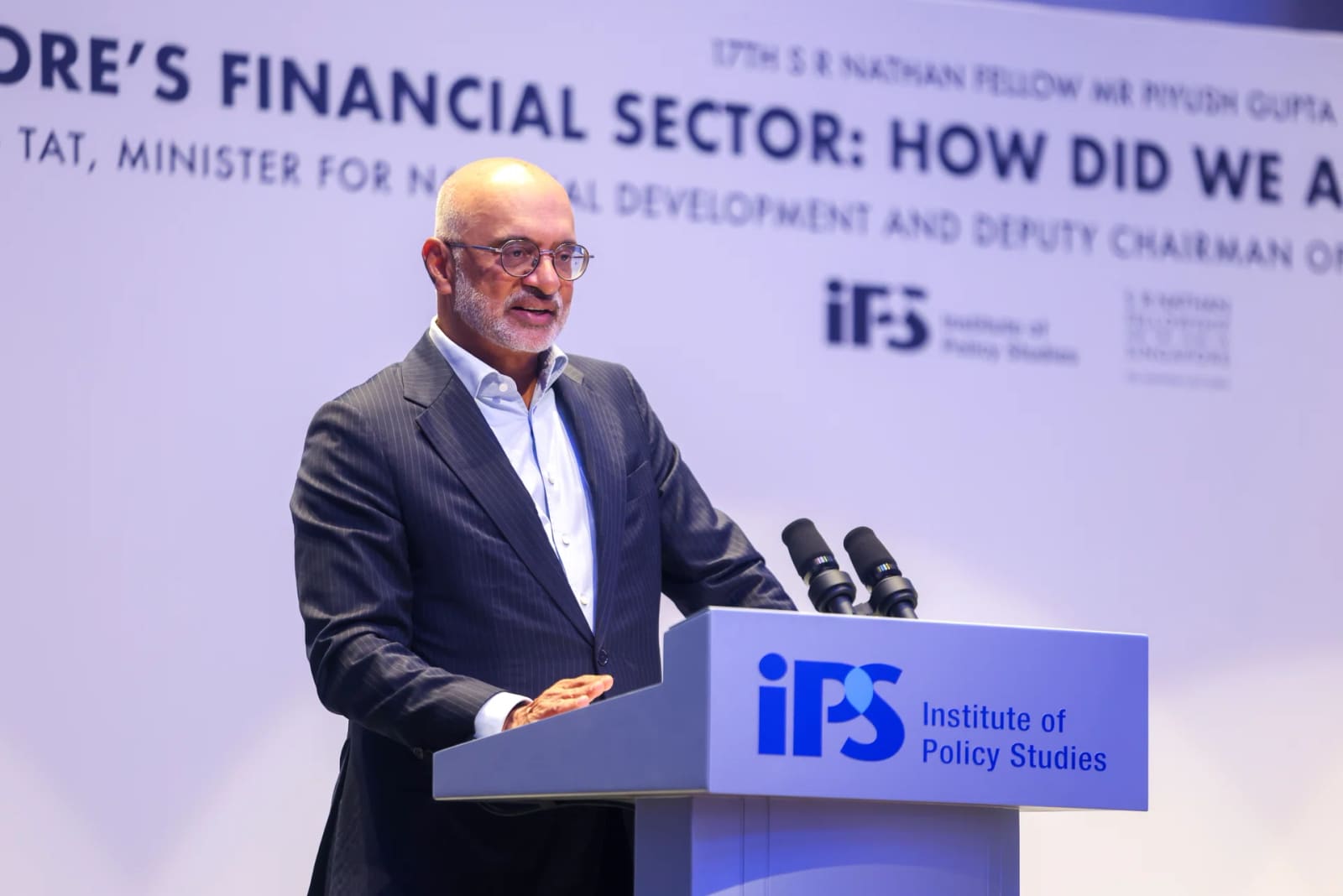
The city-state's financial sector stands at an inflection point where its reputation for prudence could calcify into risk aversion, argues Piyush Gupta, who stepped down as DBS chief executive earlier this year after transforming the bank into Southeast Asia's most valuable. Speaking at the launch of his book on Singapore's financial evolution at the National University of Singapore in August 2026, Gupta warned that the same stability that attracted global capital could now repel innovation.
The tension is not abstract. While Hong Kong moves ahead with fiat-backed digital currencies, Singapore deliberates. While competitors experiment with new listing structures and market incentives, Singapore weighs systemic risk. The calculation has historically served the city well, but Gupta's central argument is that the pace of technological and competitive change has made caution itself a form of risk.
This is not a call for recklessness. It is a recognition that the environment that rewarded Singapore's measured approach in the 1990s and 2000s no longer exists.
Trust as Product, Not Virtue
Financial services operate under a constraint that technology platforms do not: they handle other people's money. A failed social network loses users; a failed bank destroys savings. This reality shapes every regulatory decision in Singapore, where trust is not a brand attribute but the core product.
Gupta's book, drawn from three lectures delivered at NUS's Institute of Policy Studies in 2025, traces how Singapore navigated this tension across decades. The early years required boldness, establishing offshore banking units in the 1970s and positioning the city as a neutral hub when regional politics made that valuable. Later phases demanded discipline, tightening anti-money laundering frameworks and building supervisory capacity as capital flows grew.
The result is a financial center that consistently ranks among the top globally for regulatory quality and ease of doing business. But that ranking reflects past decisions. The question Gupta poses is whether the institutional muscle memory that produced stability will allow the experimentation needed for the next phase.
National Development Minister Chee Hong Tat, speaking at the same event, acknowledged the challenge. Not every opportunity comes with a playbook, he noted, and Singapore must accept that some initiatives will fail. The statement itself is telling; in a system built on minimizing failure, giving permission to fail represents a shift.
Where Singapore Is Already Moving
The critique would carry less weight if Singapore were standing still, but recent moves suggest the system is already recalibrating. The Equity Market Development Programme, a S$6.5 billion initiative to deepen local capital markets, represents the kind of large-scale bet that would have been unthinkable a decade ago. The Global Listing Board, allowing simultaneous listings on Nasdaq and the Singapore Exchange, breaks from the zero-sum logic that once defined exchange competition.
Gupta himself acknowledged these developments have shifted his assessment. He initially believed Singapore was not taking sufficient risk, but subsequent policy moves have demonstrated a willingness to experiment within guardrails. The EQDP in particular signals that authorities recognize market depth requires more than regulatory tweaks; it requires capital commitment and tolerance for volatility.
Yet these moves remain reactive to competitive pressure rather than setting the agenda. Hong Kong's lead in digital currency infrastructure is a case study. Singapore's regulatory sandbox for fintech has been successful, but a sandbox is by definition contained. Launching a Singapore dollar-backed stablecoin, as Gupta recommends, would be a different order of commitment, requiring coordination across monetary policy, payments infrastructure, and regional currency dynamics.
The Tightrope Gets Narrower
Singapore's historical advantage has been its ability to balance competing imperatives better than rivals. It offered stability without stagnation, openness without chaos, and innovation within boundaries. That edge persists, but the margin for error has narrowed.
Regional competitors are not standing still. Hong Kong, despite political headwinds, continues to attract mainland capital and push digital asset adoption. Shanghai's financial infrastructure is maturing. Even emerging centers like Bangkok and Jakarta are carving niches in specific segments, from Islamic finance to retail investment platforms.
Technology is eroding some of the structural advantages that geography once provided. Cross-border payments no longer require correspondent banking networks. Digital assets move on rails that do not respect jurisdictional boundaries. The regulatory moat that protected incumbents is filling in.
Gupta's argument is that Singapore must rediscover the mindset that built the system in the first place. The 1960s and 1970s required vision without precedent, building institutions when the city-state had little more than a port and political independence. The risks taken then, from establishing the Monetary Authority of Singapore to courting international banks, were existential bets.
Today's risks are different but no less consequential. Failing to adopt programmable money could marginalize Singapore in the next generation of financial infrastructure. Failing to deepen capital markets could leave the city as a wealth management hub without the investment ecosystem to support it. Failing to attract and retain talent could hollow out the expertise that regulators and firms depend on.
What Boldness Looks Like Now
The prescription is easier to state than execute. Boldness in financial services does not mean deregulation or lowering standards. It means placing bigger bets on where the industry is heading and accepting that some will not pay off.
A Singapore dollar stablecoin is one example. It would require resolving questions around issuance, reserves, interoperability, and cross-border flows, but it would also position the city at the center of digital currency adoption in Asia. The alternative is watching other jurisdictions define the standards and infrastructure that Singapore will eventually have to adopt.
Another area is climate finance, where Singapore has regulatory frameworks but limited market depth. The city could become the primary venue for green bond issuance and carbon credit trading in Asia, but that requires not just rules but liquidity, which in turn requires capital and risk appetite from both public and private sectors.
Talent policy is a third lever. Singapore's financial sector depends on importing expertise, but immigration frameworks have tightened in response to political pressures. Competing for the next generation of fintech engineers, quantitative researchers, and digital asset specialists will require clarity on visas, pathways to residency, and quality of life.
The Future Is Not Guaranteed
Gupta closed his remarks with a line that captures the underlying anxiety: the future is Singapore's for the taking, but only if it keeps earning it. The phrasing is deliberate. Singapore's position is not assured by past success or geographic advantage. It is sustained by decisions made today about where to place capital, how much risk to tolerate, and which opportunities to pursue.
The financial sector has always been central to Singapore's economic model, contributing roughly 14 percent of GDP and employing a significant share of high-skilled workers. Losing ground in this sector would ripple across the economy, affecting everything from real estate demand to tax revenue.
The irony is that the very success that makes Singapore cautious also gives it the resources to take risks. The city has fiscal space, institutional capacity, and a track record that allows it to experiment without jeopardizing its core stability. The question is whether the political and bureaucratic culture will allow that experimentation to happen at the speed and scale required.
Gupta's book and the debate it has sparked are themselves part of the answer. Singapore's strength has always included its ability to have these conversations openly, to assess performance critically, and to adjust course when needed. Whether that translates into the bold moves Gupta advocates will determine whether the city remains a financial center that shapes the industry or one that merely responds to it.
RELATED STORIES

Singapore Food Tenant Sues OG Over Taste Orchard Eviction
Lim Hui Ying · 3 min

GXS Bank Launches Credit Card with 10% Grab Rebates
Priyanka V. Rao · 3 min

Singapore Retail Investors Turn to AI Assistants for Portfolio Decisions
Priyanka V. Rao · 3 min
Singapore Electronics Exports Surge 112% on AI Hardware Demand
Priyanka V. Rao · 3 min
Spot something wrong? Email editor@briefasia.com. We log every correction publicly.