Asia · Business
Singapore Factory Activity Holds Steady as AI Chip Demand Offsets Mideast Disruption
Manufacturing PMI reached 51.4 in July, with electronics expansion now in its 14th consecutive month despite rising supply-chain costs from regional tensions
KEY TAKEAWAYS
- ·Singapore's manufacturing PMI rose to 51.4 in July, with electronics reaching 52.4 in its 14th consecutive month of expansion, the strongest readings since early 2018.
- ·AI-driven semiconductor demand pushed electronics export orders to an eight-year high of 52.6, while finished-goods inventories contracted for a third month, signaling supply constraints.
- ·Middle East conflict disruptions forced shipping route diversions around the Cape of Good Hope, driving up input costs and severely delaying supplier deliveries across manufacturing sectors.
Semiconductor Orders Sustain Factory Growth
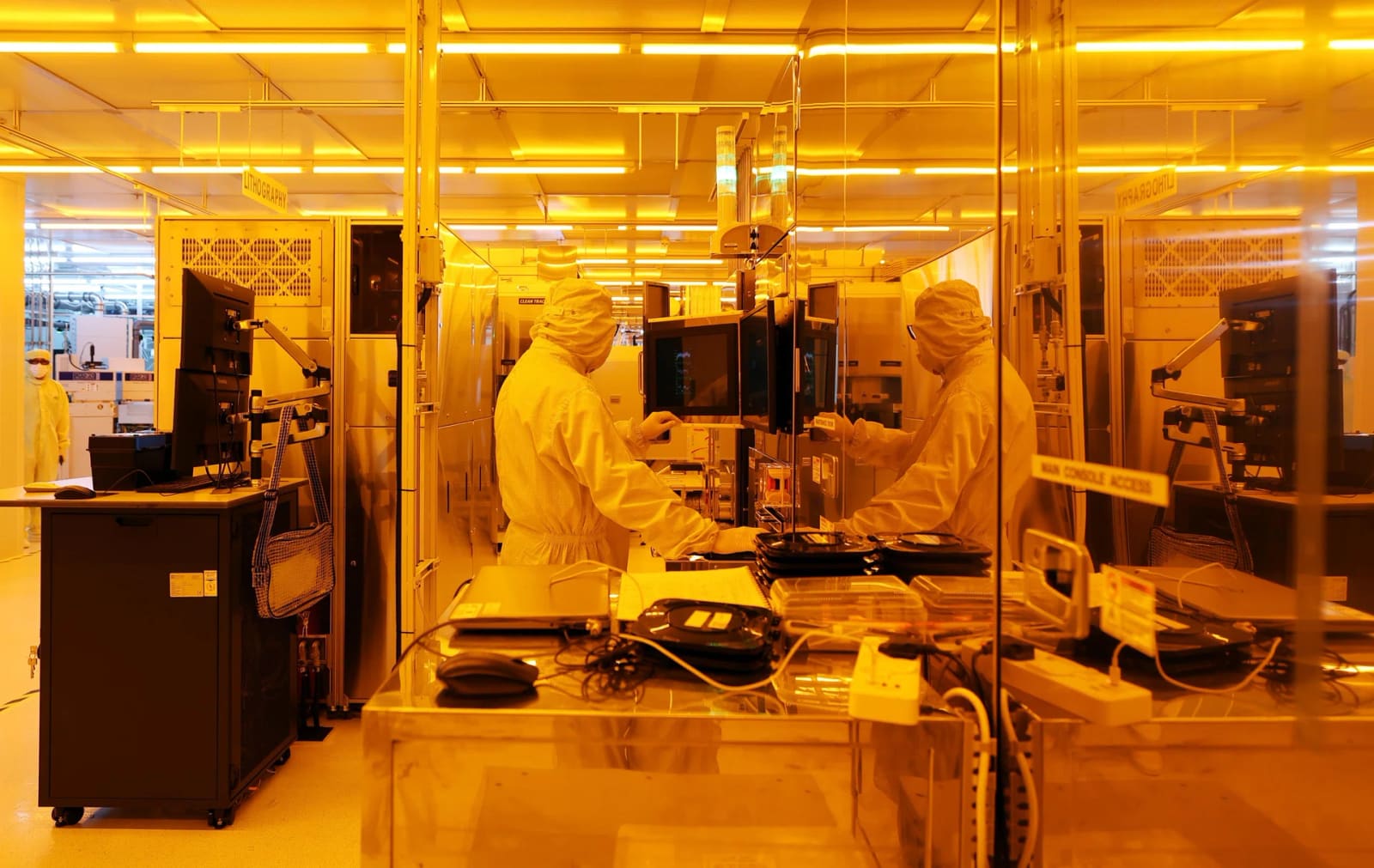
Singapore's manufacturing sector maintained its expansion trajectory in July, marking a full year of consecutive growth as artificial intelligence-driven semiconductor demand absorbed the shock of worsening supply-chain disruptions across the Middle East.
The Purchasing Managers' Index climbed to 51.4 last month, up from 51.3 in June, according to data released by the Singapore Institute of Purchasing and Materials Management. Any reading above 50 signals expansion. The electronics sub-index, which tracks the city-state's most strategically important industrial segment, rose to 52.4, extending its growth streak to 14 months.
Both figures represent the strongest readings since early 2018, a period that preceded the US-China trade war and the subsequent global slowdown. The current upturn reflects a different dynamic: hyperscale cloud providers are pouring capital into data-center infrastructure to support generative AI workloads, creating sustained demand for memory chips and server components manufactured in Singapore's fabrication plants and assembly facilities.
New export orders for electronics products reached 52.6 in July, the highest level in more than eight years. At the same time, finished-goods inventories contracted for a third straight month, pointing to a supply shortfall rather than weak demand. Manufacturers have been drawing down stocks to fulfill orders faster than production lines can replenish them.
Middle East Tensions Strain Logistics Networks
The supply-side picture grew more complicated in July as the collapse of ceasefire negotiations in the Middle East forced shipping lines to abandon routes through the Suez Canal and Bab el-Mandeb strait. Vessels are now taking the longer passage around the Cape of Good Hope, adding weeks to transit times and pushing freight rates higher.
Supplier delivery times deteriorated sharply, while input costs surged at a faster pace than in previous months. The cost pressure was more pronounced in general manufacturing than in electronics, reflecting a combination of elevated energy prices and rising memory-chip spot rates.
Stephen Poh, executive director at SIPMM, noted that the collapse of diplomatic efforts had "triggered a supply chain crisis, sending input prices soaring and severely crippling supplier delivery times."
The chemicals cluster faces particular headwinds. Feedstock supplies from the Gulf region have tightened, constraining production volumes and limiting any near-term recovery in output. Third-quarter performance in this segment is expected to remain subdued.
Forward Indicators Point to Continued Expansion
Despite the logistical headwinds, forward-looking indices remained in expansion territory for both overall manufacturing and electronics. Business expectations surveys conducted by the Economic Development Board corroborated the positive sentiment, suggesting that factory operators anticipate sustained order flows through the second half of 2026.
Hyperscaler capital expenditure plans remain robust. Major cloud infrastructure providers have committed to spending tens of billions of dollars on AI-capable hardware over the next 18 months, much of it sourced from Asian suppliers. Singapore's position in the regional semiconductor supply chain places it at the center of this investment cycle.
The durability of this expansion depends partly on manufacturers' ability to scale production capacity quickly enough to meet rising orders. Current inventory drawdowns can only bridge the gap temporarily. If lead times stretch too far, customers may shift orders to alternative suppliers in South Korea or Taiwan.
Regional Manufacturing Landscape Shifts
Manufacturing conditions across Southeast Asia showed broad improvement in July. Indonesia's PMI returned to expansion at 50.2 after contracting in June, while Vietnam's reading rose to 52.9. Thailand reached 54.2, its strongest performance since December and well above its long-run average.
The Philippines posted a five-month high of 51.8, recovering from subdued activity earlier in the year. Malaysia held steady at 50.7, marking its seventh month of expansion in the past nine.
China presented a more mixed picture. The official PMI slipped to 49.2, falling back into contraction, while a private-sector index compiled by S&P Global eased to 50.9, a four-month low. Output and new orders moderated, though new export orders returned to expansion after a three-month absence. Yao Yu, founder of RatingDog, cautioned that reduced purchasing activity and rising input inventories warranted attention going forward.
South Korea's PMI strengthened to 53.1 from 52.1, benefiting from similar AI-related tailwinds that are supporting Singapore's electronics sector.
The divergence between electronics-focused economies and broader industrial bases highlights how concentrated the benefits of the current AI investment cycle remain. Sectors outside semiconductors and related components are navigating a more challenging environment, with energy costs, trade frictions, and logistics disruptions weighing on margins and output. Singapore's factory performance over the coming quarters will test whether AI demand can continue to offset these broader pressures.
RELATED STORIES

Singapore Electronics Shipments Jump 132% as AI Chip Demand Drives Record Trade Growth
Rajesh K. Iyer · 4 min
Singapore Export Growth Hits 46% in August on AI-Driven Electronics Demand
Rajesh K. Iyer · 3 min

Southeast Asian Firms Overlook Digital Pact Worth USD 2 Trillion
Lim Hui Ying · 4 min
Singapore Economists Lift 2026 Growth Outlook to 5% as Chip Exports Surge
Priyanka V. Rao · 3 min
Spot something wrong? Email editor@briefasia.com. We log every correction publicly.