Real Estate · Land
Singapore Construction Sector Logs Double-Digit Growth as Project Pipeline Reaches S$53 Billion
First-quarter expansion of 11.8% marks construction as the fastest-growing major sector in Singapore's economy, driven by infrastructure investments spanning airports, rail networks, and healthcare facilities
KEY TAKEAWAYS
- ·Singapore's construction sector grew 11.8% year-on-year in Q1 2026, the fastest rate among major economic segments, with Q2 growth estimated at 6.2%.
- ·The Building and Construction Authority forecasts S$47 billion to S$53 billion in project demand for 2026, driven by Changi Terminal 5, MRT extensions, and healthcare facilities.
- ·Singapore-listed construction stocks gained an average of 56% over the past 12 months, with trading volumes rising nearly fourfold year-to-date.
Infrastructure Push Drives Sectoral Expansion
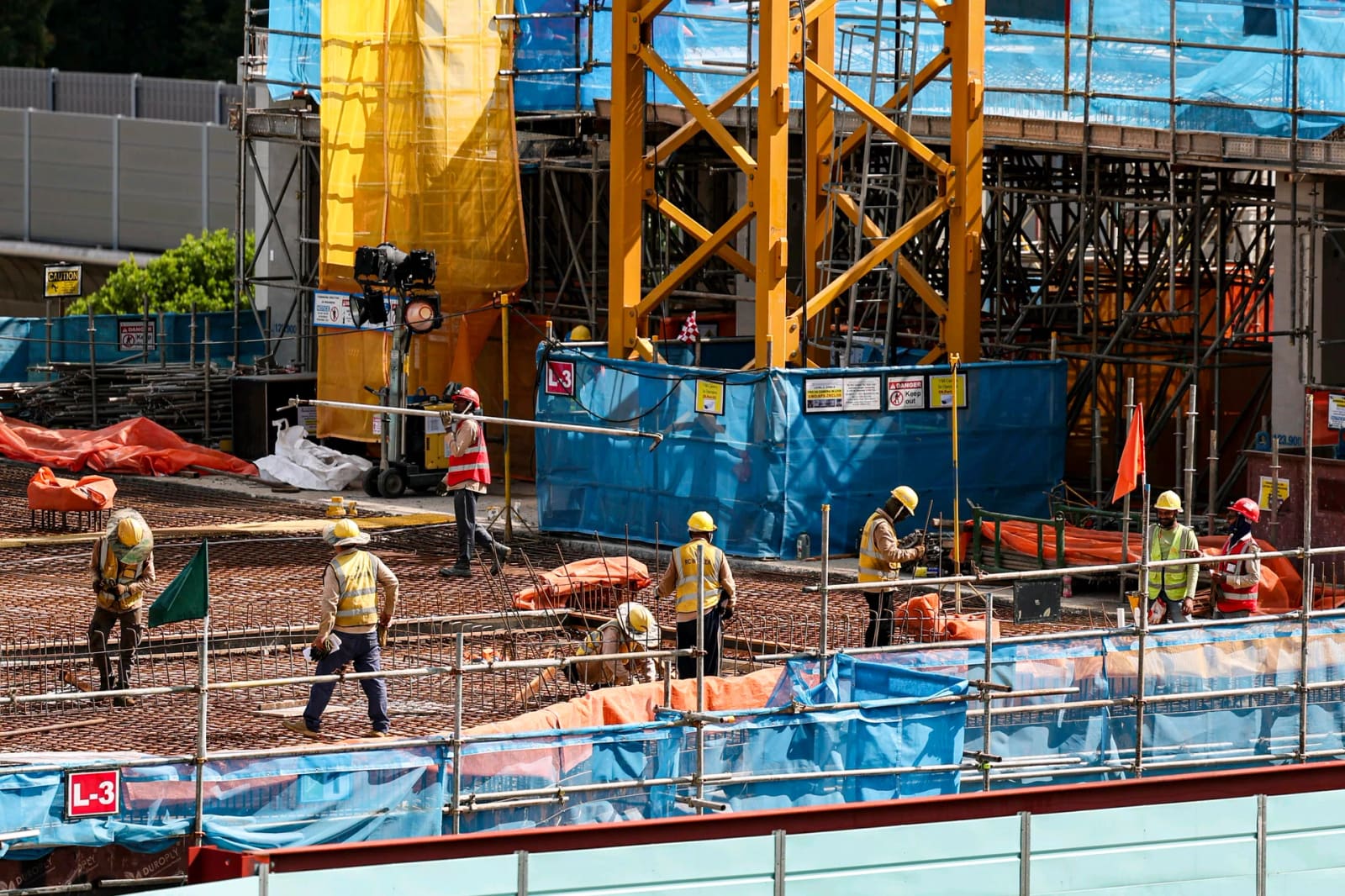
Singapore's construction sector posted 11.8 percent year-on-year growth in the first quarter of 2026, the fastest rate among major economic segments. Advance estimates for the second quarter point to continued expansion at 6.2 percent, according to data from the Singapore Exchange.
The Building and Construction Authority forecasts total project demand between S$47 billion and S$53 billion for 2026, following S$50.5 billion in awards during 2025. Looking ahead, annual construction demand is projected to range from S$39 billion to S$46 billion between 2027 and 2030.
Activity spans both public and private developments, covering institutional projects, residential estates, and industrial facilities. The current cycle reflects a broader infrastructure investment wave that extends beyond traditional building activity into transport networks, utilities, and digital infrastructure.
Project Portfolio Spans Multiple Asset Classes
The active pipeline includes Changi Airport Terminal 5, one of Asia's largest aviation infrastructure undertakings. Rail expansion continues with extensions to the Downtown Line 2 and Thomson-East Coast Line, while the new Tengah General and Community Hospital represents a significant healthcare investment.
Private sector commitments include the Marina Bay Sands expansion, a major hospitality and integrated resort project. Together, these developments create sustained visibility for contractors, engineers, and materials suppliers across multi-year timelines.
The construction value chain extends well beyond job sites. Materials procurement, engineering services, logistics coordination, equipment rental, and professional advisory work all benefit from elevated project activity. This multiplier effect positions construction as a transmission channel through which infrastructure spending flows into the broader economy.
Investor Sentiment Turns Positive
Market participants have responded to the sector's momentum. Among the 20 largest Singapore-listed construction stocks by market capitalization, share prices rose an average of 56 percent over the 12 months through July 2026.
Trading volumes reflect heightened interest. Combined year-to-date average daily turnover for this group increased nearly fourfold compared to the prior period.
The five strongest performers over the past year span different segments of the value chain. International Cement Group gained 252.6 percent, while GRC advanced 175.6 percent. Soilbuild Construction rose 128.6 percent, Koh Brothers Eco Engineering doubled, and Huationg Global climbed 89.6 percent.
These companies operate across construction materials, project delivery, and engineering services, illustrating investor appetite across multiple subsectors rather than concentration in a single niche.
Regional Context and Execution Risk
Singapore's construction boom occurs as regional governments prioritize infrastructure to support economic growth and connectivity. Jakarta, Bangkok, and Manila have all announced multi-year transport and utilities programs, creating parallel demand for engineering expertise and construction capacity across Southeast Asia.
Execution risk remains a factor. Labor shortages, supply chain delays, and cost inflation can compress margins even as top-line revenue grows. Singapore's construction workforce relies heavily on foreign labor, making immigration policy and regional labor mobility important variables for project timelines.
The sector's performance also depends on sustained public-sector commitment. Any fiscal consolidation or project deferrals would reduce the pipeline and dampen growth expectations. Private developers, meanwhile, remain sensitive to interest rates and property market conditions, which influence their willingness to proceed with large commercial projects.
For now, the combination of public infrastructure commitments and private-sector expansion plans provides a multi-year runway. The breadth of the current pipeline - spanning aviation, rail, healthcare, and digital infrastructure - suggests that construction will remain a meaningful contributor to Singapore's GDP growth through the remainder of the decade.
RELATED STORIES
Frasers Property Wins Shareholder Backing for S$2.1 Billion Hospitality Reshuffle
Lim Hui Ying · 3 min
Vietnam Draws $7.5 Billion From Singapore in Seven Months
Priyanka V. Rao · 3 min
Singapore Brokerages Raise STI Targets on Earnings Strength
Jun-ho Seo · 3 min

Addvalue Technologies Lands $5 Million in Space and Radio Contracts
Tran Quoc Bao · 3 min
Spot something wrong? Email editor@briefasia.com. We log every correction publicly.