Travel & Dining · Trends
Singapore Airlines Carries 3.7 Million Passengers in June Amid Rising Asia Travel
The airline group reported stronger cargo demand driven by AI infrastructure shipments and European e-commerce volumes, despite reduced freight capacity.
KEY TAKEAWAYS
- ·Singapore Airlines and Scoot carried 3.7 million passengers in June, a 6.3 percent year-on-year increase, with overall load factor at 87.1 percent.
- ·Cargo loads climbed 5.1 percent despite reduced capacity, driven by AI infrastructure shipments and e-commerce front-loading ahead of EU tariffs effective July 1.
- ·The group served 137 passenger destinations as of June 30, adding Hangzhou and Pontianak while suspending Jeddah service again due to Middle East tensions.
Passenger Numbers Climb on Regional Network Expansion
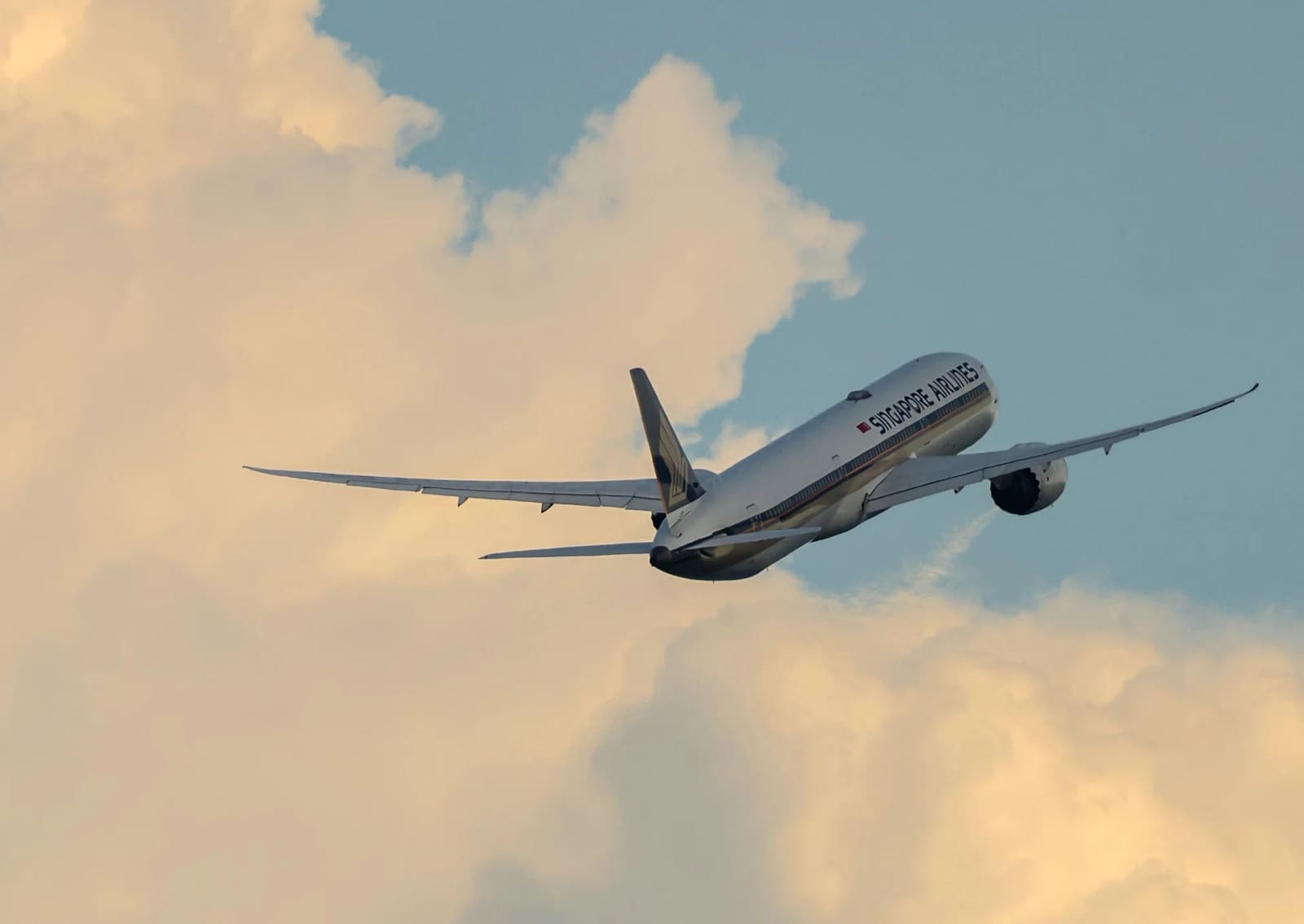
Singapore Airlines and its budget unit Scoot transported 3.7 million passengers in June, marking a 6.3 percent increase from the same month last year. The combined group reported passenger traffic growth of 4.1 percent year on year, according to operating results released by Singapore Airlines on July 15.
Passenger capacity across the group expanded 6 percent compared to June 2025, bringing the overall load factor to 87.1 percent. The full-service carrier posted a load factor of 86.4 percent, while Scoot achieved 89.5 percent for the month.
The growth comes as both carriers expanded their footprints in Asia. Singapore Airlines launched service to Hangzhou in mainland China during June, while Scoot began flights to Pontianak in Indonesia. The budget carrier also restarted passenger routes to Jeddah, Saudi Arabia, on June 22, though it suspended the service again on July 14 following heightened regional tensions in the Middle East. Singapore Airlines' Dubai routes remain suspended.
Cargo Volumes Surge on Tech and E-Commerce Demand
Freight operations showed notable strength during the month. Cargo carriage jumped 8.5 percent year on year, with overall loads climbing 5.1 percent despite a 2.3 percent reduction in cargo capacity. The cargo load factor rose 4.2 percentage points to reach 60.6 percent.
Singapore Airlines attributed the cargo momentum to shipments tied to artificial intelligence infrastructure and data center equipment. E-commerce volumes into Europe also accelerated ahead of the European Union's new small parcel duty, which took effect on July 1. Shippers front-loaded goods to avoid the tariff, creating a temporary surge in westbound freight.
The pattern reflects broader trends in Asia-Pacific air cargo, where technology hardware and cross-border e-commerce continue to drive demand even as traditional manufacturing shipments fluctuate. Singapore's position as a transshipment hub gives the carrier access to both originating and connecting freight flows across Southeast Asia, India, and Greater China.
Network Reaches 137 Destinations
As of June 30, the Singapore Airlines Group served 137 passenger destinations across 36 countries and territories. Singapore Airlines operated to 78 destinations, while Scoot covered 85. The cargo network spanned 139 destinations in 36 countries and territories.
The network figures underscore the group's dual-brand strategy, with the premium carrier focusing on long-haul and business-heavy routes while the low-cost unit targets leisure and price-sensitive travelers within a narrower radius. Scoot's suspension of the Jeddah route highlights the operational volatility carriers face in certain regions, where geopolitical developments can force rapid schedule changes.
Singapore Airlines shares closed at 7.60 Singapore dollars on July 15, down 0.3 percent for the day, before the monthly traffic update was released. The stock has traded in a relatively narrow range this year as investors weigh steady passenger recovery against fuel cost pressures and competitive capacity additions across Southeast Asia.
Outlook Hinges on Capacity Discipline
The June results suggest that travel demand in Singapore's key markets remains resilient, with both leisure and business segments contributing to the passenger growth. Load factors above 87 percent indicate that the group is managing capacity additions in line with demand, avoiding the oversupply that has pressured yields in some other Asia-Pacific markets.
Cargo performance will likely remain uneven in the coming months. The pre-tariff surge into Europe is unlikely to repeat, and technology shipment cycles can shift quickly based on product launch schedules and inventory management by electronics manufacturers. However, the ongoing build-out of data center capacity across Asia and the Middle East provides a structural tailwind for specialized freight, particularly for temperature-controlled and high-value consignments.
Singapore Airlines' ability to sustain load factors while growing capacity will depend on how competitors respond. Several regional carriers have announced capacity increases for the second half of the year, particularly on routes connecting Southeast Asia to Northeast Asia and Australia. The group's premium positioning and Changi Airport's connectivity offer advantages, but pricing discipline across the industry will determine whether the current momentum translates into improved unit revenues.
RELATED STORIES

Shein Drops 4% in Hong Kong Debut as Tariff Pressure Weighs on Valuation
Priyanka V. Rao · 4 min

Private Capital Floods Asia's MedTech Sector as Brain Interfaces and Robotics Draw Investors
Priyanka V. Rao · 4 min
Temasek Defends SIA's Air India Stake as Loss-Making Carrier Seeks $1.5 Billion
Priyanka V. Rao · 3 min

Singapore Targets High-Value Data Centre Workloads as Neighbors Scale Up Capacity
Cheng Wei-Lun · 3 min
Spot something wrong? Email editor@briefasia.com. We log every correction publicly.