Sustainability · Mobility
Seoul Targets Heavy Trucks With Mandatory Emissions Cuts Starting 2027
South Korea introduces first-ever binding greenhouse gas targets for commercial vehicles as part of aggressive 2030 climate commitment
KEY TAKEAWAYS
- ·South Korea will require manufacturers to cut average greenhouse gas emissions from medium and heavy commercial vehicles by 30 per cent from 2021-2022 baseline by 2030, starting with trucks over 15 tonnes in 2027.
- ·Passenger car fleet-average emissions limits will drop to 54 grams CO₂ per kilometre by 2030, down from a previously planned 70 g/km, as Seoul tightens standards to meet its 40 per cent emissions reduction target by 2030.
- ·A new pilot programme will allow automakers to offset up to 5 per cent of emissions obligations by generating or using renewable electricity at domestic production facilities, reflecting international regulatory trends.
First Binding Targets for Commercial Fleet
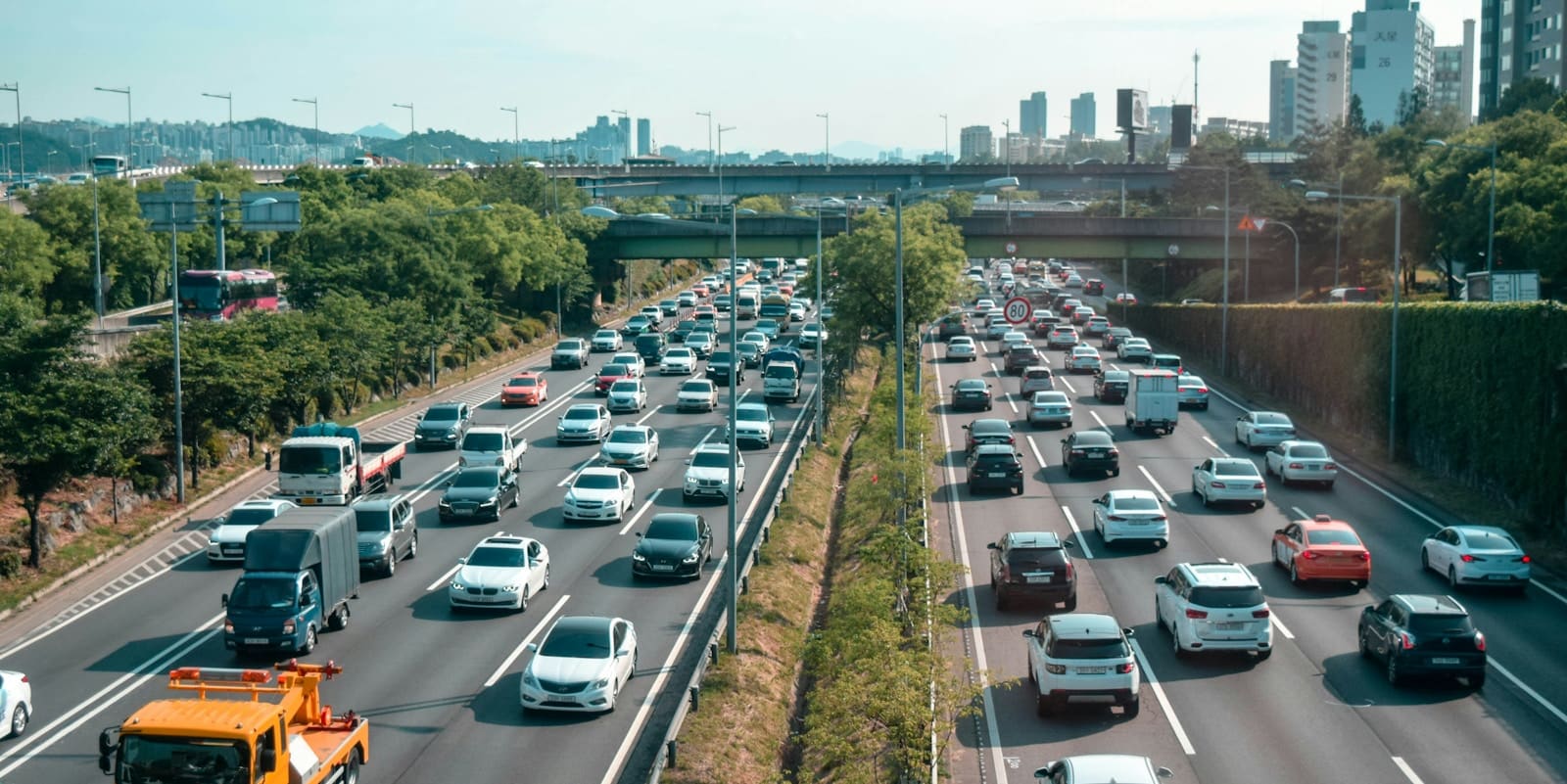
South Korea's Ministry of Climate, Energy and Environment opened public consultation Wednesday on draft regulations that will impose mandatory greenhouse gas reduction targets on manufacturers of medium and heavy-duty commercial vehicles starting in 2027. The move replaces a voluntary system that has allowed emissions from freight and commercial transport to grow even as passenger electric vehicle sales have surged.
The phased mandate begins with heavy trucks over 15 tonnes and tractor units in 2027, expanding to medium and large buses, medium-duty trucks and dump trucks by 2030. Manufacturers must reduce average greenhouse gas emissions from these categories by 30 per cent from a 2021-2022 baseline by the end of the decade. Companies missing targets will face financial penalties, though initial fines will be set low to allow technology development time. Penalty levels rise after full implementation in 2031.
Transport remains one of South Korea's most stubborn emissions sources. While the country has become one of Asia's fastest-growing EV markets for passenger cars, commercial vehicle electrification has lagged. The new rules aim to close that gap as Seoul works toward its Paris Agreement commitment to cut national greenhouse gas emissions 40 per cent below 2018 levels by 2030. The government approved an even steeper 2035 target last year, aiming for reductions of 53 to 61 per cent, with transport flagged as a priority sector.
Passenger Standards Tighten Sharply
For passenger cars and light-duty vehicles, the ministry is lowering fleet-average emissions limits far below previously planned levels. The cap for passenger cars and vans carrying up to 10 people drops to 54 grams of carbon dioxide per kilometre by 2030, down from the earlier target of 70 g/km. Light trucks and minibuses for 11 to 15 passengers face a new limit of 98 g/km, compared with the prior 146 g/km.
To cushion the impact on automakers, the government will extend its "super credit" incentive programme through 2029. The scheme allows manufacturers to count sales of electric, hydrogen and hybrid vehicles more heavily toward compliance, effectively rewarding cleaner fleet mixes. New incentives will cover hydrogen internal combustion engine vehicles, and manufacturers that miss targets will receive longer repayment periods to come into compliance. Differentiated requirements based on company size will continue.
Renewable Electricity Offsets Introduced
The draft introduces a pilot mechanism allowing automakers to offset up to 5 per cent of their emissions obligations by generating or using renewable electricity at domestic production facilities. The measure reflects emerging international practice and pushes manufacturers to decarbonise not only their vehicles but their own operations.
The indirect emissions reduction programme is modest in scope but signals a broader regulatory shift. As automakers across Asia face mounting pressure to clean up supply chains and manufacturing footprints, South Korea is embedding operational emissions into vehicle compliance frameworks. The approach mirrors evolving standards in Europe and California, where lifecycle and production emissions are increasingly factored into regulatory accounting.
Regional Context and Industry Pressure
South Korea's tightened rules arrive as automakers throughout Asia navigate a patchwork of climate regulations. China has long led the region in electric vehicle mandates and production capacity, while Japan has emphasised hybrid technology and hydrogen infrastructure. Southeast Asian markets are beginning to adopt stricter fuel economy standards, but enforcement remains uneven.
For South Korean manufacturers including Hyundai Motor Group and its commercial vehicle arms, the new targets add urgency to electrification roadmaps. Hyundai has invested heavily in battery electric and hydrogen fuel cell trucks, but commercial vehicle production timelines are longer and infrastructure requirements more complex than for passenger cars. The 30 per cent reduction target by 2030 effectively requires a significant share of new commercial vehicle sales to be zero-emission within four years.
The 60-day consultation period runs through 14 September. The ministry said it will review feedback from industry and the public before finalising the regulations. Automakers are expected to press for flexibility in compliance timelines and greater support for charging and hydrogen refuelling infrastructure, which remains sparse outside major urban corridors.
What Comes Next
The regulations represent South Korea's most aggressive regulatory intervention in commercial transport emissions to date. How manufacturers respond will shape not only domestic fleet composition but export strategies across Asia, where South Korean commercial vehicles hold significant market share in countries from Vietnam to the Philippines.
If the rules take effect as drafted, South Korea will join the European Union and California in imposing binding emissions targets on heavy-duty vehicles. The question is whether the penalty structure and incentive programmes provide enough leverage to shift production and sales at the speed required to meet 2030 climate commitments. The next three months of consultation will test how far Seoul is willing to push its automakers, and how much flexibility industry can extract in return.
RELATED STORIES
Gates-Backed TerraPower Pulls Korean Firms Into Small Nuclear Reactor Supply Chain
Cheng Wei-Lun · 3 min

SK Chemicals Targets Europe's Can-Coating Shift After BPA Ban
Cheng Wei-Lun · 2 min

LG Pivots to AI-Defined Vehicle Platform as Korea Chases China's Self-Driving Lead
Jun-ho Seo · 3 min

SK Hynix May Fast-Track Gwangju Fab Investment Alongside Yongin Expansion
Jun-ho Seo · 3 min
Spot something wrong? Email editor@briefasia.com. We log every correction publicly.