Technology · Dev
Samsung Electro-Mechanics Lands $204 Million AI Server Component Deal
The South Korean supplier has now secured $750 million in MLCC orders for 2027, underscoring Asia's grip on critical AI infrastructure supply chains.
KEY TAKEAWAYS
- ·Samsung Electro-Mechanics signed a 300 billion won contract for multilayer ceramic capacitors for AI servers, with deliveries spanning all of 2027.
- ·Combined with a June agreement worth 450 billion won, the company has disclosed 750 billion won in MLCC orders for next year from two separate buyers.
- ·The contracts underscore Asia's dominance in passive components critical to AI infrastructure, with South Korean and Japanese suppliers controlling an estimated 60 percent of global MLCC production.
Second Major Contract in a Month
Samsung Electro-Mechanics has secured a supply agreement valued at approximately 300 billion won ($204 million) for multilayer ceramic capacitors destined for artificial intelligence servers, according to the company. The contract, announced Thursday, marks the firm's second substantial MLCC order in less than four weeks. Deliveries are scheduled to run throughout the 2027 calendar year, from January through December.
The buyer's identity remains undisclosed, described only as a large global company. Samsung Electro-Mechanics did not specify whether the customer is a hyperscaler, server OEM, or another category of buyer.
Mounting Order Book
This latest agreement follows a 450 billion won contract unveiled on June 30 with a separate unnamed global technology firm. That earlier deal covers the identical delivery window. Together, the two commitments represent roughly 750 billion won in disclosed MLCC orders for 2027, a figure that excludes any additional agreements the supplier may have signed but not announced.
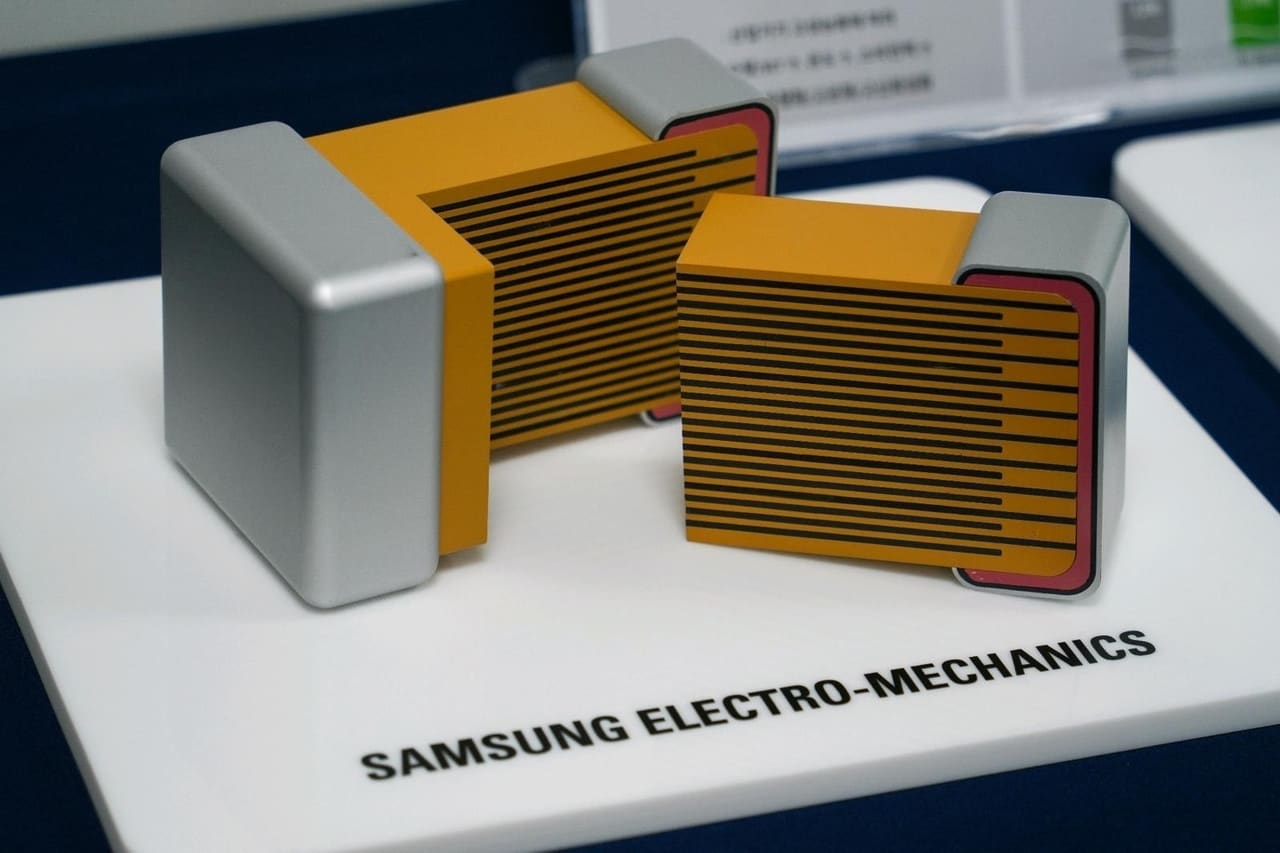
Multilayer ceramic capacitors are passive electronic components that store and regulate electrical charge. In AI servers, they stabilize voltage across processors and memory modules, a function that becomes more critical as power density climbs. A single high-end AI accelerator card can require hundreds of MLCCs, and a rack-scale system can demand thousands.
Asia's Capacitor Advantage
Samsung Electro-Mechanics is one of three dominant suppliers in the global MLCC market, alongside Japan's Murata Manufacturing and TDK. The trio commands an estimated 60 percent of worldwide production, with South Korean and Japanese factories accounting for the majority of high-capacity, high-reliability units used in data center hardware.
The concentration of MLCC manufacturing in Northeast Asia reflects decades of process refinement and capital investment. Producing MLCCs at the scale and tolerances required for AI infrastructure involves layering ceramic films thinner than a human hair, sintering them at precise temperatures, and testing each unit for electrical stability. Few suppliers outside the region have demonstrated the ability to meet hyperscaler qualification standards at volume.
Implications for AI Supply Chains
The timing of these contracts aligns with broader capacity expansion across the AI server ecosystem. Nvidia, AMD, and other accelerator vendors have reported backlog stretching into 2027, and server assemblers including Wistron, Quanta, and Supermicro have announced facility expansions in Taiwan, Thailand, and Mexico. Securing MLCC supply well in advance is standard practice for buyers managing long lead times and tight allocations.
Samsung Electro-Mechanics has been scaling production of high-capacitance MLCCs at its plants in Busan and Sejong. The company has not disclosed specific capacity figures, but industry observers note that MLCC lead times for AI server specifications remain elevated, typically twelve to sixteen weeks, compared to eight weeks for consumer electronics grades.
The undisclosed nature of both buyers suggests confidentiality clauses common in supply agreements between component makers and hyperscalers. Cloud providers and AI infrastructure operators often require suppliers to withhold customer names, shipment volumes, and technical specifications to preserve competitive advantage.
What Comes Next
Samsung Electro-Mechanics' order momentum offers a window into AI server build plans for 2027. If the disclosed contracts represent a subset of total commitments, the company's MLCC revenue from AI infrastructure could exceed one trillion won next year. That would mark a significant shift in product mix, given that automotive and smartphone applications have historically driven the majority of MLCC sales.
The supplier's ability to capture these orders also reflects broader investment in advanced ceramic materials and manufacturing precision. As AI accelerators push toward higher power envelopes, the performance requirements for capacitors will continue to tighten, favoring suppliers with established quality track records and the capital to fund next-generation production lines.
For buyers, locking in MLCC supply is one piece of a larger procurement puzzle that includes substrates, thermal modules, and power delivery components. Any bottleneck in passive components can delay server deployment, making early supplier commitments a strategic priority. Samsung Electro-Mechanics' announcement suggests that at least two major players have secured their capacitor allocations for 2027, leaving others to compete for remaining capacity.
RELATED STORIES
South Korean Chip Materials Suppliers Ride AI Boom to Profit Surge
Cheng Wei-Lun · 3 min

Samsung's Device Division Reports First Quarterly Loss as Chip Costs Surge
Cheng Wei-Lun · 3 min
Samsung Workers Plan Protest Over Pay Gap Between Chip and Device Units
Jun-ho Seo · 3 min

Nexon Commits $179M to Gaming IP Fund Targeting Asian Developers
Cheng Wei-Lun · 3 min
Spot something wrong? Email editor@briefasia.com. We log every correction publicly.