Technology · Dev
Samsung Deepens Nvidia Partnership Through NAND Flash Supply for AI Inference
Enterprise storage demand from AI inference workloads drives the memory maker's expanded collaboration with the GPU giant
KEY TAKEAWAYS
- ·Samsung Electronics is extending its Nvidia partnership to include NAND flash memory supply, targeting storage demand from AI inference deployments in enterprise data centers.
- ·AI inference workloads require high-capacity, low-latency storage for model weights and caching, creating a bottleneck distinct from GPU-intensive training clusters.
- ·The agreement positions Samsung to capture enterprise SSD revenue as inference infrastructure spending grows faster than training capex through 2027, while pressuring SK hynix and Japanese competitors.
Samsung Pivots to AI Storage Opportunity
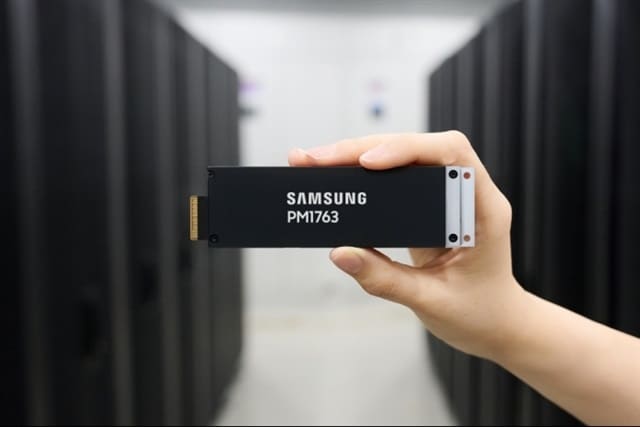
Samsung Electronics has extended its supply agreement with Nvidia to include NAND flash memory, responding to mounting storage requirements from AI inference deployments across enterprise data centers. The move marks a strategic shift for the Korean memory giant as it seeks to capture revenue beyond traditional GPU partnerships.
AI inference, the process of running trained models to generate predictions or outputs, consumes significant storage bandwidth. Unlike training workloads that rely heavily on high-speed compute and memory, inference requires rapid access to model weights, prompt data, and result caching. This architectural shift has created new bottlenecks in storage subsystems, particularly for large language models that exceed hundreds of gigabytes.
Samsung's decision to supply NAND directly into Nvidia's ecosystem reflects the changing economics of AI infrastructure. As inference scales across cloud providers and enterprises, storage cost per query has emerged as a key operational metric. High-capacity, low-latency SSDs built on advanced NAND nodes can reduce both capex and power consumption per terabyte, a critical factor when inference farms process millions of requests daily.
The Inference Storage Bottleneck
The technical demands of inference differ sharply from training. Training clusters prioritize GPU-to-GPU interconnect and HBM capacity; inference systems prioritize throughput to storage and lower per-query latency. A single inference server might handle dozens of concurrent model instances, each requiring fast reads from persistent storage to load weights and embeddings.
Nvidia's inference platforms, including the H100 NVL and upcoming Blackwell-based systems, integrate NVMe storage controllers optimized for these access patterns. Samsung's V-NAND, with its vertical cell architecture and high endurance ratings, aligns with the write-intensive caching and logging tasks common in inference pipelines.
Enterprise customers deploying on-premises inference infrastructure have begun specifying storage configurations that rival or exceed their GPU budgets. A typical rack-scale inference cluster might pair eight H100 GPUs with 60 terabytes of NVMe storage, a ratio unheard of in training environments just two years ago.
Regional Implications for Asia's Memory Supply Chain
Samsung's expanded Nvidia relationship carries weight across Asia's semiconductor landscape. The company's NAND fabrication facilities in Pyeongtaek, South Korea, and Xi'an, China, supply a significant share of global enterprise SSD capacity. Securing Nvidia as a direct or indirect customer stabilizes production volumes amid cyclical downturns in consumer electronics and PC markets.
The deal also pressures regional competitors. SK hynix, which has dominated the HBM market for AI training through its partnership with Nvidia, now faces a Samsung countermove in the inference storage segment. Meanwhile, Kioxia and Western Digital, both with joint-venture ties in Japan, must accelerate their own enterprise NAND roadmaps to remain competitive in AI-adjacent verticals.
For Asian cloud providers, including Alibaba Cloud, Tencent Cloud, and Naver, the Samsung-Nvidia alignment signals tighter integration between storage and accelerator ecosystems. These providers have invested heavily in proprietary inference chips and hybrid architectures; access to co-optimized NAND from a tier-one supplier could lower deployment friction and improve total cost of ownership.
Market Dynamics and Forward Outlook
NAND pricing has stabilized in recent quarters after a prolonged correction, but AI inference demand introduces a new variable. Enterprise-grade SSDs command higher margins than consumer products, and long-term supply agreements with hyperscalers or platform vendors reduce spot-market exposure. Samsung's strategy appears designed to lock in volume commitments before competing foundries can match its process node advantages.
Nvidia's data center revenue, which exceeded $47 billion in its most recent fiscal year, increasingly derives from inference deployments rather than pure training clusters. As models mature and enterprises shift from experimentation to production, inference infrastructure spending is expected to grow faster than training capex through 2027. Storage represents a rising share of that bill of materials.
Samsung has not disclosed shipment volumes or contract terms, but industry observers note that Nvidia's reference designs for inference servers now list Samsung V-NAND as a qualified component. This formal qualification process typically precedes large-scale procurement and suggests multi-quarter visibility for Samsung's NAND business unit.
The partnership underscores a broader recalibration in AI supply chains. As the center of gravity shifts from training supercomputers to distributed inference at the edge and in regional data centers, component suppliers must adapt. Storage, power delivery, and cooling now rival GPUs in strategic importance. For Samsung, the Nvidia relationship offers a foothold in a market segment where performance, endurance, and supply reliability matter more than raw cost per gigabyte.
RELATED STORIES
Memory Makers Gain Leverage as AI Server Costs Climb
Cheng Wei-Lun · 3 min
Samsung's Device Division Reports First Quarterly Loss as Chip Costs Surge
Cheng Wei-Lun · 3 min
South Korean Chip Materials Suppliers Ride AI Boom to Profit Surge
Cheng Wei-Lun · 3 min
Samsung Workers Plan Protest Over Pay Gap Between Chip and Device Units
Jun-ho Seo · 3 min
Spot something wrong? Email editor@briefasia.com. We log every correction publicly.