Real Estate · Proptech
Rockwell Takes Near-Complete Control of Alabang Town Center With $114 Million Buyout
The developer now holds 99% of the Manila mall and plans incremental upgrades over two years before a major transformation
KEY TAKEAWAYS
- ·Rockwell Land acquired an additional 22.96% of Alabang Commercial Corporation for P6.2 billion, bringing its ownership of the 17.5-hectare Alabang Town Center to 99.26%.
- ·The developer plans incremental upgrades over two years, focusing on parking, traffic flow, and tenant mix, before a larger five- to ten-year transformation.
- ·Rockwell posted record net income of P5.3 billion in 2025 and first-quarter 2026 revenues jumped 45% to P6.45 billion, partly from the initial Alabang acquisition.
A Measured Takeover
Rockwell Land has tightened its grip on one of Metro Manila's oldest retail landmarks. The developer acquired another 22.96% of Alabang Commercial Corporation for P6.2 billion (approximately $114 million), lifting its total stake to 99.26%. The transaction will be settled in three equal payments each July from 2026 through 2028, according to a disclosure filed with the Philippine Stock Exchange on July 30.
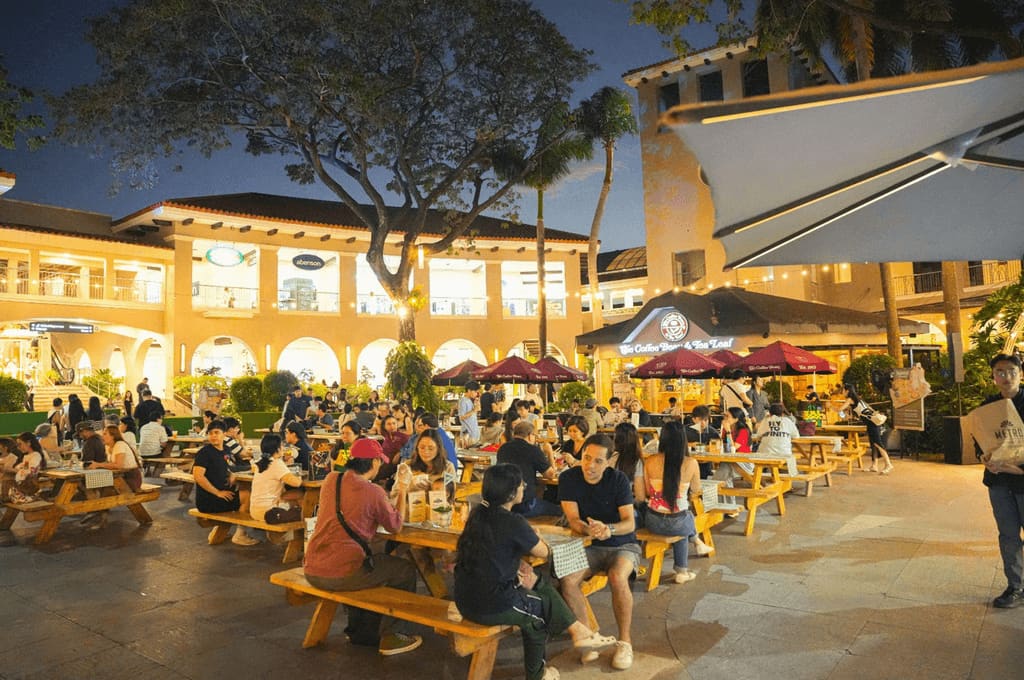
Alabang Commercial Corporation owns and operates Alabang Town Center, a 17.5-hectare mixed-use complex that opened in 1982 and has since become a fixture for residents of Manila's southern suburbs. The property houses more than 500 retail and office tenants across a low-rise, open-air layout that distinguishes it from the enclosed mega-malls that later became the norm in the capital.
The latest purchase follows a December 2025 transaction in which Rockwell acquired a nearly 75% controlling stake from the Madrigal family for P21.6 billion. That deal came days after Ayala Land divested its 50% interest in Alabang Commercial Corporation to existing partners for P13.5 billion, effectively unwinding a decades-long co-ownership arrangement.
Parking and Tenants Come First
Shoppers should not expect a dramatic overhaul in the immediate term. Rockwell has signaled that the first wave of changes will focus on operational improvements: expanded parking capacity, smoother traffic flow around the property, and a refreshed tenant roster. The company has indicated this initial phase will unfold over the next two years.
Notices posted inside the complex state that portions of The Street, an outdoor promenade within the mall, will be temporarily closed starting in August. Rockwell has not yet released a detailed construction timeline.
The more ambitious transformation is slated for a five- to ten-year horizon. Rockwell has engaged Uruguayan architect Carlos Ott and Filipino architect Jun Rodriguez of PRSP Architects to develop a master plan. The brief calls for preserving the property's legacy character while repositioning it as what the company describes as a more vibrant and experiential lifestyle destination.
Rockwell's Template
Rockwell Land built its reputation around premium mixed-use developments, most notably Rockwell Center in Makati, which is anchored by Power Plant Mall. The developer has cultivated a brand centered on curated retail, upscale dining, and integrated residential towers.
In recent years it has pushed beyond Makati, with projects in Cebu, Pampanga, Bacolod, Batangas, and Mactan. Among its 2026 milestones are the handover of Aruga Resort and Residences in Mactan, the topping-off ceremony for Power Plant Mall Angeles, and continued sales at Cabo San Diego, a beach community in Lian, Batangas.
The company posted record consolidated net income of P5.3 billion in 2025, a 29% increase, while revenues edged up 4% to P20.9 billion. Profit attributable to the parent company reached P4.7 billion, which included a one-time gain of P700 million from the initial Alabang Commercial Corporation acquisition. In the first quarter of 2026, revenues jumped 45% to P6.45 billion and attributable profit climbed 67% to P1.29 billion.
The Asset in Context
Alabang Town Center occupies a particular place in Manila's retail landscape. Its sprawling footprint, landscaped courtyards, and outdoor walkways have long appealed to families and office workers in the southern suburbs, an area that has seen steady residential and commercial expansion over the past two decades.
The property's design reflects an earlier era of Philippine mall development, when open-air circulation and horizontal layouts were more common. That format has since fallen out of favor as developers shifted to air-conditioned, vertically integrated complexes optimized for density and climate control.
Whether Rockwell will preserve that distinctive character or move toward a more enclosed, climate-controlled model remains to be seen. The involvement of Carlos Ott, whose portfolio includes the Opéra Bastille in Paris and the Dubai Opera, suggests the master plan will carry architectural ambition. Jun Rodriguez and PRSP Architects bring experience in large-scale commercial and mixed-use projects across the Philippines.
For now, the emphasis is on incremental upgrades. Rockwell's phased approach reflects both the scale of the asset and the operational complexity of renovating a 42-year-old mall that remains fully operational. The developer will need to balance construction disruption with tenant obligations and shopper convenience, a challenge familiar to any operator attempting a live renovation of a high-traffic retail property.
The near-complete consolidation of ownership should simplify decision-making and capital allocation, removing the governance friction that can accompany joint ventures. That streamlined structure will be critical as Rockwell moves from planning to execution over the coming decade.
RELATED STORIES

When Paper Wealth Outpaces Real Revenue: The Villar Land Valuation Puzzle
Anand Sundaram · 7 min

Koloma Targets Fourth Philippine Hydrogen Block in Offshore Palawan Push
Tran Quoc Bao · 3 min

GCash Parent Mynt Clears Final Regulatory Hurdle for Manila IPO
Mariel D. Santos · 3 min

Philippine Capital Inflows Slide as Foreign Firms Curtail Local Lending
Tran Quoc Bao · 3 min
Spot something wrong? Email editor@briefasia.com. We log every correction publicly.