Finance · Markets
Ringgit Slips Against Dollar as US Manufacturing Data Buoys Greenback
Malaysia's currency closed marginally weaker versus the dollar but gained ground against the yen, euro, and regional peers on Tuesday
KEY TAKEAWAYS
- ·The ringgit closed at 4.0945 per US dollar on Tuesday, down from 4.0935 the previous day, as stronger-than-expected US manufacturing data pushed the Dollar Index above 100 points.
- ·Malaysia's currency strengthened against major peers including the yen, euro, and British pound, as well as regional currencies like the Thai baht, Indonesian rupiah, and Philippine peso.
- ·Narrow trading ranges and limited volatility characterized the session, with economists noting the dollar is likely to remain well supported by positive US economic data in the near term.
Dollar Resilience Caps Ringgit Gains
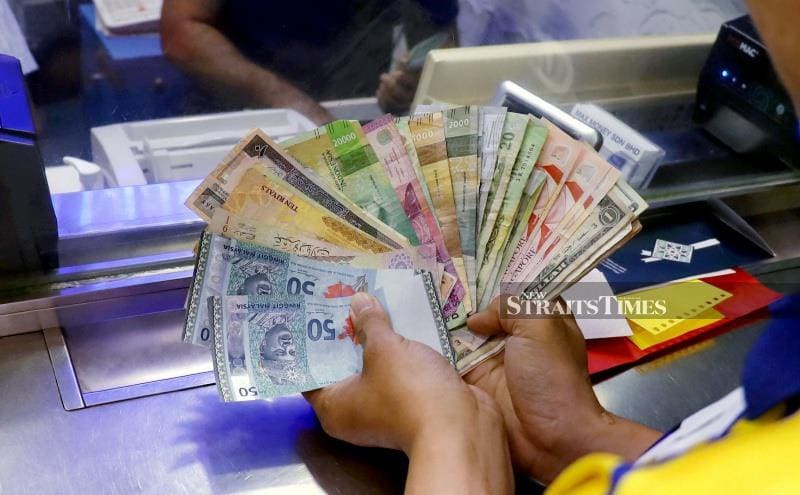
The ringgit closed marginally softer against the US dollar on Tuesday, settling at 4.0945 per dollar compared to Monday's 4.0935, as robust US economic indicators reinforced confidence in the American economy and lifted the greenback across global markets.
The dollar's strength came after July manufacturing data from the US Institute for Supply Management exceeded market expectations, pushing the US Dollar Index back above the psychologically significant 100-point threshold. The surprise upside in factory activity signaled continued resilience in the world's largest economy, prompting investors to maintain dollar positions despite recent volatility.
Bank Muamalat Malaysia chief economist Mohd Afzanizam Abdul Rashid noted that positive economic releases from the United States are likely to keep the dollar well supported in the near term. The data reinforces the view that the US economy maintains momentum even as other developed markets show signs of slowing.
Despite the headline move against the dollar, the ringgit's trading session was characterized by narrow ranges and limited volatility. The local currency hovered close to the 4.09 level throughout the day, reflecting a market still searching for clear directional catalysts.
Strength Across Other Majors
Where the ringgit did find traction was against other major currencies, posting gains across the board. The Malaysian currency appreciated to 2.5929 per 100 yen from Monday's 2.6062, benefiting from continued weakness in the Japanese currency as the Bank of Japan maintains its ultra-loose monetary stance.
Against the euro, the ringgit strengthened to 4.7120 from 4.7165, while it edged up versus the British pound to 5.5034 from 5.5053. The moves suggest that while the dollar retains its safe-haven appeal, the ringgit is holding its own against European currencies amid concerns about growth prospects in the eurozone and the UK.
Regional Currency Performance
The ringgit also advanced against Southeast Asian peers, reflecting Malaysia's relatively stable economic fundamentals and attractive carry trade positioning. It gained ground versus the Thai baht, closing at 12.2487 compared to 12.2663 the previous day, and firmed against the Indonesian rupiah to 227.1 from 227.4.
The currency appreciated to 6.69 per Philippine peso from 6.72, and strengthened marginally against the Singapore dollar to 3.1899 from 3.1911. The broad-based gains against regional currencies underscore steady demand for ringgit assets, even as global risk sentiment remains mixed.
Market Outlook
The divergence in the ringgit's performance highlights the complex currency dynamics facing Asian economies. While the dollar's strength reflects genuine economic momentum in the US, regional currencies are navigating their own domestic considerations, from central bank policy to export competitiveness and capital flow patterns.
For Malaysia, the ringgit's stability against the dollar and strength elsewhere suggests markets view the economy as on solid footing. With Bank Negara Malaysia maintaining a data-dependent approach to monetary policy and external accounts in surplus, the currency has room to absorb dollar strength without undue volatility.
The coming sessions will likely hinge on further US data releases and any signals from the Federal Reserve about the trajectory of interest rates. For now, the ringgit appears to be trading within established ranges, with the 4.08 to 4.10 band providing near-term boundaries as traders assess the next leg of the dollar cycle.
RELATED STORIES

Ringgit Holds Steady Against Dollar as Markets Await US Jobs Data
Cheng Wei-Lun · 2 min

Malaysian Ringgit Holds Ground as Weak US Jobs Data Clouds Fed Path
Priyanka V. Rao · 2 min

Ringgit Gains Ground as Weak US Jobs Data Shifts Fed Rate Outlook
Cheng Wei-Lun · 3 min

Malaysia's Tabung Haji Posts Best Returns Since 2018 After Restructuring
Priyanka V. Rao · 3 min
Spot something wrong? Email editor@briefasia.com. We log every correction publicly.