Real Estate · Land
Quek Leng Chan's GuocoLand Malaysia Sets July 30 Trading Halt for Privatization Exit
The property developer will delist from Bursa Malaysia after a selective capital reduction buyout valued at RM269.4 million targets minority shareholders.
KEY TAKEAWAYS
- ·GuocoLand Malaysia will halt share trading on July 30 as controlling shareholder GLL (Malaysia) executes a privatization valued at RM269.4 million for minority holders.
- ·The buyout offer of RM1.10 per share will be funded primarily from the company's existing cash reserves, with GuocoLand Limited potentially injecting up to RM72.25 million.
- ·Billionaire Quek Leng Chan, Malaysia's fifth-richest individual with US$7.5 billion net worth, controls nearly 72 percent of Singapore-listed parent GuocoLand Limited.
Countdown to Delisting
GuocoLand Malaysia announced that trading of its shares on Bursa Malaysia will cease on July 30, marking the beginning of the end for the property developer's public listing. The halt clears the way for a privatization transaction structured as a selective capital reduction, with the company's controlling shareholder GLL (Malaysia) orchestrating the buyout of remaining public investors.
The suspension remains in effect until the firm completes its formal delisting from Bursa Securities, according to a filing GuocoLand Malaysia submitted last Thursday. At the close of trading that day, the company carried a market capitalization of RM763.5 million, equivalent to US$186.9 million, with shares priced at RM1.09.
GLL (Malaysia), the wholly owned subsidiary of Singapore-listed GuocoLand Limited, first disclosed the privatization plan in early February. The offer price of RM1.10 per share represents a modest premium over recent trading levels, designed to compensate minority investors who collectively hold approximately 35 percent of the outstanding equity.
Financial Mechanics of the Buyout
The total consideration payable to minority shareholders reaches RM269.4 million under the terms of the capital reduction exercise. Billionaire Quek Leng Chan, who maintains a direct personal stake of 2.78 percent in GuocoLand Malaysia, stands to receive RM21.46 million from the transaction.
GuocoLand Malaysia intends to fund the buyout primarily through its existing cash reserves, a structure that minimizes the need for external financing. Should the company's internal liquidity prove insufficient, GLL (Malaysia) or its Singapore parent GuocoLand Limited will bridge any shortfall through advances or equity injections.
Current estimates suggest GuocoLand Limited may need to inject up to RM72.25 million to complete the exercise. The Singapore entity, which serves as the ultimate parent, is chaired by Quek, who controls an interest approaching 72 percent of its issued shares.
Strategic Rationale and Regional Context
The privatization of GuocoLand Malaysia fits a broader pattern across Southeast Asian property markets, where developers have increasingly opted to consolidate ownership structures and exit public markets. Malaysia's real estate sector has faced headwinds from interest rate volatility, uneven demand recovery in key urban centers, and regulatory shifts affecting foreign investment flows.
Taking GuocoLand Malaysia private allows the parent company to streamline decision-making, eliminate the compliance costs and disclosure obligations of a public listing, and potentially redeploy capital more flexibly across its regional portfolio. For minority shareholders, the offer provides liquidity at a time when trading volumes in mid-cap property stocks on Bursa Malaysia have thinned.
The transaction also reflects Quek's preference for tighter control over the operating entities within his sprawling business empire. Hong Leong Group Malaysia, which he also controls, spans financial services, food manufacturing, and property development. Consolidating ownership in GuocoLand Malaysia aligns with a strategic focus on core assets and reduces the complexity of managing multiple listed platforms.
Quek's Empire and Market Standing
Quek Leng Chan ranked as Malaysia's fifth-richest individual in April, with Forbes estimating his net worth at US$7.5 billion. His influence extends across both Malaysian and Singaporean capital markets, with GuocoLand Limited serving as a key vehicle for regional property investments.
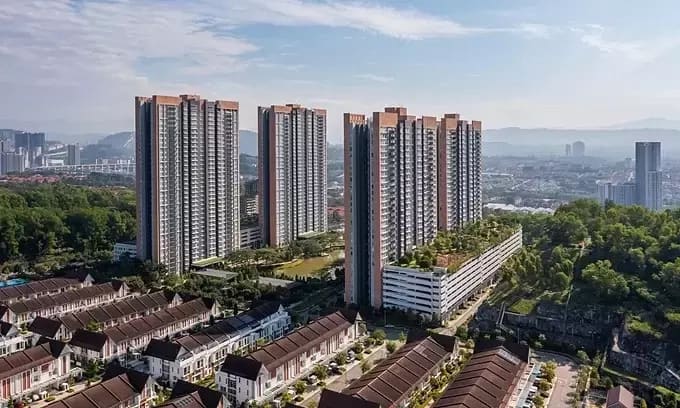
GuocoLand Malaysia's portfolio includes residential and mixed-use projects in Kuala Lumpur and surrounding areas. Emerald Hills, a residential development in the Malaysian capital, exemplifies the firm's focus on mid-to-upper segment housing. The company has navigated a challenging environment in recent years, with softness in the condominium market and competition from both domestic rivals and international developers entering Malaysia.
By withdrawing GuocoLand Malaysia from public trading, Quek gains operational latitude to recalibrate the business without the scrutiny of quarterly earnings cycles. The move also consolidates reporting lines, reducing the administrative burden of maintaining two separate listed entities in Singapore and Malaysia for what is effectively a unified regional property strategy.
Implications for Bursa Malaysia
The delisting adds to a gradual decline in the number of property developers listed on Bursa Malaysia, a trend that has raised concerns among market participants about liquidity and sectoral representation. Several mid-cap firms have pursued privatizations or voluntary delistings over the past three years, citing low valuations and limited investor interest.
For remaining public property companies in Malaysia, GuocoLand Malaysia's exit underscores the difficulty of maintaining a compelling equity story in a market where institutional investors have rotated toward technology, industrials, and financial services. The transaction also highlights the availability of internal cash within established developers, enabling buyouts without recourse to external debt or equity markets.
Minority shareholders who accept the RM1.10 offer will exit at a valuation that reflects both the company's asset base and the subdued sentiment toward Malaysian property stocks. Those who decline the offer will face the prospect of holding shares in an illiquid or delisted entity, a scenario that typically compels acceptance in the final stages of a privatization.
What Comes Next
The suspension of trading on July 30 triggers a procedural timeline governed by Bursa Malaysia's listing requirements. GuocoLand Malaysia must complete the capital reduction and satisfy regulatory conditions before the exchange grants final approval for delisting. The process typically spans several weeks to a few months, depending on shareholder approvals and the resolution of any outstanding objections.
Once delisted, GuocoLand Malaysia will operate as a private subsidiary of GLL (Malaysia), with financial results consolidated into GuocoLand Limited's reporting. The Singapore parent will retain flexibility to restructure the Malaysian business, pursue asset sales, or redeploy capital into other markets across Asia without the constraints of a dual-listed structure.
For Quek, the transaction reinforces his position as one of Southeast Asia's most influential property magnates, with direct oversight of development pipelines in Singapore, Malaysia, and China. The privatization of GuocoLand Malaysia removes one layer of complexity from that footprint, concentrating decision-making authority and capital allocation within a more streamlined corporate framework.
RELATED STORIES
Mah Sing Acquires 14-Acre Ampang Site for $1.92 Billion Residential Play
Priyanka V. Rao · 3 min
Malaysia's Benchmark Index Holds Steady Ahead of Holiday and Earnings Season
Priyanka V. Rao · 3 min
Malaysia's KLCI Index to Add 20 Stocks in Phased Expansion
Jun-ho Seo · 2 min
Malaysian Ringgit Strengthens on Strong US Jobs Data
Tran Quoc Bao · 3 min
Spot something wrong? Email editor@briefasia.com. We log every correction publicly.