Asia · Business
Prime Infra Races to Finish $2.57 Billion Rizal Hydro Ahead of 2030 Target
The Wawa pumped storage project, now 18 percent complete, aims to deliver 600 MW of capacity and strengthen grid stability as the Philippines accelerates its renewable energy transition.
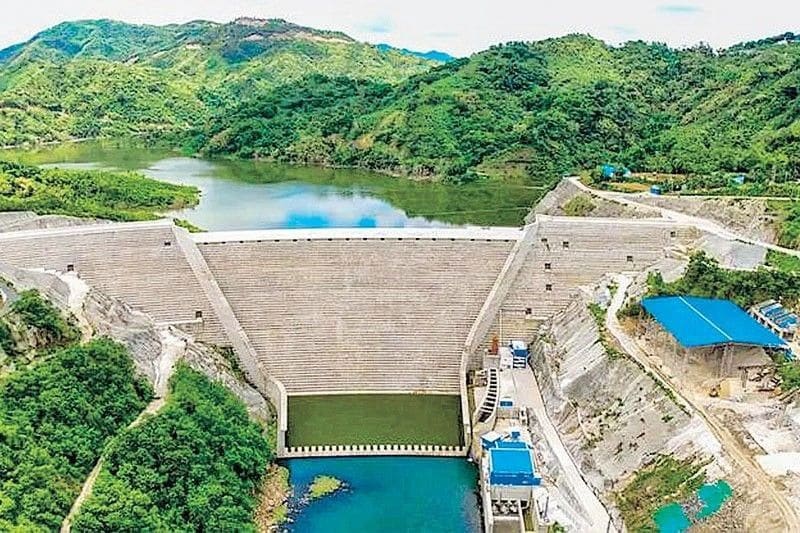
KEY TAKEAWAYS
- ·Prime Infrastructure is targeting early 2030 completion for its $2.57 billion Wawa pumped storage facility in Rizal, which will provide 600 MW of capacity and 6,000 MW-hours of storage.
- ·Kansai Electric acquired a 14 percent stake in the project's parent company in July, marking Japan's second-largest utility's first overseas pumped storage investment.
- ·Prime Infra is also developing the larger $5.03 billion Pakil project in Laguna with 1,400 MW capacity, both secured under twenty-year green energy auction contracts.
Accelerating a Grid-Scale Battery
Prime Infrastructure Capital Inc. is working to bring its Wawa pumped storage hydropower facility online ahead of its 2030 deadline, according to the company's president and CEO Guillaume Lucci. The $2.57 billion project in Rizal province, now roughly 18 percent complete, is designed to deliver 600 megawatts of generating capacity and store 6,000 megawatt-hours of energy.
Lucci said the company hopes to finish construction by the first quarter of 2030 at the latest. He noted that the facility will function as grid-scale storage, pumping water to an upper reservoir during periods of low demand and releasing it to generate electricity when consumption peaks. The technology addresses one of the core challenges facing renewable energy expansion: intermittency.
Prime Infra is developing the project through its subsidiary Olympia Violago Water & Power Inc. Energy Secretary Sharon Garin described the timeline as ambitious but achievable, observing that hydropower projects typically require ten to fifteen years from planning to commissioning. She emphasized that pumped storage will be essential as the Philippines adds more solar and wind capacity, which cannot supply power around the clock without complementary storage infrastructure.
Kansai Electric Takes a Stake
In July, Kansai Electric Power Co. finalized agreements to acquire a 14 percent equity interest in PMJVCo Holdings Inc., the parent company of Olympia Violago. The transaction marks the first overseas pumped storage investment by Japan's second-largest utility. Financial terms were not disclosed.
Following the deal, PMJVCo remains 86 percent owned by Prime Hydropower Energy Inc., in which FGEN Aqua Power Holdings Inc., part of the Lopez Group, holds a 33 percent stake. The entry of Kansai Electric brings additional technical expertise and signals confidence in the Philippine energy storage market.
A Second, Larger Project in Laguna
Prime Infra is simultaneously advancing the Pakil pumped storage project in Laguna, a $5.03 billion facility with a planned capacity of 1,400 MW. That project also targets a 2030 completion date. Both Wawa and Pakil secured twenty-year contracts under the government's third green energy auction, locking in revenue streams and reducing offtake risk for investors.
The combined output of the two facilities would represent a significant addition to the country's dispatchable capacity, particularly as coal-fired generation faces phase-down pressure and natural gas supply remains constrained. Pumped storage offers a proven, long-duration alternative to lithium-ion batteries, which are better suited to shorter discharge cycles.
Energy Security and Transition Dynamics
Lucci framed the Wawa project as a tool for energy security, allowing grid operators to call on stored power during peak hours or supply disruptions. Garin echoed that view, stating that the transition to cleaner energy cannot rely solely on solar installations without corresponding storage and dispatchable capacity.
The Philippines has set a target of 35 percent renewable energy in its generation mix by 2030 and 50 percent by 2040. Achieving those goals will require not only new solar and wind farms but also infrastructure to manage variability and maintain grid frequency. Pumped storage, while capital-intensive and geographically constrained, offers multi-hour discharge capability that battery systems cannot yet match at comparable cost.
Prime Infra's ability to deliver both projects on schedule and budget will serve as a test case for private-sector execution of large-scale storage in Southeast Asia, a region where grid modernization has lagged behind renewable capacity additions.
RELATED STORIES
Philippines Races to Launch $80 Million Food Hub in Clark by Late 2027
Mariel D. Santos · 3 min
Philippines Infrastructure Delays Stem From Short-Term Budgeting Cycles
Mariel D. Santos · 3 min
Manila Eyes Larger Coal Revenue Cut as Semirara Mine Tender Stalls
Priyanka V. Rao · 2 min
Philippines Rice Tariff Revenue Climbs to $213 Million on Import Surge
Priyanka V. Rao · 2 min
Spot something wrong? Email editor@briefasia.com. We log every correction publicly.