Technology · AI
Pony.ai Eyes Freight Market With Robotruck Expansion Plans
Autonomous driving firm targets China's trillion-yuan road freight sector with heavy- and light-duty vehicle deployment strategy
KEY TAKEAWAYS
- ·Pony.ai is deploying heavy- and light-duty autonomous trucks targeting China's road freight market, valued at a minimum of RMB 1 trillion (USD 147.9 billion).
- ·The freight sector faces high accident rates, rising operating costs, and persistent driver shortages, creating openings for autonomous and electric vehicle adoption.
- ·Pony.ai competes with Inceptio, Plus, and TuSimple in China's autonomous freight space as regulatory frameworks for commercial deployment continue to evolve.
Freight Economics Drive Autonomous Push
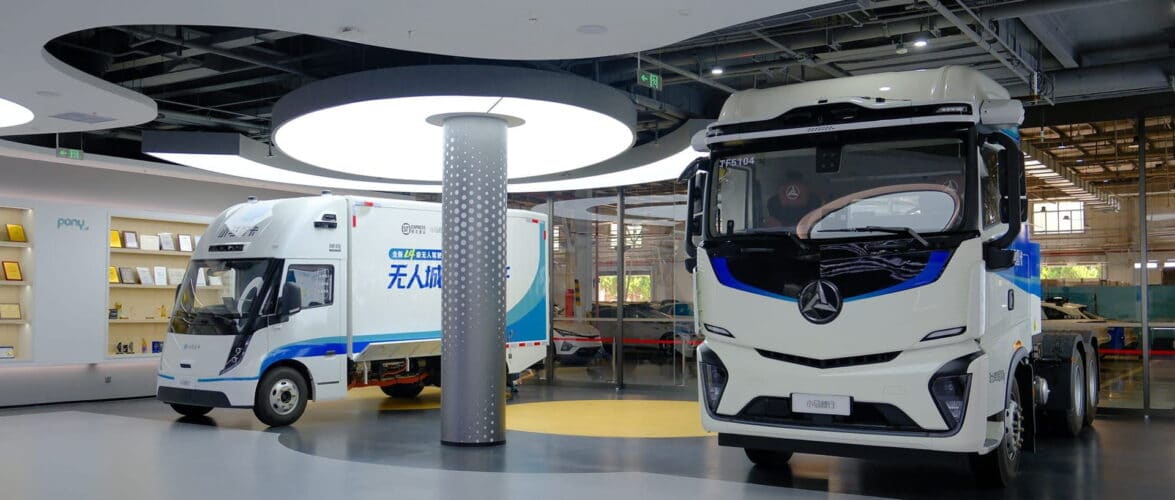
Pony.ai is positioning its autonomous trucking division to capture share in China's road freight sector, a market He Xing, vice president of Pony.ai and head of the company's robotruck business, values at a minimum of RMB 1 trillion (USD 147.9 billion). Even modest penetration of this sector would represent significant revenue potential for the autonomous vehicle developer.
The company's robotruck strategy spans both heavy- and light-duty vehicles, reflecting varied use cases across inter-city freight corridors and last-mile delivery networks. He outlined the deployment plans as Pony.ai continues to scale commercial operations beyond its robotaxi services in Guangzhou, Beijing, and other Chinese cities.
Industry Pain Points Create Opening
China's freight logistics industry faces structural challenges that autonomous technology could address. Truck accidents remain frequent, with driver fatigue and human error contributing to collision rates on highways and urban arterials. Operating costs have climbed as fuel, insurance, and labor expenses rise. Driver shortages have intensified across the sector, particularly for long-haul routes, as younger workers eschew the profession's demanding schedules and extended time away from home.
He noted that autonomous driving technology aligns well with the shift toward electric powertrains in commercial vehicles. Electric heavy- and light-duty trucks can reduce fuel expenditure and lower emissions, while autonomous systems can optimize route planning and driving behavior to extend battery range and further cut energy consumption.
Deployment Timeline and Regulatory Landscape
Pony.ai has been testing autonomous trucks on public roads in China for several years, accumulating mileage data and refining its perception and planning algorithms for freight applications. The company has partnered with logistics operators to pilot robotruck services on specific routes, gathering operational feedback before broader rollout.
China's regulatory environment for autonomous commercial vehicles remains in flux. The Ministry of Transport and provincial authorities have issued pilot permits for autonomous trucking in designated zones and corridors, but nationwide deployment frameworks are still under development. Pony.ai and peers including Inceptio Technology, TuSimple, and Plus must navigate a patchwork of local rules as they scale operations.
He's comments suggest Pony.ai views the freight sector as a near-term commercialization opportunity, potentially ahead of fully driverless robotaxi services, which face more complex urban environments and higher public scrutiny. Freight routes often involve highway driving with less pedestrian interaction, simplifying the autonomy challenge and accelerating path to profitability.
Capital and Competition
Pony.ai raised USD 100 million in a Series D extension round in early 2023, bringing total funding to over USD 1.3 billion. The company has signaled intent to pursue a U.S. initial public offering, though timing remains uncertain amid cross-border regulatory tensions. Revenue from robotruck operations would strengthen the equity story ahead of any listing.
Competition in China's autonomous freight market is intensifying. Inceptio, backed by SAIC Motor and Sinotrans, has deployed trucks on expressways linking manufacturing hubs. Plus has partnerships with FAW Group and is testing electric autonomous trucks in several provinces. TuSimple, which delisted from Nasdaq in 2023, continues China operations despite U.S. regulatory setbacks.
The freight market's scale and structural inefficiencies make it an attractive target for autonomous vehicle developers seeking to move beyond pilot projects. Pony.ai's dual focus on heavy- and light-duty vehicles positions the company to address both long-haul and urban logistics, capturing revenue across the freight value chain. Whether the technology and regulatory environment mature quickly enough to deliver on the trillion-yuan opportunity remains the open question for investors and industry watchers.
RELATED STORIES
Beijing's AI Bar Offers Free DeepSeek Access as Price Wars Reshape Global Market
Cheng Wei-Lun · 3 min
Huawei Unveils Sub-800-Gram Laptop Running Homegrown Kirin Chip
Cheng Wei-Lun · 3 min

Asia's Memory Makers Shift Focus as DRAM Margins Challenge HBM Dominance
Cheng Wei-Lun · 4 min

DeepSeek Backs Unitree With $20.8 Million Stake in Shanghai IPO
Cheng Wei-Lun · 3 min
Spot something wrong? Email editor@briefasia.com. We log every correction publicly.