Real Estate · Homes
Pine Grove Owners Hold Out as Singapore's Largest En Bloc Bid Falls Short of Mandate
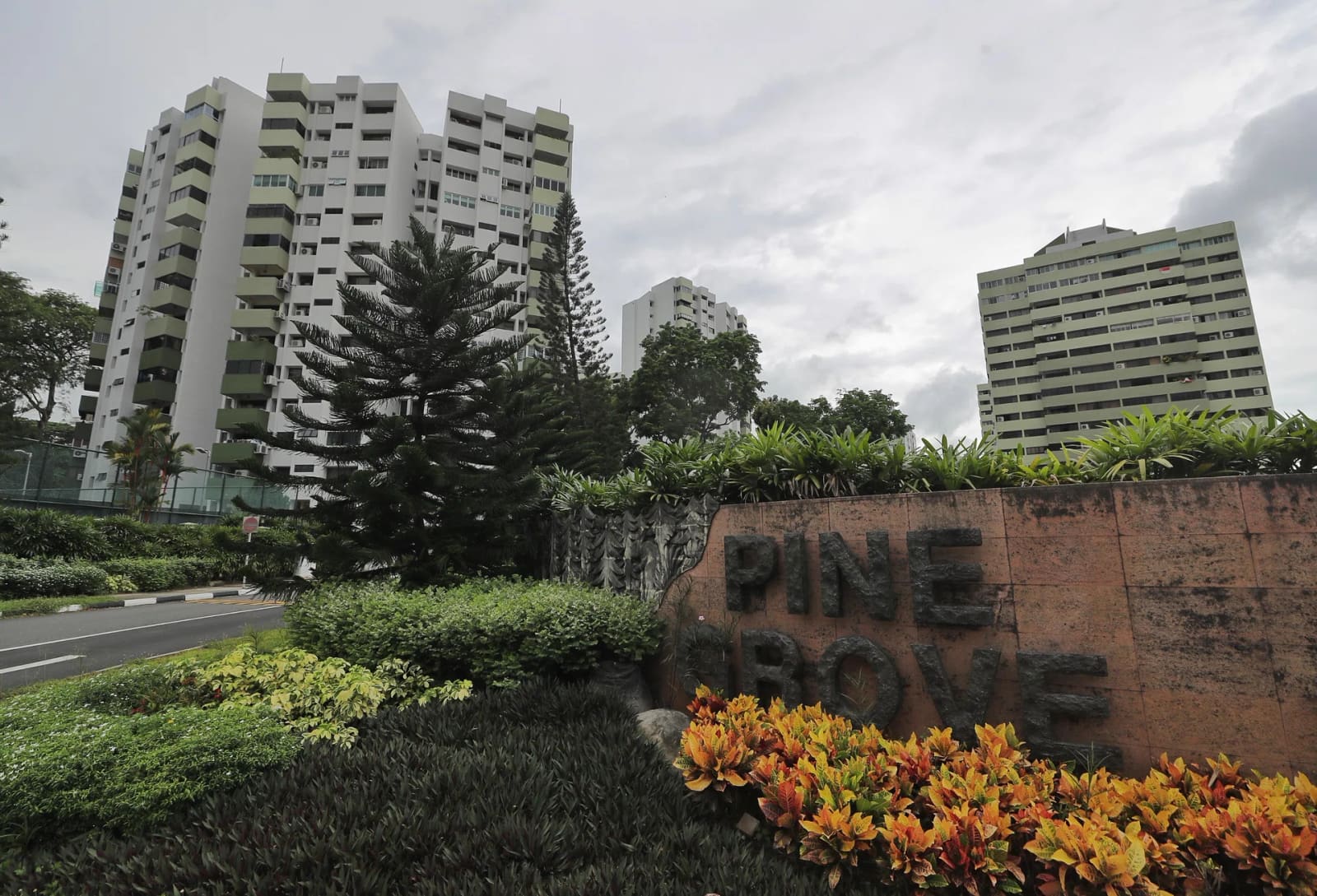
The 660-unit estate has secured 62 percent consent for its S$1.78 billion collective sale, still 18 points below the threshold needed before its September deadline.
KEY TAKEAWAYS
- ·Pine Grove's collective sale has secured 62 percent owner consent for its S$1.78 billion reserve price, falling 18 percentage points short of the 80 percent mandate needed by September 20.
- ·New ABSD concessions grant mega en bloc sites yielding at least 1,400 units seven years to complete construction and sales, up from 5.5 years, with developers required to sell half within six years.
- ·Monthly maintenance fees at the 42-year-old estate will rise to S$479.60 per unit from August, up from S$318.28, as the committee warns of declining unit values if the sale fails.
The Mandate Gap
Pine Grove's collective sale committee is racing against time. As of late July, only 62 percent of owners at the sprawling 660-unit condominium off Ulu Pandan Road have signed the collective sale agreement. That leaves the committee 18 percentage points short of the 80 percent mandate required before the agreement expires on September 20.
The S$1.78 billion reserve price excludes any land betterment charge the eventual developer would pay to intensify the site. When factoring in estimated charges for lease top-up to a fresh 99-year tenure and bonus gross floor area, the estate's marketing agent ERA calculates the effective land value at around S$1,355 per square foot per plot ratio.
The committee outlined five primary reasons for owner resistance in a July 27 letter: fears the reserve price will deter buyers, dissatisfaction with the asking figure, disputes over how proceeds would be divided among units, emotional attachment to the estate, and difficulty finding comparable replacement homes at similar price points.
Benchmarking Against Government Sites
The committee maintains the reserve price remains competitive when measured against recent government land sales in the vicinity. UOL and SingLand acquired the Pinetree Hill site in 2022 for S$671.5 million, equivalent to S$1,318 per square foot per plot ratio. MCL Land and Sinarmas Land paid S$692.4 million for the Nava Grove site in 2023, or S$1,223 per square foot per plot ratio.
Pine Grove occupies 893,219 square feet and could yield approximately 2,050 new residential units if redeveloped, subject to regulatory approval. The estate was privatized from a former Housing and Urban Development Company development in 1996 and has launched five unsuccessful collective sale attempts since 2008, each failing to secure sufficient owner support or attract a buyer.
Policy Tailwind Arrives Late
One day after the committee's letter to owners, National Development Minister Chee Hong Tat announced revised ABSD rules for large-scale en bloc redevelopments. Mega sites yielding at least 1,400 residential units now have seven years to complete construction and sell all inventory, up from 5.5 years. Developers must sell at least half the units within six years to retain a 35 percent upfront ABSD remission; failure triggers a clawback with interest.
Sites producing between 700 and 1,400 units receive six years. Both categories require a redevelopment yield of at least 1.5 times the existing residential unit count. Developers meeting additional criteria can apply for a further six-month extension.
ERA told local media the announcement creates a more supportive environment for large-scale collective sales and could improve owner confidence. The firm noted the policy shift offers Pine Grove a renewed opportunity to reach market within the updated framework, though it declined to comment on developer interest at the current reserve price.
The Maintenance Cost Argument
The committee is leaning on financial pressure to sway undecided owners. Monthly Management Corporation Strata Title fees will jump to S$479.60 per unit starting in August, up from S$318.28. The 42-year-old estate faces escalating repair costs, including more frequent spalling concrete and water seepage, which the committee warns will drain the sinking fund.
If the collective sale fails, the committee projects values of larger units could decline to between S$1.6 million and S$1.8 million. The estate currently has no competing government land sale sites nearby, though planned development in the adjacent Maju area could intensify competition in future attempts.
Structural Headwinds
Nicholas Mak, chief research officer at Mogul.sg, points to the steady pipeline of government residential land as a structural challenge for en bloc projects. Developers often prefer the government land sale route because the process is faster and avoids the risk of owner objections and litigation.
Resistance to collective sales frequently stems from owners' inability to find replacement units of similar size, Mak noted. A former resident identified as Tan, who sold his unit several years ago, described how repeated en bloc attempts created uncertainty and prompted some owners to exit independently. He cited the estate's unsheltered drop-off point, aging lift lobbies, and outdated lighting as quality-of-life issues that complicate the living experience between sale cycles.
The current effort has also been shadowed by earlier friction over the appointment of ERA and law firm BR Law, which a group of owners argued should have been subject to competitive tender.
Pine Grove's committee has six weeks to close the 18-point gap. The revised ABSD framework may provide a technical advantage, but the fundamental tension between owner expectations, replacement housing supply, and developer appetite for large, complex sites remains unresolved.
RELATED STORIES
Frasers Property Wins Shareholder Backing for S$2.1 Billion Hospitality Reshuffle
Lim Hui Ying · 3 min
Singapore REITs Raise S$4.5 Billion in Nine Months as Fundraising Momentum Extends Into 2026
Priyanka V. Rao · 3 min

Blackstone's AirTrunk Lines Up S$2 Billion Loan for Singapore REIT IPO
Anand Sundaram · 3 min

Blackstone's AirTrunk Pursues $1.6 Billion Loan Ahead of Singapore REIT Listing
Jun-ho Seo · 3 min
Spot something wrong? Email editor@briefasia.com. We log every correction publicly.