Technology · AI
Philippines Targets November for Pax Silica AI Hub Agreement With US
The framework governing a 4,000-acre artificial intelligence industrial complex in New Clark City could be signed during President Trump's anticipated ASEAN Summit visit.
KEY TAKEAWAYS
- ·The Philippines expects to finalize the Pax Silica AI hub framework within two to three months, targeting a November signing during Trump's potential ASEAN Summit visit.
- ·The 4,000-acre development in New Clark City represents a rare opportunity for the Philippines to enter advanced technology sectors beyond electronics assembly.
- ·Philippine private sector groups are mapping investment opportunities independently rather than waiting for government direction on Pax Silica participation.
Framework Under Pressure
The Philippines expects to complete negotiations on the governance structure for its Pax Silica artificial intelligence hub within two to three months, positioning a potential signing ceremony for November when US President Donald Trump may visit Manila for the ASEAN Summit.
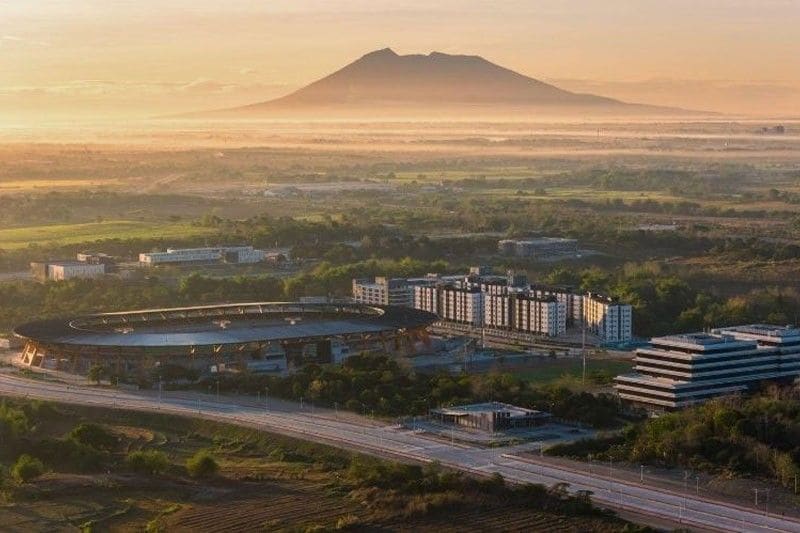
Joshua Bingcang, president and CEO of the Bases Conversion and Development Authority, told ANC that his team faces pressure to deliver the framework in time for what could become a marquee announcement during the 80th anniversary year of Philippines-US relations. The 4,000-acre development in New Clark City, Tarlac represents one of the most concrete outcomes of Washington's broader Pax Silica initiative, which aims to construct a secure artificial intelligence supply chain across allied nations.
The Philippines formally joined Pax Silica in April, becoming an early participant in the US-led effort to diversify semiconductor and AI infrastructure beyond traditional manufacturing centers. New Clark City, a planned metropolis north of Manila that already hosts government offices and sports facilities, offers land availability and relative proximity to the capital that make it attractive for large-scale industrial projects.
Private Sector Mobilizes Ahead of Government
Philippine business leaders are not waiting for official frameworks to materialize before mapping their role in Pax Silica and the related Luzon Economic Corridor, another US-Philippines infrastructure initiative announced earlier this year.
Jaime Augusto Zobel de Ayala, chairman of Ayala Corporation, one of the country's oldest and largest conglomerates, said at an American Chamber of Commerce general membership meeting that the private sector has begun coordination independent of government timelines. The Makati Business Club and AmCham have agreed to identify sectors where Philippine companies can contribute to both initiatives rather than waiting for directives from Manila or Washington.
Ebb Hinchliffe, executive director of AmCham Philippines, framed the approach as a reversal of typical public-private dynamics. "From the private sector, let's start focusing on what's needed, how do we do it, who's going to do it from the private sector and let the government join us as is possible," Hinchliffe said.
This bottom-up mobilization reflects both opportunity and anxiety within Philippine business circles. The country has watched Vietnam, Thailand, and Indonesia attract waves of semiconductor and electronics investment over the past decade, often feeling left behind despite competitive labor costs and strong English proficiency. Pax Silica represents a rare instance of explicit US attention to Philippine manufacturing potential, and local executives appear determined not to squander the moment.
Stakes Beyond Infrastructure
The AI hub carries implications beyond the immediate construction and employment it will generate in Tarlac. For Manila, participation in Pax Silica offers a pathway into advanced technology sectors where the Philippines has historically lacked scale. The country's electronics industry, while substantial, has remained concentrated in assembly and testing rather than design or fabrication. An AI-focused industrial park could shift that profile if it attracts not just data centers but chip design houses, AI software developers, and research facilities.
The November timeline also carries political weight. Trump's potential visit would mark his first trip to Southeast Asia since returning to office, and both governments have incentive to showcase tangible progress in the bilateral relationship. For the Philippines, hosting a major signing ceremony during the ASEAN Summit would underscore its role as a key US partner in the region, particularly as Washington seeks to counter China's influence in the South China Sea and across ASEAN member states.
Whether the framework can be finalized on schedule remains uncertain. Cross-border industrial agreements typically involve complex provisions on intellectual property protection, investment incentives, labor standards, and technology transfer. The BCDA's two-to-three-month timeline is aggressive by the standards of such negotiations, suggesting that much of the groundwork has already been laid quietly or that both sides are willing to settle for a less detailed initial framework that can be refined later.
Ayala's emphasis on private-sector initiative hints at another dynamic: Philippine businesses may be preparing to proceed with investments in New Clark City infrastructure and related supply chains regardless of whether a formal framework is ready by November. That would give political leaders something concrete to announce even if legal and regulatory details remain under negotiation.
RELATED STORIES
Manila's Chip Industry Still Stalled in Assembly While Taipei Built Fabs
Priyanka V. Rao · 4 min
Manila Startup Kita Closes $4.5M to Automate Loan Document Processing Across Asia
Priyanka V. Rao · 3 min

Philippine Economic Zones Pull Record ₱216 Billion in Eight Months
Priyanka V. Rao · 3 min

PhilWeb Trading Halted After P4.2 Billion JKS Tech Bet
Tran Quoc Bao · 3 min
Spot something wrong? Email editor@briefasia.com. We log every correction publicly.