Sustainability · Climate
Philippine Farmers Cut Methane Emissions With Water-Saving Rice Technique
Alternate wetting and drying method reduces flooding in paddies, tackling Southeast Asia's agricultural greenhouse gas challenge
KEY TAKEAWAYS
- ·A rice farmer in Los Banos, Philippines, adopted alternate wetting and drying nine years ago, a technique that can cut methane emissions from paddies by up to thirty percent without sacrificing yields.
- ·Flooded rice fields across Southeast Asia are a major methane source; the Philippines produces roughly twenty million tons of rice annually, much of it under continuous flooding that creates anaerobic conditions.
- ·Scaling the method requires better irrigation infrastructure and farmer training, with governments in the Philippines, Vietnam, Thailand, and Indonesia running pilot programs as part of climate commitments.
A Quarter-Century of Tradition, Upended
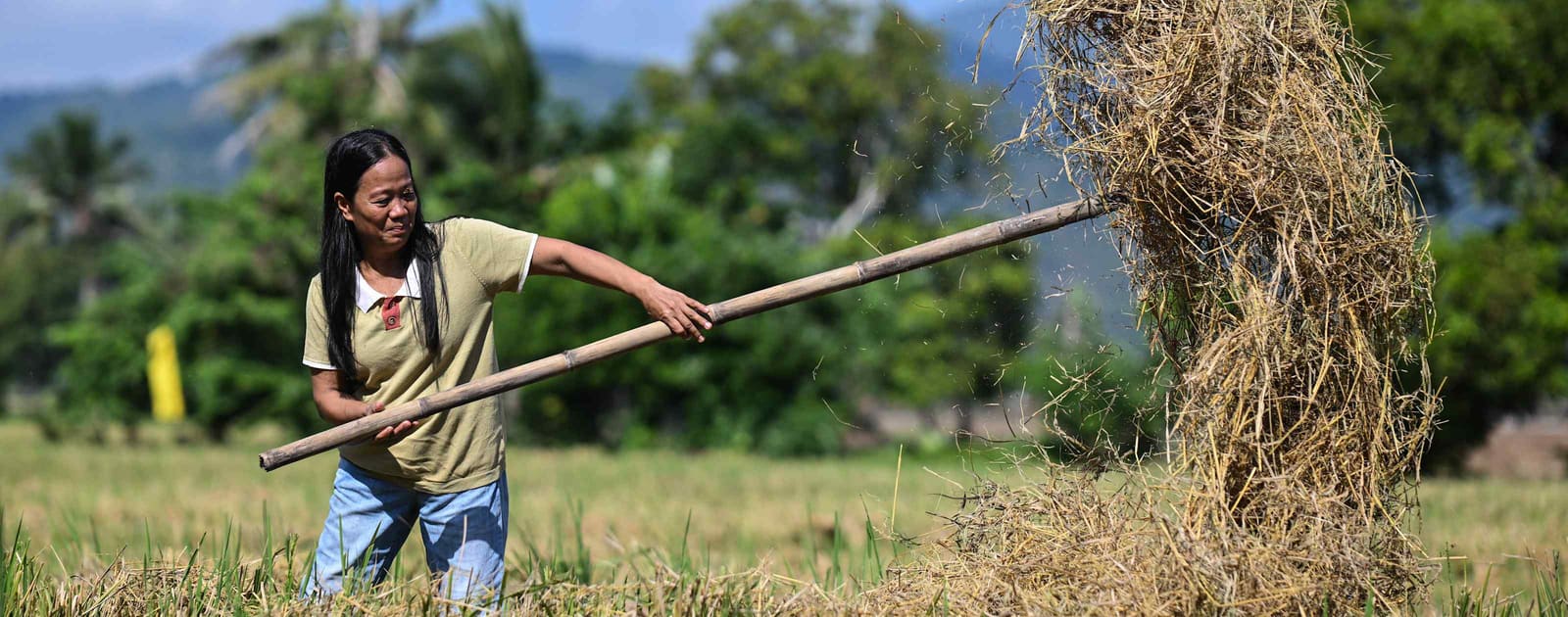
Merriam Saba had spent more than twenty-five years growing rice the conventional way in Los Banos, Philippines, when she heard about a different approach nine years ago. The method, called alternate wetting and drying, sounded counterintuitive: instead of keeping her paddy continuously flooded, she would let the water level drop periodically before reflooding the field.
She tried it. The results convinced her to abandon the old practice entirely.
Saba's decision reflects a quiet shift taking place across Philippine rice country, where growers are experimenting with irrigation schedules that could materially reduce methane emissions from one of Southeast Asia's largest sources of agricultural greenhouse gases. Rice paddies account for a substantial share of the region's methane output, a byproduct of anaerobic decomposition in waterlogged soils.
The Methane Problem in Southeast Asian Rice
Flooded rice fields create ideal conditions for methane-producing bacteria. When organic matter decomposes without oxygen, microbes release methane, a greenhouse gas with roughly twenty-eight times the warming potential of carbon dioxide over a century. Across Southeast Asia, where rice is both staple and export commodity, the cumulative emissions are significant.
The Philippines produces approximately twenty million tons of rice annually, much of it grown under continuous flooding. That volume places the country among the region's top emitters from paddy cultivation. Vietnam and Thailand, with larger export sectors, face similar challenges.
Alternate wetting and drying breaks the cycle. Farmers allow water to drain from the field until the soil reaches a certain dryness, then reflood. The periodic exposure to air interrupts anaerobic conditions, cutting methane generation while maintaining crop performance. Field trials conducted by agricultural research centers in the region have measured emission reductions of up to thirty percent, with minimal or no yield loss when the technique is applied correctly.
Adoption Challenges Beyond the Lab
Saba's experience in Los Banos offers a window into both the promise and the friction of scaling this practice. Los Banos sits in Laguna province, home to the International Rice Research Institute and a concentration of progressive growers willing to test new methods. Even here, adoption has been gradual.
Water management infrastructure is one constraint. Alternate wetting and drying requires reliable control over irrigation, including the ability to drain fields on schedule. Many smallholders in the Philippines and neighboring countries rely on communal or gravity-fed systems that do not permit individual timing adjustments. Without investment in water control structures, the technique remains out of reach.
Labor is another variable. Monitoring soil moisture and coordinating drainage cycles demands more attention than simply keeping a field flooded. For farmers juggling multiple plots or off-farm work, the added complexity can be a deterrent, even when the environmental and potential cost savings are clear.
Regional Context and Policy Levers
The Philippine government has signaled interest in promoting alternate wetting and drying as part of its climate commitments under the Paris Agreement. The Department of Agriculture has run training programs and demonstration farms, though funding and extension reach remain uneven. Similar initiatives are underway in Vietnam and Thailand, where rice export earnings give policymakers an incentive to burnish sustainability credentials in European and North American markets increasingly sensitive to carbon footprints.
India, the world's largest rice exporter, has also piloted the method in select states, though the scale of its paddy area and the diversity of farming systems complicate nationwide rollout. In Indonesia, where rice self-sufficiency is a political priority, the government has tested alternate wetting and drying in Java and Sumatra, with mixed results tied to irrigation quality.
Private sector interest is emerging as well. Japanese trading house Sumitomo recently joined a project in the United States to sequester carbon in the form of rice hulls, signaling broader corporate attention to agricultural emissions. If carbon credit markets mature in Asia, alternate wetting and drying could become a monetizable practice, offering farmers a financial return on emission reductions.
What Comes Next
For now, the technique remains concentrated in pockets of early adoption. Saba's success in Los Banos is not yet representative of the broader Philippine rice belt, let alone the region. Scaling will require coordinated investment in irrigation infrastructure, farmer training, and possibly financial incentives to offset the transition costs.
Climate forecasts add urgency. El Niño cycles and shifting monsoon patterns are already disrupting planting schedules and water availability across Southeast Asia. Alternate wetting and drying, by reducing water use alongside emissions, offers a dual benefit in a region where both climate mitigation and adaptation are increasingly pressing.
RELATED STORIES
Philippines Halts Meat Imports from Seven Middle East and Mediterranean Nations
Priyanka V. Rao · 3 min
Philippine Economy Stalls as Investment Collapse Drags Growth to Pandemic Lows
Priyanka V. Rao · 3 min

Philippines Central Bank Fielded 120,000 Customer Disputes in 2025
Priyanka V. Rao · 3 min

Manila's New Bulacan Airport Faces Construction Delays Over Sand Supply
Mariel D. Santos · 3 min
Spot something wrong? Email editor@briefasia.com. We log every correction publicly.