Sustainability · Climate
A Philippine Farm Proves Coastal Agriculture Can Coexist With Mangroves
Glinoga Integrated Farm in Quezon province combines rice paddies, livestock, and fishponds with intact wetlands, offering a blueprint for climate-resilient food production in Southeast Asia's threatened coastal zones
KEY TAKEAWAYS
- ·Glinoga Integrated Farm in Quezon province recorded 65 plant species within one hectare, the highest diversity among 12 Philippine permaculture sites surveyed in a 2023 study.
- ·The operation generates revenue from value-added coconut products including wood vinegar, tar, soap, and sauce rather than selling raw commodities vulnerable to price volatility.
- ·Wetlands International Philippines advocates for a 100-meter coastal vegetation buffer and Associated Mangrove Aquaculture systems that reintroduce mangroves along waterways rather than within ponds.
Rebuilding From Bare Ground
When Ninieveh Glinoga first walked onto her husband's family land in Pitogo municipality in 2008, smoke rose from scorched earth. A tenant farmer had spent years clearing vegetation through slash-and-burn methods, stripping the property down to bare soil. The family meal that day consisted of native chicken and salt; no vegetables grew anywhere on the farm.
Glinoga, drawing on childhood memories of tenant farming and permaculture concepts encountered at weekend markets during years abroad, invested 1,000 pesos (around $16) in composting worms. The recovery took three years just to restore soil health. By 2011, the operation hired its first employee. A decade passed before the investment began generating returns.
Today, the Glinoga Integrated Farm spans multiple elevation zones, from coconut groves on higher slopes to tidal rice paddies and seasonal fishponds at lower elevations. Mangroves line the property edges, deliberately preserved rather than cleared. The farm sits roughly four hours from Manila by land or water, with both access routes passing through mangrove corridors.
Design Follows Topography
The property's layout mirrors natural elevation gradients. Coconut trees occupy salt-tolerant upper slopes, their fruit processed into copra. Mid-elevation vegetable plots and bamboo stands anchor soil during monsoon rains. At the lowest points, rice paddies border swamp grasses where livestock graze alongside wild birds, including buff-banded rails.
A training school sits atop one slope, overlooking livestock pens and a production site for wood vinegar and pyroligneous tar. Staff housing features rainwater collection systems and outdoor kitchens. A campground accommodates visiting trainees. Flowering plants edge the trails that climb toward an intact forest zone at the upper boundary.
According to a 2023 study examining permaculture sites across 11 Philippine provinces, Glinoga's operation recorded the highest plant diversity among 12 surveyed farms, with 65 species within a single hectare. Between 75 and 95 percent were perennials such as cacao, mango, banana, and bamboo. The research noted the farm's integration of mangroves into what permaculture practitioners call the "wilderness zone," areas left largely unmanaged but providing ecological services.
Staff Retention Through Skill Building
Rosabel Cadiz joined the farm as a cook a decade ago, despite warnings from neighbors that the isolated location and frequent flooding would prove unmanageable. Seawater regularly inundates low-lying sections for days after typhoons. Meals sometimes consist solely of farm-grown ingredients. The 20-minute walk to town must be made on foot regardless of weather.
Cadiz now holds certification from the Technical Education and Skills Development Authority (TESDA), the Philippines' national vocational training agency, and teaches farming techniques to visiting trainees. Reynaldo Oliveros, the longest-tenured employee, expanded his role from carpentry to include fruit propagation and permaculture instruction. He remains at the farm because the salary arrives consistently and includes government benefits, though it covers only basic family expenses.
The current workforce includes one regular employee and seven daily-wage workers who manage individual projects and receive profit shares twice annually. Many trainees pursue TESDA National Certificate II credentials as stepping stones to overseas employment.
Hydrology Determines Success
Maria Josella Pangilinan, senior program officer at Wetlands International Philippines, emphasized that integrating mangroves into productive landscapes requires understanding tidal flow and hydrology. Planting inappropriate species in unsuitable locations such as seagrass meadows or mudflats risks degrading the ecosystems intended for restoration.
The organization advocates for a National Coastal Greenbelt Act that would mandate a 100-meter vegetation buffer along coastlines to reduce storm surge impacts, flooding, and erosion. Wetlands International Philippines also promotes Associated Mangrove Aquaculture (AMA), a system requiring pond operators to reintroduce mangroves along riverbanks and estuaries rather than planting them on dikes or within ponds.
Glinoga's farm faces ongoing vulnerability to flooding. She considers converting the rice paddies, formerly used for pig raising, into expanded fishpond capacity. Certain areas remain intentionally untouched; any development on the hilltop could trigger erosion on slopes below.
Value-Added Processing Over Commodity Sales
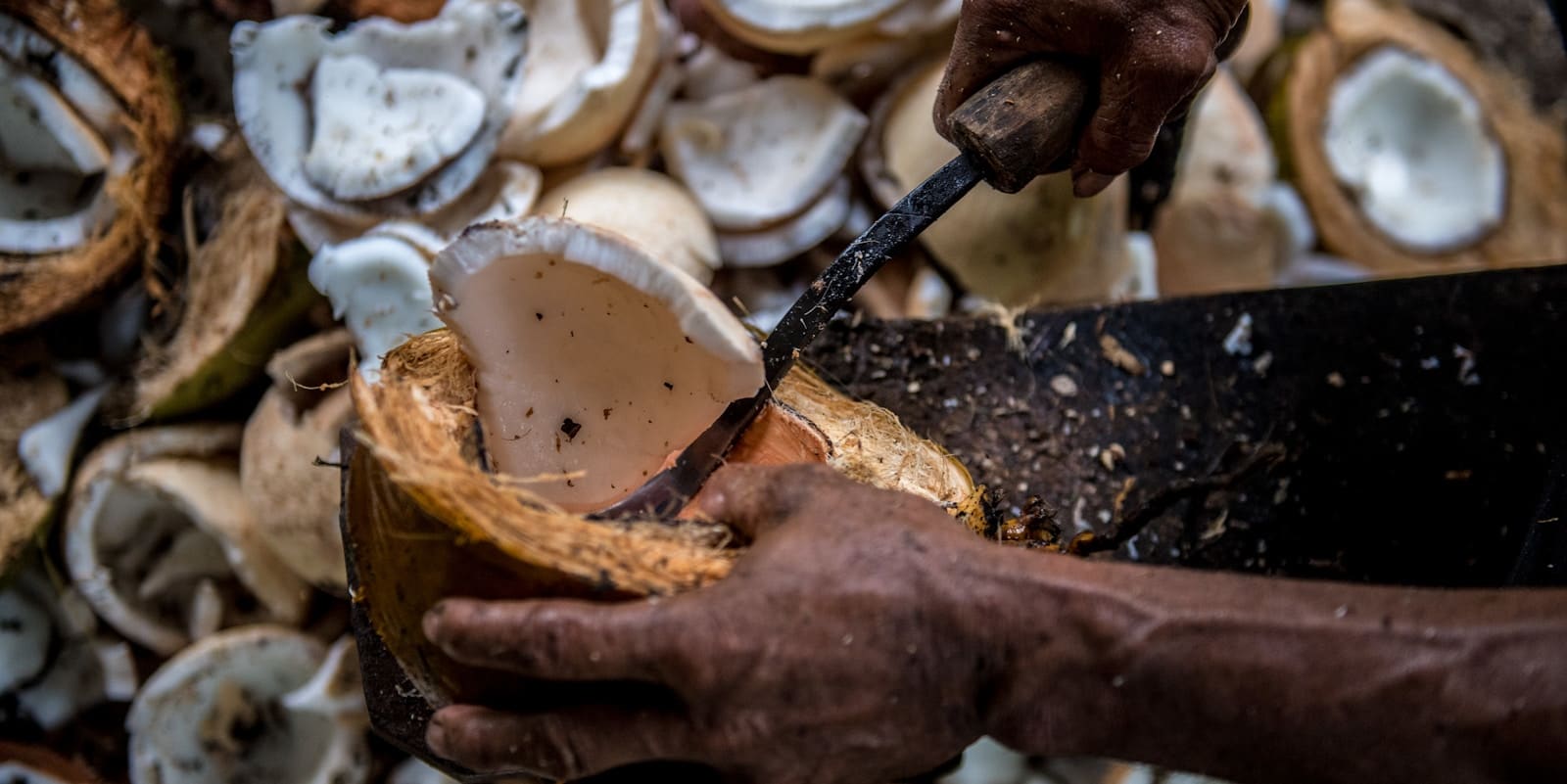
The farm now emphasizes processed goods rather than raw materials. Coconut shells become wood vinegar and tar; coconut fruit transforms into soap, vinegar, and sauce. Revenue arrives more slowly than from commodity sales, but processed products command higher margins and avoid exposure to volatile farmgate prices, transport costs, and fuel price swings.
A neighboring fishpond tenant previously encroached on the property to expand operations, leaving a cleared patch near the entrance where nipa palms once grew. Although the dispute was resolved, Glinoga's attempt to restore mangrove cover in that area has struggled to establish.
The farm's mature perennial plantings require minimal replanting. Glinoga said she initially lined the entrance with mangrove propagules carried by tidal currents simply because she admired a neighboring property surrounded by them, not from conservation intent. She now plans to deepen her knowledge of mangrove species as part of managing the wilderness zone.
The Regional Context
Across the Philippines, coastal development continues to eliminate wetlands that historically buffered communities and supported marine biodiversity. Glinoga's operation demonstrates an alternative approach: food production integrated with coastal ecosystems rather than replacing them.
The farm's design works with natural water movement rather than against it. Embankments were raised to accommodate tidal flooding while preserving mangrove stands. The result is a mosaic landscape reflecting the ecological patterns found across many Philippine coastal communities, one that produces income while maintaining the biological functions that underpin long-term resilience.
Staff members recognize the protective role mangroves play. As Cadiz noted, flooding would worsen significantly without the trees. That shared understanding shapes both daily operations and long-term planning, anchoring the farm's approach in the realities of coastal hydrology and climate risk.
RELATED STORIES
Seventeen Firms Compete for Manila's $200 Million Geothermal Risk Fund
Priyanka V. Rao · 3 min

Manila's Hyperscaler Bet Draws Fire Over Job Creation and Grid Strain
Priyanka V. Rao · 5 min

Philippines Energy Budget Climbs 26% as Electric Vehicle Funding Surges
Priyanka V. Rao · 3 min

Philippine National Bank Finances $109 Million Solar-Storage Plant in Iloilo
Priyanka V. Rao · 4 min
Spot something wrong? Email editor@briefasia.com. We log every correction publicly.