Finance · Deals
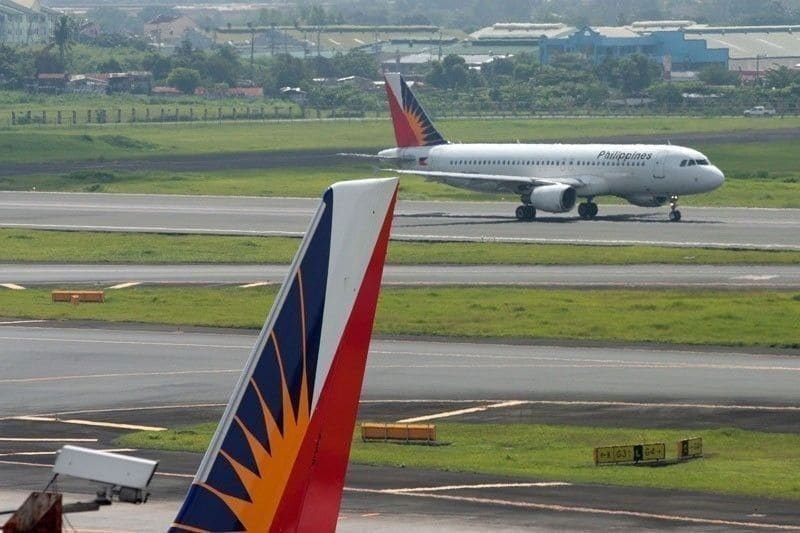
Philippine Airlines Reports $25 Million Loss as Fuel Costs Surge 48 Percent
The flag carrier's first-half profitability evaporated amid Middle East turmoil that drove jet fuel above $200 per barrel, forcing route cuts and schedule adjustments across Asia-Pacific operations.
KEY TAKEAWAYS
- ·Philippine Airlines posted a $25.1 million net loss in the first half, reversing a $136.7 million profit a year earlier, as fuel costs surged 48 percent to $674.5 million.
- ·Fuel now accounts for 39 percent of PAL's operating expenses, up from 30 percent, forcing the carrier to cut Middle East and domestic frequencies while prioritizing transpacific routes.
- ·The airline will launch direct Manila-Chicago service in November, adding a fifth U.S. gateway to strengthen its competitive position as regional carriers navigate elevated fuel prices.
Revenue Growth Fails to Offset Fuel Shock
Philippine Airlines recorded a $25.1 million net loss for the six months ending June, a sharp reversal from the $136.7 million profit PAL Holdings Inc. posted during the same period last year. The swing into red ink came despite a six percent uptick in consolidated revenue to $1.75 billion, underscoring how deeply fuel volatility can cut into airline margins across Southeast Asia.
The carrier's fuel bill climbed 48 percent to $674.5 million, driven by geopolitical tensions in the Middle East that sent jet fuel prices above $200 per barrel in April. That spike forced airlines from Manila to Jakarta to reassess route economics and trim capacity on thinner routes. For PAL, fuel now represents 39 percent of total operating expenses, up from 30 percent a year earlier, a shift that compresses the room for error in pricing and load management.
Network Reshuffling and Passenger Dynamics
Facing the cost squeeze, PAL adjusted flight frequencies on domestic sectors and Middle East routes, redirecting capacity toward transpacific services where yield and demand have held firmer. The airline carried 8.2 million passengers in the half, down three percent year on year, with load factor easing to 78.9 percent as travelers pulled back on discretionary trips amid broader inflationary pressure.
Even so, passenger revenue edged up five percent to $1.47 billion, a function of fare increases calibrated to recover some of the fuel surcharge burden. Cargo operations provided a brighter spot, with revenue jumping 30 percent to $98.2 million as e-commerce flows and supply-chain restocking sustained demand for belly-hold and dedicated freight capacity across Asia-Pacific lanes.
The interplay between lower traffic and higher yields reflects a familiar balancing act for carriers in the region. PAL's ability to lift fares without triggering a sharper demand collapse speaks to residual pent-up travel appetite, but also to the limited competition on certain routes where the flag carrier retains pricing power.
Middle East Exposure and Liquidity Discipline
PAL president Richard Nuttall acknowledged the fragility of the situation, noting that any escalation in the Middle East could prolong elevated fuel prices. The airline has responded by protecting liquidity, deferring non-critical capital outlays, and leaning into partnerships that spread network risk. Fleet investment continues, but at a measured pace calibrated to cash generation rather than growth for its own sake.
The Middle East dimension matters not only for fuel markets but also for route economics. PAL and regional peers including Cebu Pacific and Indonesia's Lion Air group have all built meaningful traffic flows to Gulf hubs over the past decade, connecting Filipino and Indonesian workers to employment markets in Dubai, Doha, and Riyadh. When fuel spikes coincide with softer demand on those corridors, the double hit to margins can be severe.
Airlines across Asia have limited hedging in place compared to North American and European carriers, leaving them more exposed to spot-price swings. PAL's unhedged position means the second-half outlook hinges heavily on whether Brent crude and jet fuel track lower or remain elevated through year-end.
Transpacific Bet and Chicago Launch
PAL is doubling down on its transpacific franchise, announcing plans to launch direct Manila-Chicago service in November. The new route will add a fifth U.S. gateway alongside Los Angeles, San Francisco, New York, and Honolulu, sharpening the carrier's competitive position against new entrants eyeing the Filipino diaspora market.
Transpacific yields have historically been stronger and more stable than intra-Asia or Middle East routes, thanks to a mix of visiting-friends-and-relatives traffic, business travel, and cargo. The Chicago launch signals confidence that demand will absorb the added capacity, even as the carrier trims elsewhere. It also positions PAL to capture connecting traffic from secondary Philippine cities through Manila's hub, a strategy that mirrors the hub-and-spoke playbooks of Singapore Airlines and Cathay Pacific.
The timing of the Chicago rollout, however, will test whether PAL can thread the needle between fleet utilization, crew availability, and fuel-cost recovery. November sits at the start of the peak holiday travel season, when load factors typically climb, but it also arrives just as the carrier digests six months of losses and prepares for potential volatility heading into 2027.
Regional Context and Competitive Pressure
PAL's first-half stumble mirrors challenges facing other Southeast Asian full-service carriers. Thai Airways, Garuda Indonesia, and Malaysia Airlines have all grappled with fuel-cost inflation, currency headwinds, and the need to balance capacity expansion against profitability. The post-pandemic rebound that buoyed results in 2024 and early 2025 has given way to a more sober environment where cost discipline and route selection determine winners.
Low-cost carriers in the region, including AirAsia and Cebu Pacific, have also felt the fuel pinch but often enjoy lower break-even load factors and simpler fleet economics. PAL's full-service model carries higher overhead, making the airline more vulnerable when fuel and labor costs rise in tandem.
The Philippines itself remains one of Asia's fastest-growing aviation markets, with a young population, rising middle class, and sprawling archipelago geography that favors air travel. Yet infrastructure bottlenecks at Manila's Ninoy Aquino International Airport and regulatory uncertainty around slot allocation continue to constrain growth and add operational friction.
What Comes Next
PAL has maintained that its underlying business remains resilient, pointing to the speed with which it implemented fare and network adjustments. Liquidity remains adequate, and the carrier has not signaled any need to tap capital markets or seek emergency financing. Fleet modernization continues, with newer Airbus A350 and A321neo aircraft gradually replacing older widebodies, a move that should yield fuel savings over time.
Still, the second half will be pivotal. If jet fuel prices moderate and demand holds through the year-end holiday season, PAL could narrow the full-year loss or even return to modest profitability. If geopolitical tensions escalate or a broader economic slowdown dampens travel appetite, the carrier may face a longer path back to the black.
For now, PAL is betting that its transpacific strength, cargo momentum, and network agility will carry it through the turbulence. Whether that bet pays off depends on variables largely beyond the airline's control, a reality that defines the precarious economics of aviation in Asia today.
RELATED STORIES

Philippines Senator Calls for Simpler Access to Financial Services Beyond Fee Cuts
Mariel D. Santos · 3 min

Philippines' SSS Looks Abroad as Investment Portfolio Reaches P1.27 Trillion
Priyanka V. Rao · 3 min

Ayala Corp Earnings Fall 7% as Real Estate Slowdown Offsets Gains Elsewhere
Priyanka V. Rao · 3 min
AirAsia Group Posts RM527 Million Second-Quarter Loss on Soaring Fuel Costs
Priyanka V. Rao · 3 min
Spot something wrong? Email editor@briefasia.com. We log every correction publicly.