Sustainability · ESG
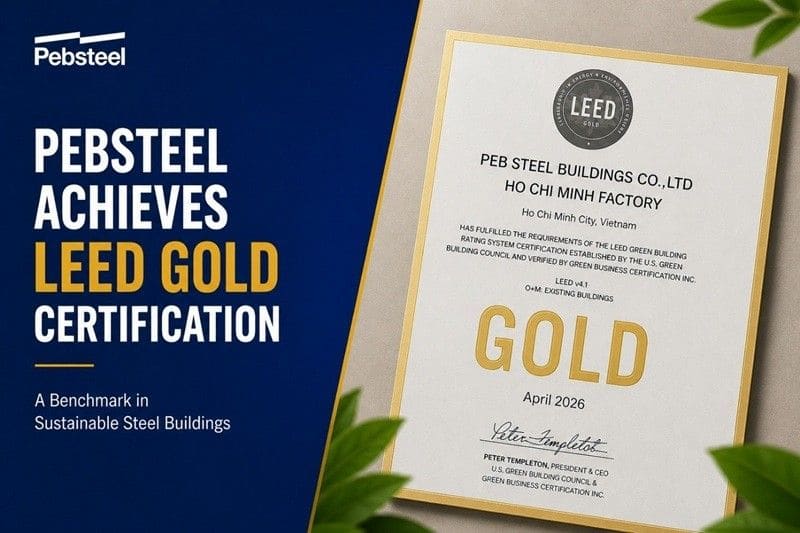
Pebsteel's Ho Chi Minh City Plant Earns LEED Gold in Net Zero Push
The Vietnamese factory's certification marks a strategic positioning for the steel builder as construction faces mounting pressure to cut carbon emissions across Southeast Asia.
KEY TAKEAWAYS
- ·Pebsteel's factory in Ho Chi Minh City received LEED Gold certification from the US Green Building Council, validating energy, water, and emissions improvements.
- ·The certification positions Pebsteel as a verified supply chain partner for developers pursuing green building credentials in Southeast Asia's tightening regulatory environment.
- ·Pebsteel implemented energy-efficient systems, water-saving technologies, and digitalized carbon monitoring to meet LEED Gold standards at the Dong Xuyen Industrial Park facility.
Manufacturing Meets Green Standards
Pebsteel's manufacturing facility at Dong Xuyen Industrial Park in Ho Chi Minh City has received LEED Gold certification from the US Green Building Council, according to the company. The recognition places the steel building manufacturer among a growing cohort of industrial operators in Southeast Asia working to align production processes with environmental benchmarks.
The certification arrives as regional construction sectors grapple with tighter emissions mandates and client demand for verifiable sustainability credentials. For Pebsteel, the designation supports its stated Net Zero trajectory and offers a competitive edge in markets where green building standards increasingly shape procurement decisions.
Operational Overhaul
Achieving LEED Gold required Pebsteel to redesign core systems across the facility. The company installed energy-efficient lighting, optimized natural ventilation paths, and integrated water-saving technologies throughout the plant. Construction materials were sourced to prioritize recycled and low-impact inputs, while digitalized management systems now monitor and minimize carbon output in real time.
These changes extend beyond compliance. By embedding environmental, social, and governance principles into manufacturing workflows, Pebsteel aims to demonstrate that heavy industrial operations can meet rigorous sustainability criteria without sacrificing throughput or structural performance.
Market Implications
The certification carries tangible value for Pebsteel's client base. Developers and contractors pursuing their own green building targets can now point to a certified supply chain partner, simplifying documentation for LEED, BREEAM, or equivalent project certifications. In markets such as the Philippines, Singapore, and Vietnam, where government incentives and financing increasingly favor low-carbon construction, a certified steel supplier reduces project risk.
Pebsteel frames the milestone as a collaborative achievement involving design, construction, and operations teams. The company states that the certification lays groundwork for further investment in emissions-reduction technologies and positions the facility as a model for future expansions.
Regional Context
Southeast Asia's construction industry accounts for a significant share of regional carbon emissions, driven by rapid urbanization and infrastructure buildout. Governments across ASEAN have introduced carbon pricing mechanisms, green bond frameworks, and mandatory environmental impact assessments. In Vietnam, the Ministry of Construction has signaled plans to tighten energy efficiency standards for industrial and commercial buildings by 2027.
Against this backdrop, manufacturers with certified facilities gain a measurable advantage. LEED certification, administered by the US Green Building Council, is recognized by investors and multilateral lenders as a credible indicator of operational sustainability. For Pebsteel, the designation supports access to green financing and positions the company to bid on projects with stringent environmental clauses.
Steel and Sustainability
Prefabricated steel construction offers inherent sustainability benefits relative to traditional concrete methods, including reduced on-site waste, shorter build times, and recyclability at end of life. However, the carbon intensity of steel production remains a sector challenge. Pebsteel's digitalized management systems and energy optimization measures address upstream emissions, a priority as clients scrutinize Scope 3 impacts across supply chains.
The company has not disclosed specific emissions reductions or energy savings resulting from the upgrades, but the LEED Gold standard requires documented performance improvements in energy use, water efficiency, and indoor environmental quality.
Next Steps
Pebsteel indicates that the certification will inform design standards for future facilities and guide technology adoption across its regional network. The company is exploring additional certifications and partnerships to advance its sustainability agenda, though specific targets and timelines have not been announced.
As environmental regulations tighten and corporate climate commitments mature, industrial operators across Asia face pressure to move beyond voluntary disclosures toward third-party verification. Pebsteel's LEED Gold certification offers a template for manufacturers seeking to align production with global green building benchmarks while maintaining competitiveness in cost-sensitive markets.
RELATED STORIES
Hà Tĩnh Greenlights $315 Million Wind Portfolio as Vietnam Races to Energy Transition
Tran Quoc Bao · 2 min
AEON Vietnam Breaks Ground on New Shopping Centre in Phủ Lý
Tran Quoc Bao · 3 min

Vietnam Pours Capital Into Laos as Vientiane Seeks Relief From Beijing Debt
Priyanka V. Rao · 4 min

Thailand Faces Two Decades in Middle-Income Trap Without Workforce Upgrade
Priyanka V. Rao · 3 min
Spot something wrong? Email editor@briefasia.com. We log every correction publicly.