Finance · Deals
Parkway Life REIT's H1 DPU Climbs 15% Despite Revenue Slip
Singapore hospital operator's distribution rises to S$0.0877 per unit as step-up leases in Singapore and France offset yen weakness and Japan tenant exits
KEY TAKEAWAYS
- ·Parkway Life REIT's distribution per unit rose 14.6 percent to S$0.0877 for the first half ended June 30, 2026, while revenue fell 1.6 percent to S$77.1 million.
- ·Step-up lease arrangements in Singapore hospitals and France imaging centers, plus the absence of a prior-year France tax provision, drove distributable income up 14.6 percent to S$57.2 million.
- ·Japanese yen depreciation and tenant exits from five nursing home properties weighed on revenue, highlighting currency and occupancy risk in the trust's Japan portfolio.
Distribution Outpaces Revenue
Parkway Life Real Estate Investment Trust delivered a distribution per unit of S$0.0877 for the six months ended June 30, 2026, marking a 14.6 percent increase from S$0.0765 in the same period a year earlier. The gain came despite a 1.6 percent decline in revenue to S$77.1 million, down from S$78.3 million in the prior corresponding half.
The trust's manager attributed the revenue contraction to two headwinds: depreciation of the Japanese yen against the Singapore dollar, and lower rental income from five Japan nursing home properties that saw tenant departures. Net property income followed the same trajectory, falling 2 percent year on year to S$72.4 million from S$73.8 million.
Yet distributable income told a different story, climbing 14.6 percent to S$57.2 million from S$49.9 million. That divergence between top-line pressure and bottom-line growth reflects the mechanics of the REIT's lease structures across its three-country portfolio.
Singapore and France Portfolios Drive Growth
The trust's Singapore hospital assets contributed higher rental through an Annual Rent Review formula, while its France portfolio benefited from step-up lease arrangements that automatically escalate rent over time. Both mechanisms provided a cushion against the revenue softness from Japan.
An additional tailwind came from the absence of a France tax provision that had weighed on the year-ago period. That non-recurring adjustment boosted the comparative performance of distributable income in the latest half.
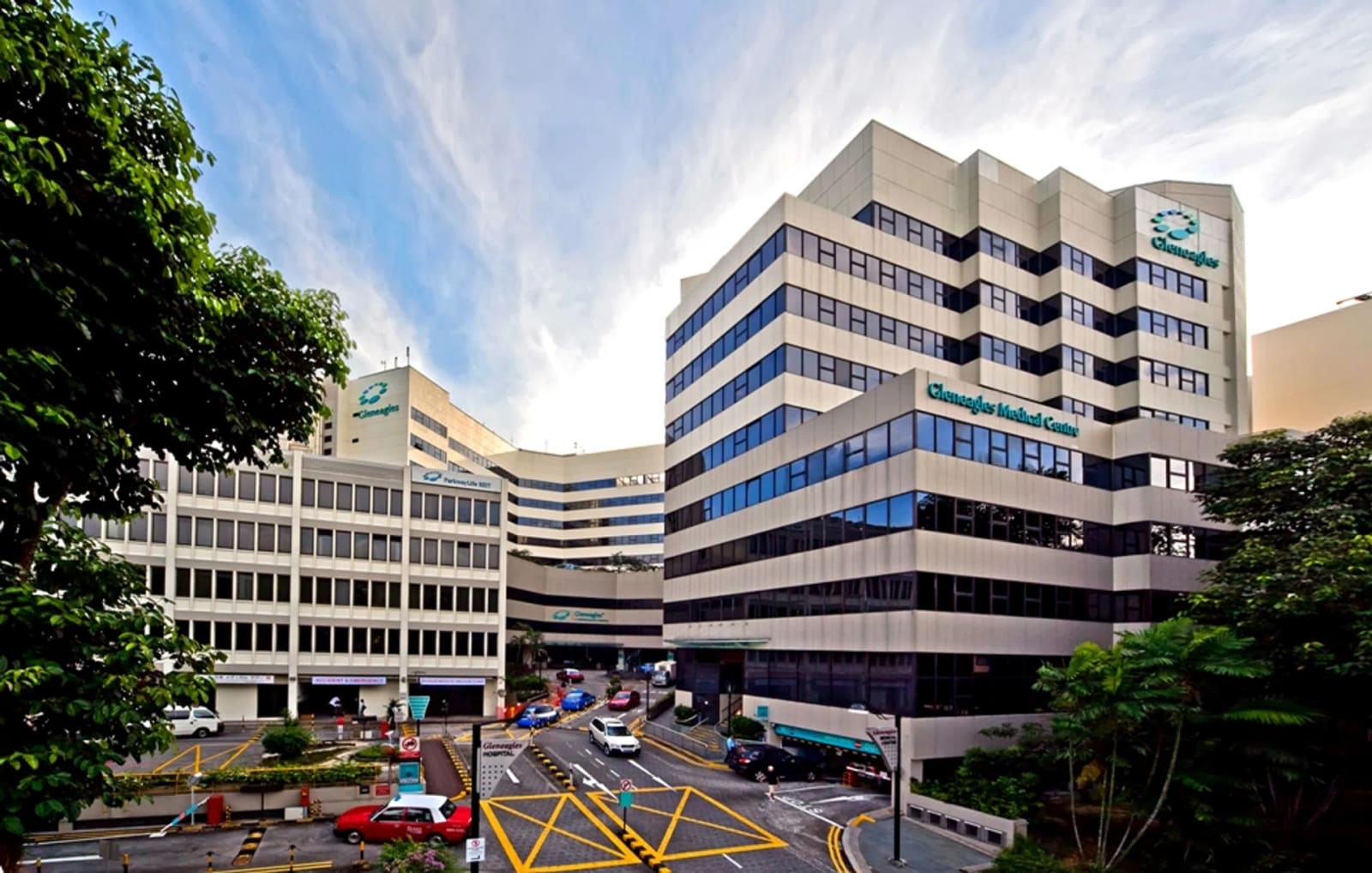
Parkway Life REIT's portfolio spans three geographies: Singapore hospitals anchored by Gleneagles Hospital, a network of nursing homes in Japan, and diagnostic imaging centers in France. The Singapore hospitals account for the bulk of net property income, insulating the trust from currency and occupancy volatility in its Japan book.
Japan Tenant Exits and Currency Pressure
The five Japan nursing home properties that lost tenants represent a localized operational challenge rather than a systemic shift. Japan's aging demographics continue to underpin long-term demand for elderly care facilities, but individual site performance can vary with operator turnover and local competition.
Currency translation compounded the Japan drag. The yen weakened materially against the Singapore dollar over the past year, eroding the Singapore-dollar value of yen-denominated rent even where local-currency income held steady. Parkway Life REIT does not fully hedge its Japan exposure, leaving it vulnerable to exchange-rate swings.
Valuation and Outlook
Units of Parkway Life REIT closed at S$4.22 on August 3, unchanged from the prior session. At that price and the half-year DPU run rate, the trust trades at an implied annualized yield near 4.2 percent, assuming the second-half distribution mirrors the first.
The distribution will be paid on September 8. Investors will watch whether the Singapore hospital rental escalators and France step-ups can continue to offset Japan headwinds in the second half, and whether any further tenant departures emerge in the nursing home portfolio.
Parkway Life REIT's ability to grow distributions while revenue contracts hinges on the durability of its master lease arrangements and the pace of any recovery in Japan occupancy. The trust's Singapore concentration remains its anchor, but Japan currency and tenant risk will remain a drag until the yen stabilizes or the manager secures replacement tenants for the vacant properties.
RELATED STORIES
Singapore REITs Raise S$4.5 Billion in Nine Months as Fundraising Momentum Extends Into 2026
Priyanka V. Rao · 3 min

Blackstone's AirTrunk Lines Up S$2 Billion Loan for Singapore REIT IPO
Anand Sundaram · 3 min

Blackstone's AirTrunk Pursues $1.6 Billion Loan Ahead of Singapore REIT Listing
Jun-ho Seo · 3 min

Indonesian Digital Banks Outpace Regional Peers on Deposits and Loan Growth
Priyanka V. Rao · 3 min
Spot something wrong? Email editor@briefasia.com. We log every correction publicly.