Finance · Markets
Oil Climbs as Iran Threatens Ship Blockade in Strait of Hormuz
Energy markets react to reports of potential restrictions on US and Israeli vessels through critical waterway
KEY TAKEAWAYS
- ·Iran reportedly plans to restrict US and Israeli vessels from transiting the Strait of Hormuz, which carries one-fifth of global oil supply.
- ·Oil prices extended gains while Asian equity markets declined as earlier optimism over a diplomatic resolution faded.
- ·Energy-dependent economies across Asia face potential supply chain disruptions and higher costs if restrictions materialize.
Energy Markets on Edge
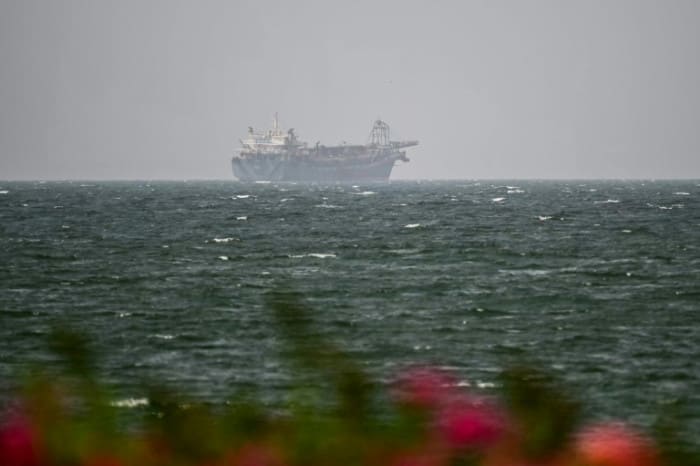
Oil prices pushed higher Friday while equity markets across Asia retreated, driven by renewed uncertainty over shipping access through the Strait of Hormuz. The energy rally came as reports surfaced that Iran intends to impose restrictions on vessels flagged by the United States and Israel transiting the vital waterway.
The development marks a sharp reversal from earlier optimism that diplomatic efforts involving Oman might yield a comprehensive agreement ensuring unfettered passage through the strait, which handles roughly one-fifth of global oil supply. Markets had initially priced in expectations of de-escalation, but those assumptions now appear premature.
The Strait Factor
The Strait of Hormuz sits at the nexus of global energy security. The narrow passage between Iran and the Arabian Peninsula serves as the primary export route for crude from Saudi Arabia, the UAE, Kuwait, Iraq, and Qatar. Any disruption to shipping lanes immediately translates into supply concerns for refineries across Asia and Europe.
Iran's reported plan to selectively block ships represents a calibrated escalation rather than a total closure, yet the impact on risk premiums remains significant. Energy traders are recalculating the probability of supply interruptions, particularly for cargoes bound for markets that rely on Middle Eastern crude.
The proposed restrictions would operate within the framework of a broader arrangement with Oman, though details of that agreement remain unclear. Oman has historically served as an intermediary between Tehran and Western capitals, leveraging its neutral diplomatic stance in the Gulf.
Market Response
Asian stock indexes reflected investor caution, with declines registered across major bourses. Hong Kong equities fell as risk appetite weakened, while energy-heavy indexes showed mixed performance as oil producers benefited from rising crude prices even as broader sentiment soured.
The energy sector's divergence from general market trends underscores the immediate calculus facing portfolio managers: balancing exposure to potential supply shocks against broader economic headwinds. Refiners and shipping companies face particular uncertainty, as route adjustments and insurance costs rise in tandem with geopolitical risk.
Oil benchmarks extended gains from earlier in the week, building on momentum that began when initial reports of potential transit restrictions emerged. The price action suggests traders are positioning for a sustained period of elevated risk rather than a temporary spike.
Regional Implications
For Asia's energy-dependent economies, the Hormuz situation carries direct economic consequences. Japan, South Korea, China, and India collectively import millions of barrels daily through the strait. Alternative routes exist, including pipelines and longer tanker voyages around Africa, but these come with significant time and cost penalties.
Singapore's role as a regional refining and trading hub puts the city-state at the center of any rerouting calculus. Traders based there are already modeling scenarios for supply chain adjustments should restrictions materialize or widen beyond the reported scope.
The situation also tests the resilience of energy security strategies across the region. Countries that have invested in strategic petroleum reserves and diversified supplier relationships find themselves better positioned to weather short-term disruptions, while those with concentrated import dependencies face greater vulnerability.
What Comes Next
The immediate focus turns to diplomatic channels and whether Oman's mediation efforts can produce a framework that satisfies security concerns while preserving commercial shipping norms. The gap between reported restrictions and a workable compromise remains substantial.
Energy analysts will be watching inventory levels, tanker tracking data, and forward curve movements for signals of actual supply tightness versus speculative positioning. The distinction matters for both price forecasting and policy responses.
For now, markets are pricing in uncertainty rather than certainty of disruption. That premium may prove justified if restrictions take effect, or it may dissipate if diplomatic progress materializes. Either way, the Strait of Hormuz has reasserted itself as a critical variable in global energy markets.
RELATED STORIES

Asian Tech Stocks Surge as Weak US Jobs Data Dims Rate Hike Outlook
Cheng Wei-Lun · 4 min
Hong Kong's Wealth Hub Status Faces Test as Beijing Tightens Tax Enforcement
Cheng Wei-Lun · 3 min

Hong Kong Regulator Steps Up Scrutiny of Concentrated Shareholdings
Cheng Wei-Lun · 3 min

Hong Kong and China Regulators Announce Market Integration Reforms
Cheng Wei-Lun · 3 min
Spot something wrong? Email editor@briefasia.com. We log every correction publicly.