Asia · Business
Nike Pulls Products From Third-Party Online Retailers in China
Sportswear giant redirects e-commerce to branded channels as domestic competitors continue to erode market share
KEY TAKEAWAYS
- ·Nike will end online sales through most Chinese wholesale partners in January, redirecting distribution to branded storefronts on Tmall, JD.com, Douyin, and its own digital properties.
- ·Greater China sales fell 17% in the fourth quarter on a constant-currency basis, accelerating from a 10% decline the previous quarter as domestic rivals Anta and Li Ning gain share.
- ·The company appointed a vice president of local product creation for Greater China and aims to rebuild consumer trust through tighter control of pricing and brand experience.
Tightening the Digital Reins
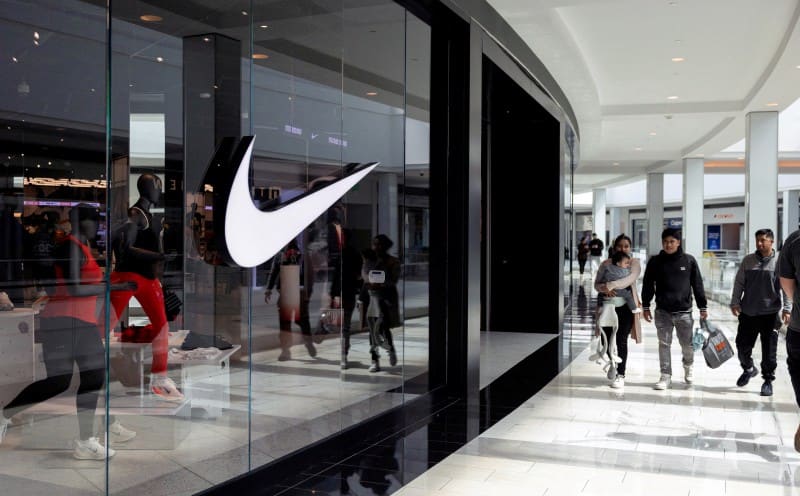
Nike will cut off online sales through most of its Chinese wholesale partners starting in January, channeling all digital distribution through company-controlled storefronts in a bid to reverse sustained revenue declines in the world's second-largest economy.
The shift affects the majority of Nike's 16 store partners in China, which collectively operate thousands of physical locations. These retailers will continue selling Nike products in-store but lose the ability to offer the brand's footwear and apparel through their own e-commerce operations, according to Cathy Sparks, Nike's vice president and general manager of Greater China.
Instead, Chinese consumers will find Nike products online exclusively through branded digital storefronts on Tmall, JD.com and Douyin, plus Nike's proprietary website and mobile application. The company frames the consolidation as a response to what Sparks described as a fragmented and cluttered marketplace that has diluted brand perception and pricing power.
Revenue Pressures Mount
The strategic pivot comes as Nike's performance in Greater China continues to deteriorate. Fourth-quarter sales in the region dropped 17% on a constant-currency basis, according to the company's most recent earnings report. That decline accelerated from a 10% drop in the preceding quarter, underscoring the urgency of CEO Elliott Hill's broader turnaround efforts.
China represents Nike's third-largest market globally, making the sustained weakness a material headwind for the Oregon-based sportswear leader. Domestic competitors Anta and Li Ning have captured share by leaning into local tastes and nationalist sentiment, while international upstarts such as On and Hoka have carved out premium niches among Chinese consumers seeking alternatives to established brands.
Sparks, a 25-year Nike veteran who assumed responsibility for Chinese operations earlier this year, positioned the e-commerce consolidation as part of a larger strategy to rebuild consumer trust and protect full-price selling. The company believes that limiting distribution points will create a more premium, cohesive brand experience that bridges digital and physical retail.
Skepticism From the Street
Not everyone views the distribution pullback as sound strategy. Laurent Vasilescu, a senior analyst at BNP Paribas, called the move a potential misstep in a research note published after local media reported the impending change in June. Vasilescu argued that Nike's challenges in China stem from product relevance rather than channel proliferation, and that ceding online shelf space to wholesale partners hands competitors an opening.
Nike has acknowledged the product dimension of its China struggles. The company recently appointed a vice president of local product creation for Greater China, according to Sparks, signaling an intent to develop offerings tailored specifically to Chinese consumer preferences rather than relying on global assortments.
Hill, who returned to lead Nike after a previous tenure at the company, has spent nearly two years refocusing the brand on sports performance, repairing wholesale relationships in North America, and accelerating product launches. The China e-commerce shift extends that playbook to Asia, where the balance between control and reach carries different risks than in more mature Western markets.
The Asia Retail Calculus
The decision to restrict third-party online sales reflects a tension common across consumer brands operating in China: the trade-off between ubiquity and brand equity. E-commerce platforms in the country are intensely competitive, with frequent discounting and promotional warfare that can erode perceived value. By concentrating digital sales in branded environments, Nike aims to maintain pricing discipline and curate the customer journey from discovery to checkout.
However, the strategy also narrows Nike's digital footprint at a time when Chinese consumers increasingly discover and purchase products through a fragmented ecosystem of social commerce, live-streaming, and platform-specific deals. Wholesale partners often have deep relationships with local consumers and sophisticated logistics networks that a foreign brand cannot easily replicate.
Whether the consolidation succeeds will hinge on Nike's ability to deliver compelling product and marketing that draws traffic to its owned channels, rather than relying on the distribution muscle of established retail partners. In a market where Anta, Li Ning, and other domestic players continue to gain momentum, the margin for error remains thin.
RELATED STORIES

Shein Stumbles in Hong Kong Debut After Years of IPO Delays
Cheng Wei-Lun · 3 min

Shein Drops 4% in Hong Kong Debut as Tariff Pressure Weighs on Valuation
Priyanka V. Rao · 4 min
China's Manufacturing Index Holds Below Expansion Threshold for Second Month
Cheng Wei-Lun · 5 min
Honda Demands 30% Price Cuts From Suppliers in $9.4 Billion Cost Plan
Cheng Wei-Lun · 3 min
Spot something wrong? Email editor@briefasia.com. We log every correction publicly.