Asia · Politics
Myanmar Junta Launches Offensive to Secure Land for Russian Port Project
Military operations in Rakhine State target strategic coastal territory needed for Moscow-backed deep-water facility worth billions
KEY TAKEAWAYS
- ·Myanmar's military has launched operations in Rakhine State to secure coastal land needed for a Russian-backed deep-water port facility.
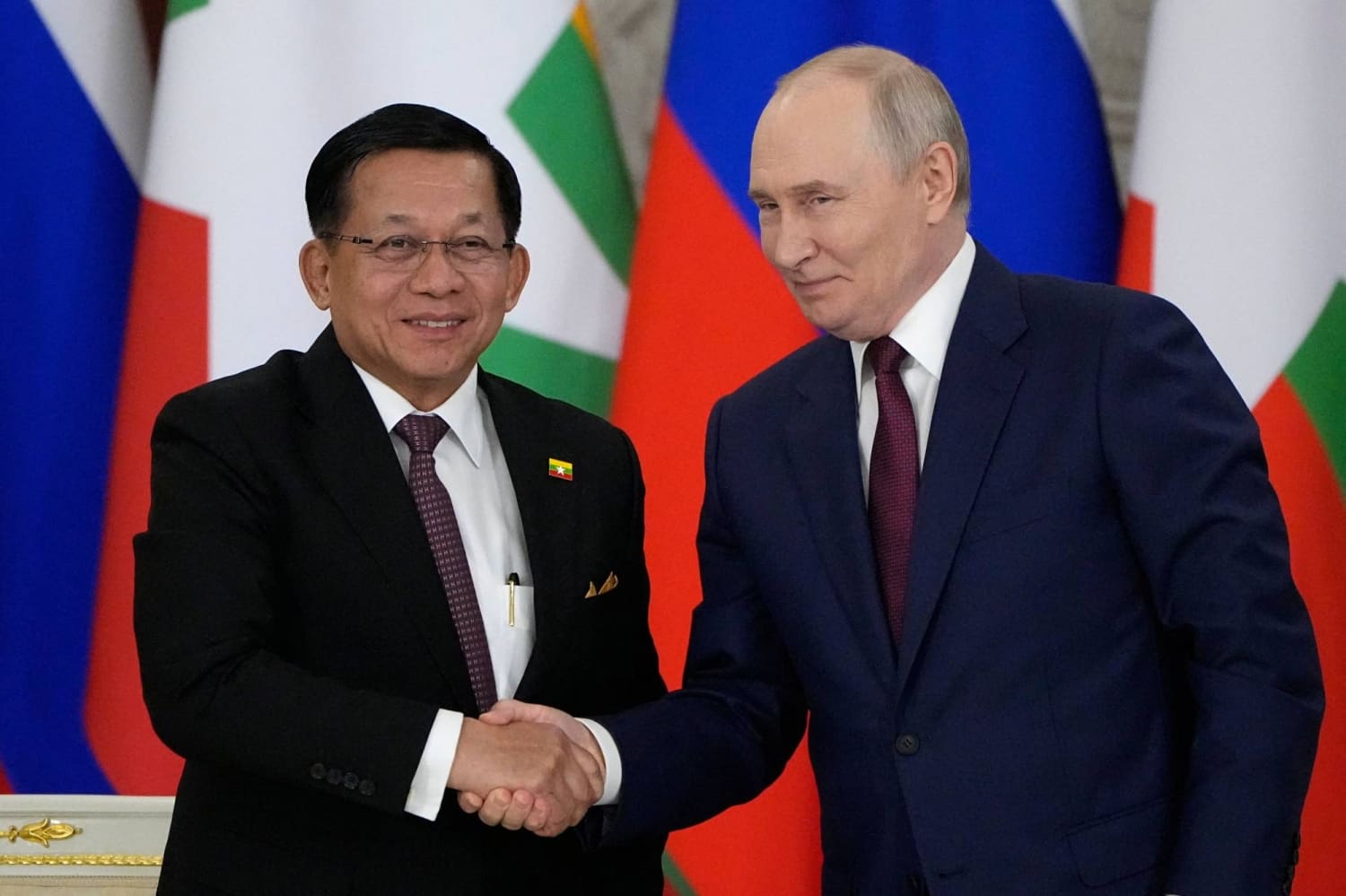
- ·Senior General Min Aung Hlaing met Putin in Moscow earlier this month to discuss the port project and economic cooperation.
- ·The development would give Russia strategic presence in the Bay of Bengal, complicating regional dynamics involving China and India.
Military Campaign Tied to Infrastructure Ambitions
Myanmar's military government has intensified combat operations in Rakhine State, with the offensive directly tied to clearing territory needed for a Russian-backed deep-water port project. The campaign marks a convergence of military strategy and infrastructure development as the junta seeks to solidify its relationship with Moscow while opening new trade corridors along the Bay of Bengal.
The military push focuses on coastal areas where Russia has expressed interest in developing port facilities that would give Moscow a strategic foothold in Southeast Asia's maritime landscape. Senior General Min Aung Hlaing met with Russian President Vladimir Putin at the Grand Kremlin Palace earlier this month, where discussions centered on economic cooperation and infrastructure projects.
The proposed port development represents one of the most significant foreign infrastructure investments in Myanmar since the 2021 military coup. Russia has positioned itself as a key supporter of the junta, providing diplomatic backing at international forums and supplying military equipment as Western sanctions have isolated the regime.
Clearing the Ground
Ground operations in Rakhine State have displaced thousands of residents as the military works to establish control over territory earmarked for the port complex. The offensive has targeted areas held by ethnic armed groups and resistance forces that have contested junta authority since the coup.
The timing of the military campaign aligns with Moscow's push to expand its presence in the Indo-Pacific region. Russia has sought warm-water ports and logistics hubs across Asia as part of its broader strategy to diversify trade routes and reduce dependence on European markets following Western sanctions over Ukraine.
For Myanmar's junta, the Russian partnership offers both economic opportunity and political legitimacy. The port project would bring construction investment and create leverage in negotiations with other regional powers, particularly China, which already operates the Kyaukpyu port in northern Rakhine State.
Regional Implications
The Russian port development adds another layer to the complex geopolitical landscape of the Bay of Bengal, where China, India, and now Russia are competing for influence. Myanmar's coastline has become increasingly strategic as major powers seek to secure maritime supply chains and project naval presence across the Indian Ocean.
India has watched Russian moves in Myanmar with concern, given New Delhi's own interests in maintaining influence along its eastern maritime flank. The prospect of a Russian naval presence in the Bay of Bengal could alter regional security calculations and complicate India's Act East policy.
China's reaction to the Russian project will also shape the initiative's trajectory. Beijing has invested heavily in Myanmar's infrastructure and views the country as a critical link in its Belt and Road Initiative. A Russian port facility could either complement Chinese investments or create friction if Moscow's ambitions overlap with Beijing's strategic interests.
Economic and Strategic Value
The proposed port would handle both commercial cargo and potentially serve military logistics functions, according to analysts tracking the project. Russia has emphasized the commercial aspects of the development, positioning it as part of broader trade connectivity between Asia and Europe via alternative routes.
Myanmar's military government has struggled to attract foreign investment since the coup, with most Western companies exiting and regional investors adopting cautious approaches. The Russian port project represents a rare vote of confidence in the junta's long-term stability, even as armed resistance continues across much of the country.
The military's willingness to launch major operations to secure land for the port underscores how central the Russian partnership has become to the junta's economic planning. With conventional foreign investment largely frozen, infrastructure deals with Moscow and Beijing represent the primary channels for development financing.
What Comes Next
The success of the port project will depend on the military's ability to maintain control over Rakhine State and Russia's capacity to finance and execute the development amid its own economic pressures. Construction timelines remain unclear, and the project faces potential obstacles from armed resistance groups operating in the region.
International observers are monitoring whether the port development will include military components that could give Russia a naval presence in Southeast Asia. Such a move would represent a significant shift in regional security dynamics and likely prompt responses from India, the United States, and other powers with interests in the Indo-Pacific.
The Myanmar military's offensive in Rakhine State demonstrates how infrastructure projects have become intertwined with battlefield objectives, as the junta prioritizes securing territory for developments that promise economic returns and geopolitical partnerships. Whether the Russian port moves from blueprint to reality will depend on factors extending far beyond Myanmar's borders.
RELATED STORIES
South Korea Tests Arctic Shipping Lane to Europe as Geopolitical Tensions Rise
Cheng Wei-Lun · 3 min
CK Hutchison Reports Strong Profit Growth Despite Panama Asset Dispute
Cheng Wei-Lun · 3 min
Myanmar's Military Regime Weaponizes Anti-Money Laundering Rules to Tighten Grip on Finance
Priyanka V. Rao · 5 min

Vietnam's Loc Troi Exports Rice Seed Technology to Myanmar
Siti Nuraini · 3 min
Spot something wrong? Email editor@briefasia.com. We log every correction publicly.