Technology · AI
Moonshot AI's Kimi K3 Triggers Fresh Cost War in Enterprise AI Race
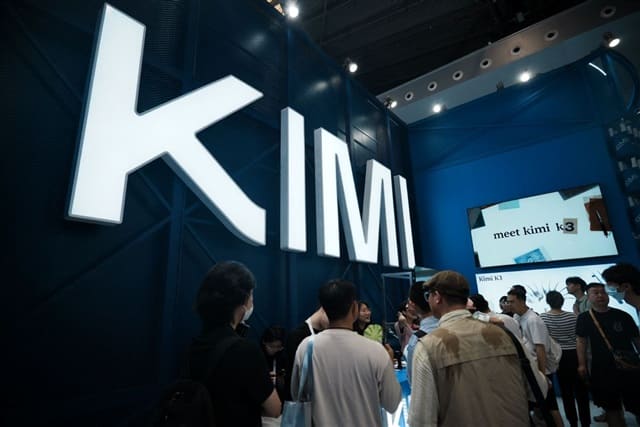
Chinese startup's latest model matches OpenAI and Anthropic on key benchmarks while undercutting rivals on price, forcing cloud giants to reassess inference economics
KEY TAKEAWAYS
- ·Moonshot AI launched Kimi K3 on July 17, delivering performance comparable to OpenAI and Anthropic models at substantially lower cost, prompting Microsoft to evaluate it for Copilot integration.
- ·The pricing pressure is reshaping semiconductor demand, with Samsung expanding Nvidia ties for inference-optimized NAND and supply constraints emerging on six-inch indium phosphide wafers for optical interconnects.
- ·China may tighten AI and chip export controls following Kimi K3's benchmark performance, while Intel deepens Taiwan supply chain engagement ahead of October talks on advanced packaging.
A New Benchmark in Price-Performance
Chinese AI startup Moonshot AI released its Kimi K3 model on July 17, achieving performance levels comparable to leading offerings from OpenAI and Anthropic across several critical tasks while charging substantially less. The launch has prompted enterprise buyers and hyperscalers to recalculate the economics of large-scale AI inference, particularly for applications where cost per query determines commercial viability.
Moonshot AI announced the model's availability without the fanfare typical of Silicon Valley launches, yet the technical specifications have already drawn scrutiny from procurement teams at cloud providers and enterprise software vendors. Early evaluations show Kimi K3 handling complex reasoning, code generation, and multi-turn dialogue at quality thresholds previously associated with models an order of magnitude more expensive to run at scale.
The pricing gap has immediate implications for companies deploying AI-powered features in consumer-facing products, where margin pressure makes inference cost a primary constraint. Microsoft is evaluating Kimi K3 for integration into Copilot services, according to industry sources, as part of a broader effort to reduce per-user compute expenses without degrading user experience.
Ripple Effects Across the Supply Chain
The arrival of a credible low-cost alternative is accelerating shifts in semiconductor demand and data center architecture. Inference workloads differ from training in their sensitivity to latency and throughput rather than raw floating-point performance, a distinction that favors different chip designs and memory hierarchies. Moonshot AI's ability to deliver competitive results on less expensive infrastructure suggests the company has optimized its model architecture for efficiency, a trend that could reshape procurement priorities for AI accelerators.
Samsung has expanded its collaboration with Nvidia in response to rising demand for NAND storage tailored to inference tasks, where rapid access to model weights and context windows drives storage performance requirements. Separately, Anthropic is exploring custom chip designs beyond Nvidia's standard offerings, a signal that even well-funded labs see value in hardware tailored to specific model characteristics.
Optical interconnect suppliers are fielding increased orders as data center operators prepare for denser AI clusters, but supply constraints on six-inch indium phosphide wafers have emerged as a bottleneck. The mismatch between silicon availability and deployment timelines is forcing some buyers to defer expansion plans or accept lower interconnect speeds in interim configurations.
Strategic Recalibration Among Incumbents
The competitive pressure from Kimi K3 extends beyond price. China has signaled it may tighten export controls on AI models and associated chip technologies following Kimi K3's strong showing in third-party benchmarks. Such measures would complicate cross-border deployment for multinational enterprises that rely on seamless model portability across regions.
Intel has deepened engagement with Taiwan's chip supply chain, with discussions scheduled for October focusing on advanced packaging and substrate technologies critical for next-generation AI processors. The move reflects a broader recognition that leadership in AI hardware requires not just cutting-edge lithography but also expertise in thermal management, power delivery, and chiplet integration, capabilities concentrated in East Asia.
MediaTek issued formal price increase notifications to customers, citing supply constraints on products used in AI edge devices. The hike affects components likely to see demand growth as enterprises push inference workloads closer to end users to reduce latency and data transfer costs, a architectural shift that Kimi K3's efficiency makes more economically feasible.
Implications for Enterprise Buyers
For corporate technology officers, Kimi K3 represents a test case for multi-vendor AI strategies. Relying on a single model provider exposes organizations to pricing power and API changes, but integrating multiple models introduces complexity in prompt engineering, output validation, and compliance workflows. The cost advantage of Kimi K3 is compelling enough that some enterprises are willing to accept that complexity, particularly for high-volume, latency-tolerant tasks such as content moderation, document summarization, and customer service routing.
Anthropic recently secured approval for a 1.5 billion dollar copyright settlement with authors, clearing a legal obstacle that had clouded enterprise adoption of generative AI in publishing and media. The resolution provides a clearer risk profile for companies evaluating AI tools, though questions about training data provenance remain a due diligence checkpoint.
Supermicro disclosed record orders totaling 60 billion dollars, with ties to SpaceX among the contracts, even as revenue guidance came in softer than analysts expected. The divergence between order backlog and near-term revenue underscores the long lead times in AI infrastructure deployment and the volatility inherent in project-based demand.
Micron and General Motors finalized a long-term memory supply agreement for automotive applications, a sector where AI inference is moving from cloud to vehicle as autonomy features mature. The deal highlights how AI economics are influencing procurement across industries, not just technology firms.
The launch of Kimi K3 marks another inflection point in the AI infrastructure cycle, where cost efficiency rivals raw capability as a competitive differentiator. For Asian supply chains, the shift creates opportunities in specialized components and manufacturing services, even as geopolitical frictions add uncertainty to cross-border technology flows. Enterprises watching the space will need to balance short-term cost savings against long-term dependencies on vendors operating in fluid regulatory environments.
RELATED STORIES
China's Chip Makers Split Three Ways Beneath the Revenue Growth
Tran Quoc Bao · 3 min
JCET Eyes $968 Million to Scale AI Packaging Lines
Tran Quoc Bao · 3 min
Kioxia Pushes Flash Memory to Replace DRAM Amid Market Squeeze
Jun-ho Seo · 3 min
Sharpa Secures $668 Million at $3.3 Billion Valuation in Tech Giant-Backed Round
Cheng Wei-Lun · 2 min
Spot something wrong? Email editor@briefasia.com. We log every correction publicly.