Technology · Products
Memory Chip Shortage Drives Up Laptop and Smartphone Prices Across Asia
The pivot to high-bandwidth memory for AI data centers has created a supply crunch that Samsung warns will deepen through 2028, forcing consumers to delay purchases or downgrade specifications.
KEY TAKEAWAYS
- ·Memory chip prices for PCs and smartphones have increased five to six times year-over-year as manufacturers shift production to high-bandwidth memory for AI data centers, with Samsung forecasting shortages will intensify through 2028.
- ·Hong Kong computer retailers report sales down by half since September, with 16GB RAM modules climbing from HK$300-400 to HK$1,500, forcing consumers to delay purchases or choose lower-specification components.
- ·China's ChangXin Memory Technologies became the mainland's most valuable company at its Shanghai debut, signaling investor appetite in a sector where automakers now warn of rising in-vehicle system costs that may increase new car prices.
The RAMaggedon Effect
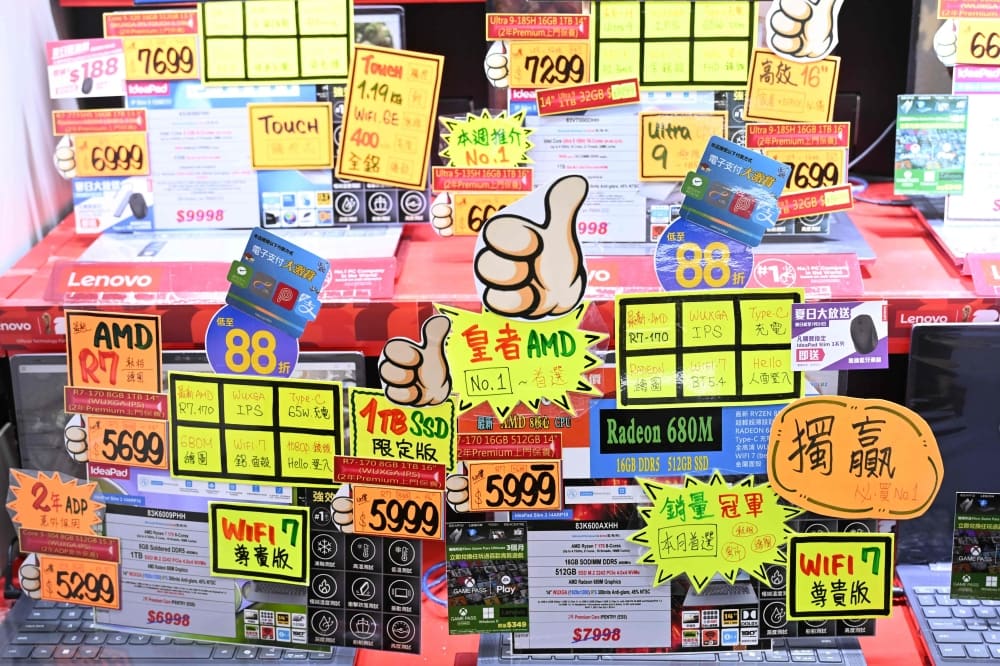
Print-outs explaining the global memory chip shortage now hang beside price lists at computer shops in Hong Kong's Wan Chai Computer Centre. The notices serve a practical purpose: helping vendors explain to customers why a component that cost HK$300 last year now sells for HK$1,500.
The supply squeeze, informally dubbed "RAMaggedon," stems from chipmakers reallocating production capacity toward high-bandwidth memory, or HBM. These advanced components power the data center servers that train and operate artificial intelligence systems. Samsung Electronics' chief financial officer indicated this week that shortages of data storage microchips will likely intensify in 2027 and remain constrained through 2028.
The shift has created a cascade effect across consumer electronics. Memory prices for personal computers and smartphones have climbed five to six times compared to year-ago levels, according to Ellie Wang at TrendForce, a Taiwan-based market research firm.
Hong Kong Retailers Adjust
At In-Technology Services in Wan Chai, manager Wade Lam keeps the explanatory articles visible to inform customers "who don't know what happened." The compact vendor is one of dozens crammed into the shopping complex, selling everything from computer parts to gaming consoles.
Ken Tam, who manages Videocom Computer and specializes in custom-built PCs, reported that business has dropped by half since price increases began in September. Sixteen gigabytes of RAM that previously sold for HK$300 to HK$400 now commands HK$1,500.
"When it suddenly gets so expensive, customers have a psychological barrier," Tam noted. Buyers who need the components purchase them regardless, but many others delay or opt for lower-performing chips to stay within budget.
Investment banker Henry Wong chose a different path. Rather than buying a new machine with upgraded specifications, he installed additional memory in an older laptop. "After upgrading the memory, I found it ran really smoothly, and I stopped wanting to buy a new computer," he said at a Hong Kong shopping centre.
Tokyo Feels the Squeeze
The crunch extends beyond Hong Kong. In Tokyo's Akihabara electronics district, Charles Brousse, a 30-year-old graphic designer from Belgium who builds custom PCs, described prices for RAM, graphics cards, and motherboards as having reached "ridiculous levels."
Brousse runs a service called PC & Chill but no longer pre-purchases components because of prohibitive costs. Instead, he requires clients to buy their own parts, which he then assembles. The shortage is pushing consumers toward cheaper laptops instead of desktops that can last up to a decade, he observed, creating a cycle of more frequent replacement purchases.
Winners and Newcomers
The memory market's transformation has delivered substantial profits to the world's top three chipmakers: Samsung Electronics and SK hynix of South Korea, alongside US-based Micron. Share prices for these companies have surged alongside demand for HBM, which pairs with powerful processors made by companies such as Nvidia to execute the computational demands of AI systems.
China's ChangXin Memory Technologies, or CXMT, ranked fourth globally, became mainland China's most valuable company when it debuted on the Shanghai stock exchange Monday. The listing underscored investor appetite for memory chip exposure.
James Zhao, senior principal analyst at Omdia, noted that CXMT "remains in a follower position regarding leading-edge technologies." However, the "current supply-constrained market environment" for conventional RAM and DRAM could provide the relative newcomer with "late-mover advantages" as established players focus on HBM production.
Automakers Brace for Impact
The shortage is beginning to affect industries beyond consumer electronics. Automakers have flagged rising costs for in-vehicle computer systems, suggesting that new vehicle prices could climb in coming months as manufacturers pass along component cost increases.
The industry shift reflects a strategic calculation by chipmakers. High-bandwidth memory carries significantly higher margins than conventional RAM, making the pivot financially attractive even as it starves other market segments of supply. Data center operators building AI infrastructure have demonstrated willingness to pay premium prices, creating incentives for manufacturers to maintain the production focus on HBM.
For now, Asian consumers and businesses are adapting to the new reality through delayed purchases, component upgrades to existing devices, and acceptance of lower specifications. The timeline Samsung outlined suggests these adjustments will remain necessary for at least two more years as the memory industry works through the supply-demand imbalance created by the AI boom.
RELATED STORIES
Hong Kong Claims Top Asia Spot for High-Growth Startup Ecosystems
Cheng Wei-Lun · 4 min
Hong Kong Debuts Robot-Run Convenience Store in Commercial Automation Push
Cheng Wei-Lun · 3 min
CaoCao Mobility Bets on Autonomous Taxis as Revenue Tops RMB 10 Billion
Cheng Wei-Lun · 3 min

Nio Sets 40,000-Unit Monthly Delivery Target for Q4
Anand Sundaram · 3 min
Spot something wrong? Email editor@briefasia.com. We log every correction publicly.