Asia · Business
McDonald's Philippines Expands Into Retail Power Market With 36 Stores
Fast-food chain partners with COREnergy to cut electricity costs by 10 percent across Cebu and Negros locations
KEY TAKEAWAYS
- ·McDonald's Philippines is enrolling 36 stores in Cebu and Negros Island into competitive electricity programs through a partnership with COREnergy, targeting a 10 percent reduction in power costs.
- ·The arrangement locks in fixed rates over two years and sources 10 to 15 percent of electricity from solar power, addressing operating cost pressures in Southeast Asia's most expensive electricity market.
- ·By year-end, McDonald's expects 64 percent of its Philippine outlets to operate under retail aggregation contracts, following a similar rollout of over 200 stores in Luzon earlier this year.
Cost Management at Scale
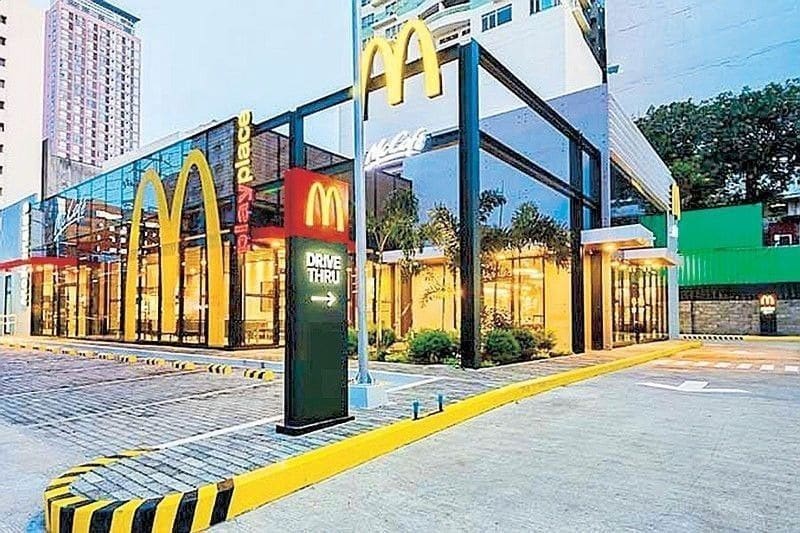
McDonald's Philippines has enrolled 36 restaurants in Cebu and Negros Island into competitive electricity procurement programs, a move that underscores the pressure operating costs place on multi-site retail businesses in Southeast Asia's most expensive power market.
The company partnered with Vivant Energy's COREnergy to access two government-backed power choice mechanisms. Thirty-two stores will join the retail aggregation program, which allows smaller electricity users to combine their demand and negotiate rates collectively. The remaining four will participate individually under the retail competition and open access framework, which permits eligible consumers to contract directly with suppliers.
According to McDonald's Philippines, participating outlets will see power costs drop by around 10 percent, with rates locked in over a two-year term. The arrangement also introduces a renewable energy component, with 10 to 15 percent of supply coming from solar sources.
"Electricity is one of the largest operating costs in our business," said Margot Torres, managing director of McDonald's Philippines. "By working with COREnergy, we can better manage this expense and build more energy-efficient restaurants as we grow."
The Wider Shift
The Visayas rollout follows a larger deployment in Luzon, where more than 200 McDonald's stores switched to the retail aggregation program earlier this year through EvoEnergi, an affiliate of D&L Industries. By year-end, McDonald's Philippines expects roughly 64 percent of its restaurant portfolio to operate under aggregated power contracts.
The scale of the transition reflects a broader trend among Philippine corporations seeking relief from electricity tariffs that remain the highest in the region. The country's industrial and commercial users have increasingly turned to retail electricity markets as deregulation allows greater choice in supplier selection.
Francis del Val, president of COREnergy, noted that cost predictability has become a priority for businesses navigating volatile energy markets. Fixed-rate contracts, he said, provide operational stability that supports longer-term planning.
Regional Context
The Philippines liberalized its retail electricity market more than a decade ago, but adoption has been uneven. Small and medium-sized enterprises often lack the scale to meet minimum thresholds for direct contracting, making aggregation programs a critical bridge. Retail aggregation reduces administrative complexity and allows participants to access wholesale pricing typically reserved for larger buyers.
For McDonald's, the operational calculus is straightforward. With electricity representing a substantial share of store-level expenses, even modest percentage reductions translate into meaningful savings across hundreds of locations. The two-year fixed pricing also insulates the chain from spot market volatility, a factor that has grown more salient as regional power grids grapple with supply constraints and fuel price swings.
Torres emphasized that managing electricity costs strategically supports the sustainability of both company-owned and franchised outlets. As the chain continues its Visayas expansion, energy efficiency and cost control are becoming central to site selection and store design.
What Comes Next
The shift to competitive procurement is part of a wider energy transition for the Philippine fast-food sector. Chains operating dozens or hundreds of sites are increasingly leveraging their aggregate demand to negotiate better terms, a dynamic that could accelerate as more retailers and service businesses enter the market.
McDonald's Philippines has not disclosed the total value of its electricity spend, but the company's emphasis on cost management suggests that power procurement will remain a strategic priority as it scales. The integration of renewable energy, even at relatively modest levels, also signals attention to sustainability considerations that are becoming standard in multinational corporate operations across Asia.
The rollout in Cebu and Negros marks another step in the broader shift toward retail electricity competition in the Philippines, a market where regulatory frameworks are in place but commercial adoption is still building momentum. For businesses with distributed operations, the ability to pool demand and lock in rates offers a rare opportunity to control one of the most unpredictable line items on the balance sheet.
RELATED STORIES

Philippines Energy Budget Climbs 26% as Electric Vehicle Funding Surges
Priyanka V. Rao · 3 min
Philippine Nickel Miners Push for Unified Policy Framework as Critical Minerals Race Intensifies
Priyanka V. Rao · 3 min

Philippine Water Operator Earmarks $400 Million for Southeast Asia Expansion
Mariel D. Santos · 2 min
Seventeen Firms Compete for Manila's $200 Million Geothermal Risk Fund
Priyanka V. Rao · 3 min
Spot something wrong? Email editor@briefasia.com. We log every correction publicly.