Finance · Deals
Maybank and ADB Trust Fund Partner to Deepen Asean Local Currency Bond Markets
Malaysia's largest bank raises 2026 private debt issuance forecast to RM170 billion as regional infrastructure financing demand accelerates
KEY TAKEAWAYS
- ·Maybank and CGIF formalized a partnership to develop local currency bond and sukuk markets across Asean+3, focusing on digital infrastructure and energy transition financing
- ·Maybank raised its 2026 forecast for Malaysia's private debt securities issuance to between RM160 billion and RM170 billion, up from RM150 billion, citing strong pipeline and stable credit conditions
- ·The collaboration leverages CGIF's credit guarantees and Maybank's regional network to help mid-sized issuers access capital markets and reduce reliance on dollar-denominated debt
Partnership Targets Regional Capital Market Development
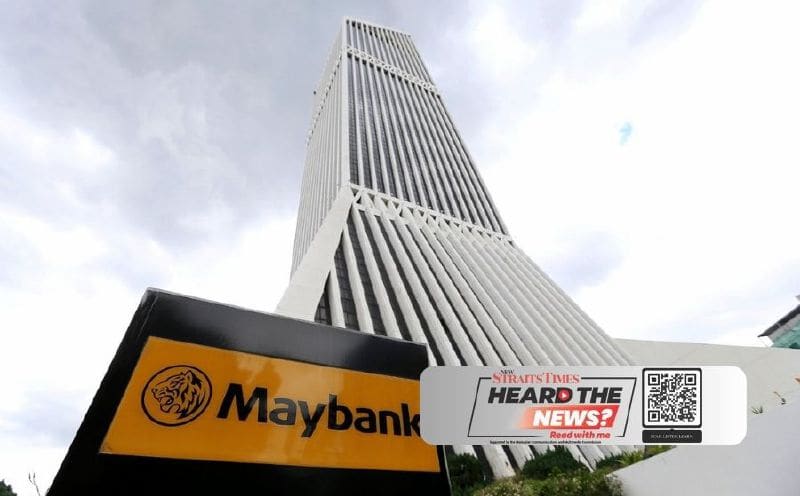
Maybank has entered a formal partnership with the Credit Guarantee and Investment Facility, a trust fund managed under the Asian Development Bank, to expand local currency bond and sukuk markets across the Asean+3 region. The agreement was formalized in Kuala Lumpur at a forum focused on digital infrastructure financing attended by approximately 150 policymakers and corporate executives.
The collaboration builds on previous joint transactions in Malaysia, Vietnam, Thailand, and Hong Kong, where both institutions facilitated bond and sukuk issuances denominated in local currencies. The expanded partnership will concentrate on mobilizing capital for energy transition projects, digital economy development, and infrastructure financing while helping regional issuers diversify their funding sources beyond traditional bank lending.
John Chong, who leads global banking at Maybank Group, noted that foreign direct investment into Asia continues to rise, creating demand for structured financing solutions that deepen local capital markets. The bank has revised its projection for Malaysia's private debt securities issuance in 2026 upward to between RM160 billion and RM170 billion, a significant increase from its earlier RM150 billion estimate.
Stronger Pipeline Drives Forecast Revision
The higher forecast reflects a robust pipeline of corporate and infrastructure bond issuances, supported by stable macroeconomic conditions and favorable domestic funding costs. Malaysia's credit environment remains healthy, with domestic capital markets showing sustained strength through the first half of the year.
Maybank expects these conditions to persist into the second half of 2026, underpinned by resilient economic fundamentals and continued investor appetite for ringgit-denominated debt. The bank's revised outlook signals growing confidence in the depth and liquidity of Malaysia's bond market, which has attracted both domestic institutional investors and foreign participation.
Regional Financing Architecture
CGIF chief executive Noriko Nasu emphasized that deep local currency bond markets are critical infrastructure for financing Asia's long-term development needs. The facility, which provides credit guarantees to lower borrowing costs for issuers in the Asean+3 region, has been active in catalyzing private sector investment in markets where dollar-denominated debt would expose borrowers to currency mismatch risk.
The partnership combines Maybank's regional distribution network and origination capabilities with CGIF's credit enhancement tools. This structure aims to bring more issuers to market, particularly mid-sized corporations and infrastructure project sponsors that may lack the credit ratings to access international capital markets independently.
The forum where the agreement was signed included participation from Malaysia's Finance Ministry and Securities Commission, as well as a fireside discussion with Bank Negara Malaysia Deputy Governor Marzunisham Omar. The event underscored policymaker support for developing alternative financing channels beyond the banking system, particularly for capital-intensive sectors such as data centers, renewable energy, and digital connectivity infrastructure.
Digital Infrastructure Financing Priority
A central focus of the partnership is accelerating investment in digital infrastructure, a sector experiencing rapid growth across Southeast Asia as cloud computing, artificial intelligence workloads, and data localization requirements drive demand for new facilities. Traditional project finance structures have struggled to keep pace with the speed and scale of digital infrastructure buildouts, creating opportunities for capital markets solutions.
Bond and sukuk issuances offer longer tenors and fixed-rate structures that better match the cash flow profiles of infrastructure assets compared to shorter-term bank facilities. By expanding the universe of issuers able to access these markets, the Maybank-CGIF partnership aims to channel more institutional capital into projects that underpin the region's digital economy ambitions.
The collaboration also targets energy transition financing, where long-dated capital is needed to fund the replacement of fossil fuel generation capacity with renewable sources and grid modernization. Local currency financing reduces the currency risk that has constrained cross-border investment in these sectors, making projects more bankable for domestic and regional investors.
Market Conditions Favor Expansion
Current market dynamics support the expansion of local currency bond issuance across Asean. Interest rate environments in the region have stabilized following earlier tightening cycles, while domestic savings pools remain substantial. Pension funds, insurance companies, and sovereign wealth funds are seeking long-duration assets denominated in local currencies, creating natural demand for infrastructure and corporate bonds.
The partnership between Maybank and CGIF reflects a broader trend toward building regional financial architecture that reduces reliance on dollar funding and external capital markets. As Asean economies deepen their integration and intra-regional trade grows, local currency capital markets provide a more stable foundation for financing the infrastructure and industrial capacity needed to support that expansion.
For issuers, the ability to borrow in local currency eliminates the balance sheet exposure that comes with dollar debt when revenues are generated domestically. For investors, local currency bonds offer yield pickup over developed market fixed income while avoiding the volatility associated with emerging market dollar bonds during periods of global financial stress.
RELATED STORIES

Southeast Asian Firms Race to Raise Green Debt as Region Falls Behind on Renewables
Priyanka V. Rao · 3 min

Malaysia Hospital Group A1Health Prepares US$1.7 Billion IPO for Early 2027
Tran Quoc Bao · 2 min
CIMB Commits to 55% Dividend Floor as Regional Portfolio Offsets Indonesia Pressure
Priyanka V. Rao · 4 min
Malaysian Banks Face Tighter Lending as Deposit War Squeezes Margins
Jun-ho Seo · 4 min
Spot something wrong? Email editor@briefasia.com. We log every correction publicly.