Technology · AI
Manila Summit Pushes Regional AI Finance Architecture
Philippines launches wealth fund proposal and anti-scam hub as ASEAN digital economy crosses $300 billion threshold

KEY TAKEAWAYS
- ·The ASEAN Tech Summit 2026 in Manila proposes a private-sector wealth fund and a cross-border anti-scam intelligence hub as the region's digital economy surpasses $300 billion in gross merchandise value.
- ·Transnational scams across East and Southeast Asia generated up to $114 billion last year, prompting calls for coordinated fraud defense across ASEAN jurisdictions.
- ·The summit agenda includes stablecoin frameworks, tokenized payment rails, and autonomous AI agents capable of executing financial transactions without human oversight by 2030.
Private Capital for Regional Infrastructure
The ASEAN Tech Summit 2026 opens today in Manila with two concrete institutional proposals: a private-sector-led regional wealth fund and a cross-border anti-scam intelligence network. Both aim to address infrastructure gaps as Southeast Asia's digital economy surpasses $300 billion in gross merchandise value.
The Philippines, holding the rotating ASEAN chair this year, is using the summit platform to advance policy frameworks around autonomous financial systems, tokenized payment rails, and machine-speed fraud defense. Lito Villanueva, EVP and Chief Innovation Officer at RCBC and founding chairman of FinTech Alliance Philippines, outlined the proposals during opening remarks.
The proposed ASEAN Resiliency Wealth Fund would pool capital from regional banks, insurers, pension funds, and corporates rather than relying on government budgets. According to Villanueva, the vehicle would finance digital infrastructure, support innovation, and provide economic buffer capacity during geopolitical shocks. No commitment figures or governance structure have been disclosed.
Southeast Asia is home to 690 million people and ranks as the world's fifth-largest economy. Current projections place it fourth globally by 2030. The region's digital economy has expanded sevenfold over the past decade, driven by mobile payments, e-commerce, and digital lending.
Intelligence Sharing Against Cross-Border Fraud
The second proposal calls for a Network Anti-Scam Hub enabling real-time data exchange and coordinated enforcement across ASEAN jurisdictions. The United Nations estimated that transnational scams across East and Southeast Asia, Australia, and New Zealand generated as much as $114 billion last year.
Villanueva cited Singapore's Project FRONTIER+ as a template for multi-country cybersecurity collaboration. The hub would connect national fraud databases, share threat intelligence, and coordinate takedowns of syndicates operating across borders.
The summit agenda includes sessions on deepfake detection, synthetic identity fraud, and AI-enabled phishing. Criminal networks already move faster than individual national regulators, making coordinated response a priority for policymakers in Jakarta, Bangkok, Hanoi, and Kuala Lumpur.
Stablecoins and Tokenized Payments
Day one features keynote addresses from Sophendu Mohanty, CEO of the Global Finance and Technology Network Group, and Binance founder Changpeng Zhao. Both will address stablecoins, tokenized settlements, and borderless finance infrastructure.
Remittances into ASEAN total more than $70 billion annually, with transaction costs averaging five to eight percent. Stablecoins and tokenized payment rails promise faster settlement and lower fees, particularly for cross-border trade and wage transfers.
The summit also covers open finance frameworks, digital identity systems, and regulatory sandboxes. Panels include leaders from Asia's fintech associations discussing how regional coordination can match the pace of technology deployment.
Philippine FinTech Benchmark Released
The 2026 Philippine FinTech Report launches during the summit, mapping the domestic digital finance ecosystem. The report tracks payment adoption, digital banking growth, virtual asset regulation, financial inclusion metrics, anti-fraud policy, and IPO activity.
FinTech Alliance Philippines, which Villanueva chairs, represents platforms handling 95 percent of the country's digital retail financial transactions, with a combined user base exceeding 100 million accounts.
A separate announcement confirms a multi-year partnership between the Global Finance and Technology Network and the Philippines. Three initiatives anchor the collaboration: bringing GFTN's Select Series to Manila, launching the ASEAN Financial Health Challenge 2026 with Bangko Sentral ng Pilipinas, and establishing a five-year AI Horizon Philippines Programme to train young Filipinos in AI and digital finance skills. GFTN operates across more than 140 countries.
Autonomous Agents and Machine-Speed Risk
Villanueva opened the summit with a projection: by 2030, the most significant financial transactions in ASEAN may involve AI agents acting autonomously on behalf of individuals or enterprises, settling in tokenized value without human intervention.
Agentic AI systems can already underwrite businesses with limited credit histories using transaction data, execute trade finance contracts, and optimize corporate treasury operations. As these agents gain decision-making authority, the attack surface for fraud expands in parallel.
Security architecture must be embedded at the protocol level, not added as an afterthought. Deepfakes, synthetic identities, and automated financial crime evolve as quickly as the productivity tools designed to improve efficiency.
The summit runs through tomorrow, with sessions covering the Luzon Economic Corridor, AI economics, and tokenized digital identity frameworks. Outcomes from the two-day program are expected to feed into ASEAN policy discussions during the remainder of the Philippine chairmanship.
RELATED STORIES

GCash Parent Mynt Clears Final Regulatory Hurdle for Manila IPO
Mariel D. Santos · 3 min

Manila Halts Approvals for Digital Payment Operators Pending Fraud Review
Jun-ho Seo · 4 min
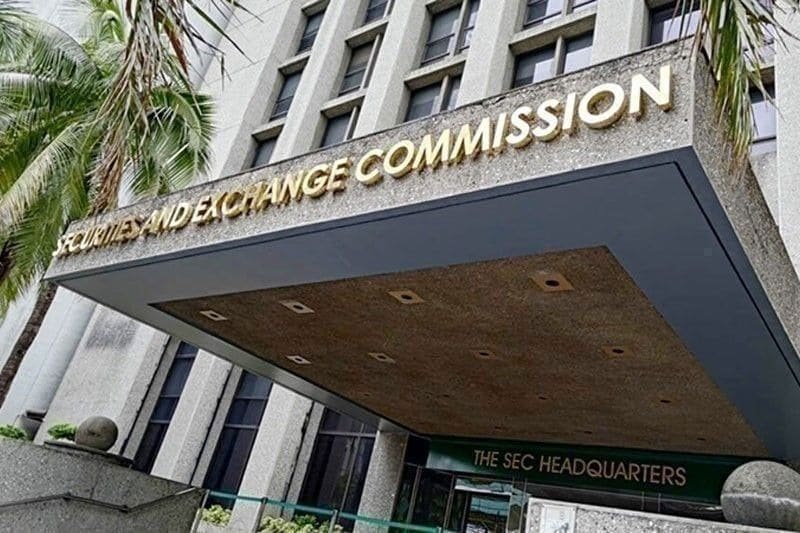
GCash Parent Mynt Wins SEC Approval for $1.6 Billion Manila IPO
Tran Quoc Bao · 3 min

Philippine Capital Inflows Slide as Foreign Firms Curtail Local Lending
Tran Quoc Bao · 3 min
Spot something wrong? Email editor@briefasia.com. We log every correction publicly.