Finance · Markets
Malaysian Stocks Retreat as Geopolitical Risks Weigh on Investor Sentiment
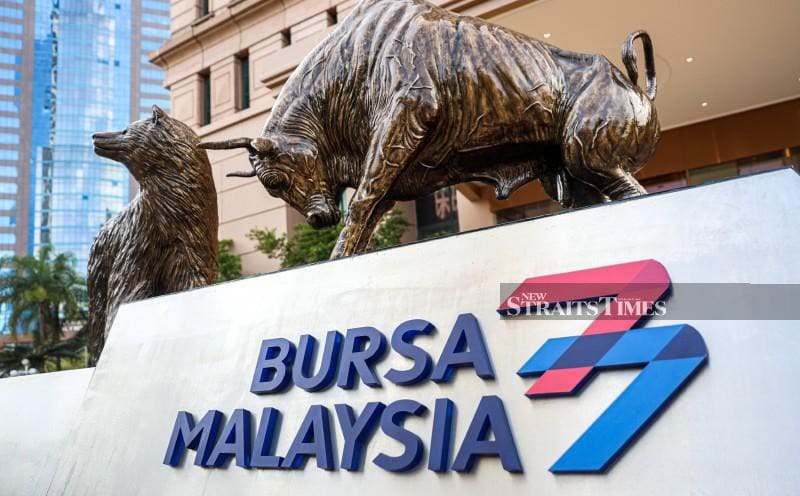
Kuala Lumpur's benchmark index declined 0.52 percent as Middle East tensions and rising crude prices triggered a wave of selling across regional markets.
KEY TAKEAWAYS
- ·Malaysia's FBM KLCI closed down 9 points at 1,711.37 as traders locked in profits following a rally from 1,655 to 1,735 levels.
- ·Brent crude climbing above 94 dollars per barrel on Red Sea shipping threats dampened risk appetite across Southeast Asian markets.
- ·Analysts expect the index to trade between 1,705 and 1,730 this week with selective interest in banking, energy, and defensive sectors.
Market Pullback Follows Recent Rally
Malaysia's equity benchmark retreated on Wednesday as traders unwound positions following a multi-week advance, with the FTSE Bursa Malaysia KLCI sliding 9 points to close at 1,711.37. The 0.52 percent decline came after the index had climbed from approximately 1,655 to 1,735 in recent sessions, prompting investors to secure returns amid heightened regional uncertainty.
Trading activity reflected cautious positioning, with declining stocks outnumbering gainers 590 to 450. Total turnover contracted to 3.43 billion units worth 2.50 billion ringgit, down from 3.48 billion units valued at 2.79 billion ringgit in the prior session. The index oscillated between 1,709.15 and 1,721.31 throughout the day before settling near session lows.
Oil Price Surge Rattles Regional Appetite
Crude prices climbing above 94 dollars per barrel for Brent added pressure across Southeast Asian bourses. Two vessels transporting Saudi crude reportedly altered their routes in the Red Sea after threats from Yemen's Iran-backed Houthi forces to expand their military operations, raising concerns about potential disruptions to critical shipping lanes that serve Asian refineries and manufacturers.
The geopolitical overhang reverberated through Malaysia's heavyweight sectors. Tenaga Nasional dropped 28 sen to 14.28 ringgit, while financial blue-chips also retreated with Maybank losing eight sen to 10.94 ringgit and Public Bank shedding five sen to 5.15 ringgit. Healthcare conglomerate IHH declined 17 sen to 8.33 ringgit as defensive positioning proved insufficient to offset broader risk aversion.
Sector Performance Diverges
Financial services bore the brunt of the selloff, with the sector index tumbling 93.02 points to 20,207.11. Plantation stocks followed suit, the sector gauge declining 35.77 points to 9,321.24 despite palm oil's typical correlation with energy commodity prices. CIMB trimmed two sen to 7.66 ringgit as banking sentiment weakened.
Energy and industrial counters bucked the broader downturn. The Energy Index advanced 4.01 points to 774.41, supported by Petronas Gas which jumped 28 sen to 17.68 ringgit. The Industrial Products and Services Index edged up 1.12 points to 188.36, suggesting selective interest in sectors positioned to benefit from elevated input costs or infrastructure spending.
Consumer staples Nestle led decliners with a 1.60 ringgit slide to 91.52 ringgit, while Malaysian Pacific Industries climbed 92 sen to 47.76 ringgit and United Plantations added 30 sen to 34.04 ringgit, illustrating the session's bifurcated performance.
Bargain Hunting Amid Consolidation
Equity researchers characterized the pullback as a natural pause rather than a structural shift. Rakuten Trade equity research vice-president Thong Pak Leng noted that the correction could attract buyers seeking entry points in fundamentally sound large-cap names, particularly given resilient domestic economic indicators and the return of foreign institutional capital in recent months.
However, volatility in energy markets and ongoing Middle East tensions are expected to constrain near-term momentum. Thong projects the benchmark index will trade between 1,705 and 1,730 through the remainder of the week, with selective activity concentrated in banking, energy, plantation, and other defensive segments.
Broader indices mirrored the main board's weakness. The FBM Emas Index fell 53.80 points to 12,655.96, while the FBM Emas Shariah Index dropped 46.76 points to 12,497.69. The FBM Top 100 Index contracted 58.87 points to 12,696.03, and the FBM Mid 70 Index decreased 51.96 points to 17,956.81.
Trading Patterns Across Market Segments
Main Market volume improved slightly to 1.94 billion units valued at 2.22 billion ringgit, up from 1.86 billion units in the previous session, though total value declined. Warrants turnover fell to 970.20 million units worth 130.98 million ringgit, while the ACE Market expanded to 520.43 million units valued at 151.15 million ringgit.
Technology counters dominated volume with 693.81 million shares traded, followed by industrial products at 427.01 million and property at 197.46 million. Financial services recorded 70.93 million shares changing hands, reflecting the sector's retreat. Energy accounted for 118.43 million units as traders repositioned around crude price movements.
Among active smaller-cap names, Aimax and Nextgram Holdings each inched up half a sen to 1.5 sen and 4.5 sen respectively, while Aimflex added three sen to 12 sen. Zetrix AI eased 1.5 sen to 71.5 sen, and Tanco Holdings decreased one sen to 30.5 sen.
The session underscores the delicate balance facing Asian equity markets as they navigate between improving domestic fundamentals and external shocks emanating from commodity markets and conflict zones that directly impact regional supply chains and investor confidence.
RELATED STORIES
Malaysia's Benchmark Index Holds Steady Ahead of Holiday and Earnings Season
Priyanka V. Rao · 3 min

Malaysia Hospital Group A1Health Prepares US$1.7 Billion IPO for Early 2027
Tran Quoc Bao · 2 min
Malaysia's KLCI Index to Add 20 Stocks in Phased Expansion
Jun-ho Seo · 2 min

Malaysian Ringgit Strengthens on Strong US Jobs Data
Tran Quoc Bao · 3 min
Spot something wrong? Email editor@briefasia.com. We log every correction publicly.