Finance · Markets
Malaysian Ringgit Steadies Amid Export Surge and Middle East Tensions
Strong trade data cushions currency against global volatility while geopolitical risks weigh on regional sentiment
KEY TAKEAWAYS
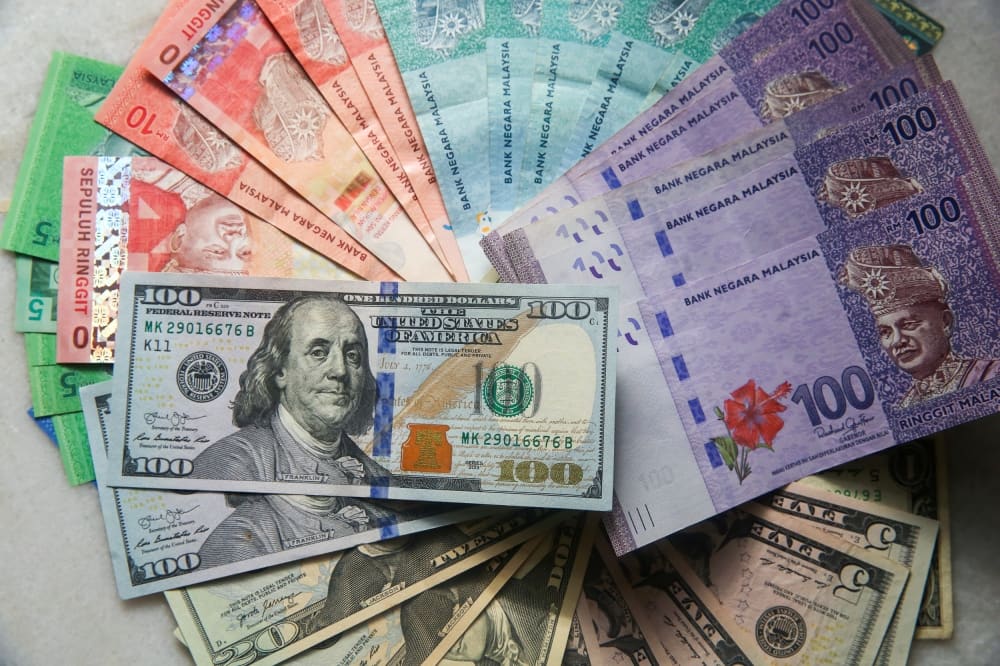
- ·Malaysia's trade surplus surged 64.9 percent to RM14.9 billion in June, with exports up 45.4 percent, providing fundamental support for the ringgit at 4.0895 against the dollar.
- ·The US dollar index remained elevated at 100.996 points as Middle East tensions and Houthi threats against Saudi shipping dampened risk appetite across Asian currency markets.
- ·Economists expect the ringgit to trade in a narrow 4.09 to 4.10 range near term, balancing strong domestic data against geopolitical uncertainty and oil price swings.
Trade Performance Anchors Currency
The Malaysian ringgit opened flat at 4.0895 against the US dollar on Tuesday morning, supported by robust economic fundamentals even as broader regional currencies faced pressure from geopolitical uncertainty. The local unit maintained its position despite a firmer dollar across most markets and escalating tensions in the Middle East.
Malaysia's Department of Statistics released trade figures Monday showing exports climbed 45.4 percent to RM177.9 billion in June, while imports increased 43.9 percent to RM163.0 billion. The trade surplus expanded by 64.9 percent to RM14.9 billion, according to the agency, providing underlying strength to the ringgit at a time when external headwinds are testing emerging market currencies.
The currency's resilience comes as the US dollar index held at 100.996 points, reflecting weak risk appetite among traders. Crude oil markets added to the volatility, with Brent briefly rising following warnings from US President Donald Trump that Iran would face consequences for the deaths of American service members. By midmorning Asian trading, Brent had reversed to trade 0.12 percent lower at $82.38 per barrel, while West Texas Intermediate slipped 0.45 percent to $88.82.
Regional Dynamics and Rate Expectations
Against other major currencies, the ringgit showed selective strength. It appreciated to 4.6686 versus the euro from 4.6743 the previous session, and edged higher against the British pound to 5.4926 from 5.5049. The currency also firmed slightly against the Japanese yen, trading at 2.5169 compared to 2.5177 Monday.
Within Southeast Asia, the ringgit posted modest gains against the Singapore dollar, moving to 3.1675 from 3.1677, and strengthened versus the Thai baht to 12.1512 from 12.1556. It held steady against the Indonesian rupiah at 227.8 and the Philippine peso at 6.63.
Dr Mohd Afzanizam Abdul Rashid, chief economist at Bank Muamalat Malaysia, noted the ringgit is likely to maintain a narrow trading band between 4.09 and 4.10 against the dollar in the near term. The elevated dollar index and subdued risk sentiment are constraining upside potential for regional units, he told local media.
Geopolitical Shadow Over Shipping Lanes
Middle East developments continued to dominate trader attention Tuesday. Yemen's Houthi forces, aligned with Iran, announced plans to impose a naval blockade on vessels bound for Saudi Arabia passing through the Bab el-Mandeb Strait, a critical chokepoint for global oil shipments. The threat adds another layer of uncertainty to energy markets and regional currencies tied to commodity flows.
Stephen Innes, managing partner at SPI Asset Management, pointed to the combination of US political rhetoric toward Iran and fresh Houthi warnings as factors keeping the dollar bid across Asian morning trade. The interplay between geopolitical risk and energy prices remains a key variable for currencies across the region, particularly those of net energy importers.
Outlook Hinges on External Stability
Malaysia's export momentum offers a buffer, but the currency's trajectory will depend heavily on whether Middle East tensions escalate further and how that feeds through to oil price volatility. The ringgit's performance against major currencies has been relatively stable compared to some regional peers, reflecting investor confidence in the country's external balance sheet.
The trade surplus of nearly RM15 billion in June represents one of the strongest monthly performances in recent years, driven by robust demand for electronics and commodities. That strength provides policymakers with room to navigate external shocks, though the currency remains vulnerable to sudden shifts in dollar demand or energy market disruptions.
Market participants will be watching for any escalation in Red Sea shipping threats and US policy signals on Iran sanctions in the coming sessions. For now, the ringgit's narrow range reflects a standoff between solid domestic data and a cautious global backdrop.
RELATED STORIES
Ringgit Strengthens as Malaysia's Stable Rates Signal Policy Flexibility
Mariel D. Santos · 3 min

Malaysia Hospital Group A1Health Prepares US$1.7 Billion IPO for Early 2027
Tran Quoc Bao · 2 min
Ringgit Set to Hold Gains as Malaysia Central Bank Meeting Nears
Priyanka V. Rao · 3 min
Malaysia's KLCI Index to Add 20 Stocks in Phased Expansion
Jun-ho Seo · 2 min
Spot something wrong? Email editor@briefasia.com. We log every correction publicly.