Finance · Markets
Malaysian Ringgit Gains Ground as Strait of Hormuz Tensions Keep Oil Elevated
The local currency strengthened against the dollar and regional peers Monday, even as markets price in higher US rates and monitor West Asia supply risks.
KEY TAKEAWAYS
- ·Malaysia's ringgit closed at 4.0680 per US dollar Monday, up from 4.0745, and gained against Singapore dollar and Indonesian rupiah.
- ·West Texas Intermediate and Brent crude traded at 73.02 and 77.80 dollars per barrel as markets monitored Strait of Hormuz shipping risks.
- ·Interest-rate futures assign 55.7 per cent probability to a 25-basis-point Federal Reserve hike in September, supporting near-term dollar strength.
Currency Closes Firmer Across the Board
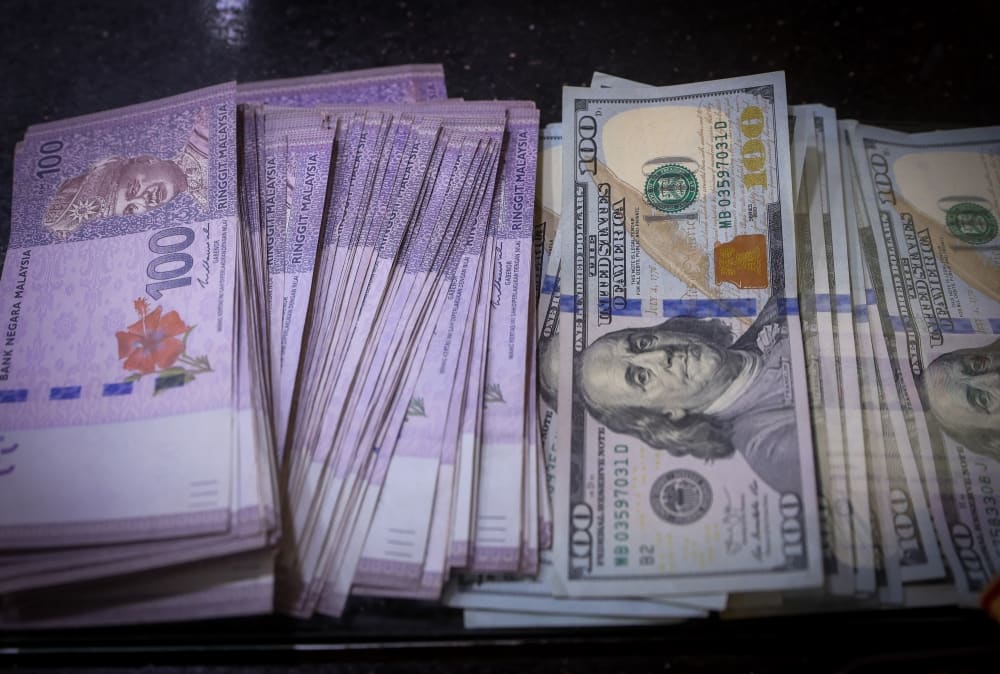
Malaysia's ringgit ended Monday's session at 4.0680 per US dollar, up from 4.0745 at the prior week's close, as markets continued to assess supply-route risks in West Asia. The local unit also posted gains against the Singapore dollar, closing at 3.1489 versus 3.1561, and advanced against the Indonesian rupiah to 224.6 from 225.2.
The firmer close came despite a broader environment that typically favours dollar strength. Interest-rate futures now assign a 55.7 per cent probability to a 25-basis-point Federal Reserve hike in September, according to data cited by Bank Muamalat Malaysia's chief economist Mohd Afzanizam Abdul Rashid. That expectation has provided a near-term floor for the greenback across emerging Asian currencies.
Against major currencies, the ringgit rose to 5.4475 per British pound from 5.4639 and edged up to 4.6501 per euro from 4.6559. The local unit also appreciated versus the Japanese yen, reaching 2.5110 from 2.5181.
Oil Prices and Shipping Uncertainty
Crude benchmarks remained elevated Monday as investors monitored the status of a US-Iran ceasefire and the security of tanker traffic through the Strait of Hormuz, the narrow waterway that handles roughly one fifth of global seaborne oil. West Texas Intermediate traded at 73.02 dollars per barrel, while Brent crude stood at 77.80 dollars.
Any disruption to flows through the strait typically sends a ripple through Asian currencies, particularly those of net energy importers. Malaysia, however, is a modest oil exporter, and a sustained lift in crude prices can support fiscal revenues and the current account. That dynamic may have cushioned the ringgit even as geopolitical risk kept volatility elevated.
Regional Currency Moves
Elsewhere in Southeast Asia, the ringgit strengthened against the Thai baht to 12.1953 from 12.2302 and gained versus the Philippine peso to 6.60 from 6.62. The moves suggest a modest reallocation of intra-regional flows, possibly reflecting investor preference for Malaysia's relatively stable fiscal outlook and its exposure to energy revenues.
The currency's performance will hinge on two competing forces in the weeks ahead: the trajectory of US monetary policy and the persistence of oil-price support. A September rate increase by the Federal Reserve would widen the yield differential in favour of dollar assets, pressuring Asian currencies. At the same time, any escalation in West Asia that lifts crude above 80 dollars per barrel could provide a tailwind for the ringgit, provided global risk appetite holds.
What Traders Are Watching
Market participants are parsing each update on the ceasefire framework and monitoring tanker-tracking data for signs of congestion or diversion around the strait. Any breakdown in the ceasefire or new sanctions on Iranian crude exports would likely push Brent toward the mid-80s, a scenario that historically correlates with ringgit strength against regional peers.
On the monetary-policy front, the focus shifts to US employment and inflation prints due later this month. A hotter-than-expected jobs report or a reacceleration in core inflation would cement expectations for the September hike and test the ringgit's recent resilience. Conversely, softer data could see futures markets reprice the probability lower, easing pressure on emerging-market currencies across the board.
For now, the ringgit has carved out a narrow window of support, balancing geopolitical risk premium in energy markets against the gravitational pull of higher US rates. How long that balance holds will depend on whether crude prices remain elevated and whether Kuala Lumpur can sustain investor confidence in its fiscal trajectory.
RELATED STORIES
Ringgit Strengthens as Malaysia's Stable Rates Signal Policy Flexibility
Mariel D. Santos · 3 min
Ringgit Set to Hold Gains as Malaysia Central Bank Meeting Nears
Priyanka V. Rao · 3 min

Malaysia Hospital Group A1Health Prepares US$1.7 Billion IPO for Early 2027
Tran Quoc Bao · 2 min
Malaysia's KLCI Index to Add 20 Stocks in Phased Expansion
Jun-ho Seo · 2 min
Spot something wrong? Email editor@briefasia.com. We log every correction publicly.