Finance · Markets
Malaysian Equities Slip After Brief Morning Rally as Industrial Stocks Face Selling Pressure
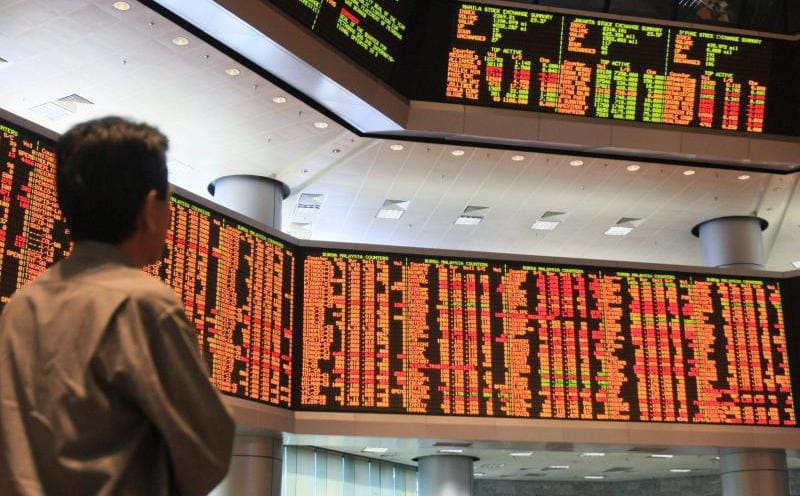
The FTSE Bursa Malaysia KLCI retreated from opening gains, shedding 3.05 points by mid-morning despite positive overnight signals from US markets and cooler inflation data
KEY TAKEAWAYS
- ·Malaysia's FTSE Bursa KLCI declined 3.05 points to 1,731.66 by mid-morning Friday, reversing opening gains as investors sold industrial and construction stocks.
- ·Semiconductor plays UMS Integration and Vitrox gained 58 sen and 15 sen respectively, reflecting optimism around Malaysia's chip supply chain positioning.
- ·Analysts expect the index to trade within a 1,730 to 1,740 range as markets await the Federal Reserve's September policy meeting following cooler US inflation data.
Early Optimism Fades
Malaysian equities opened higher on Friday morning but quickly gave up gains as investors took profits in industrial products and construction stocks, reversing the positive momentum carried over from Wall Street's overnight advance. By 9:06 a.m., the FTSE Bursa Malaysia KLCI had declined 3.05 points to 1,731.66, erasing an opening gain that had lifted the benchmark index by a marginal 0.01 points to 1,734.72. The retreat came despite the Dow Jones Industrial Average and broader US indices closing higher on Thursday, buoyed by cooler-than-expected producer price inflation data.
The session's early trading dynamics reflected a market still grappling with mixed signals from the global economy. While 166 counters advanced and 139 declined, breadth remained positive but not decisively so. A substantial 289 stocks traded unchanged, and turnover reached 192.50 million shares worth 68.46 million ringgit, indicating moderate activity levels rather than the kind of conviction buying that typically accompanies sustained rallies.
Heavyweight Stocks Hold Steady Amid Volatility
Major blue-chip names displayed resilience even as the broader index faltered. Maybank, the country's largest lender by assets, slipped two sen to 10.58 ringgit, but other financial heavyweights held their ground. Public Bank traded flat at 5.16 ringgit, while CIMB Group remained unchanged at 7.95 ringgit. Tenaga Nasional, the national power utility, and IHH Healthcare, Southeast Asia's largest hospital operator, also showed no movement, closing the morning session at 14.50 ringgit and 8.27 ringgit respectively.
The stability among these large-cap names suggests institutional investors are maintaining positions in defensive sectors while adopting a wait-and-see stance on more cyclical plays. This pattern is consistent with broader regional trends, where investors across Asia have grown increasingly selective amid uncertainty over the pace of US monetary policy adjustments and their knock-on effects on emerging market capital flows.
Sectoral Divergence Highlights Risk-Off Sentiment
Sector performance painted a picture of investor caution. The Energy Index dropped 3.92 points to 779.40, reflecting weakness in oil and gas plays despite relatively stable crude prices. The Financial Services Index edged down 0.38 points to 20,356.63, while the Plantation Index fell 20.21 points to 9,353.45, hit by concerns over palm oil demand from key markets including China and India.
The Industrial Products and Services Index slipped 0.55 points to 188.93, consistent with the profit-taking theme that characterized the session. Meanwhile, the FBM ACE Index, which tracks smaller-cap growth companies, advanced 14.93 points to 5,259.58, and the FBM 70 Index inched up 3.27 points to 18,333.49, suggesting some risk appetite remained for higher-beta plays among retail investors.
Petronas Chemicals Group led decliners, losing 10 sen to 4.45 ringgit, while Press Metal Aluminium Holdings shed six sen to 7.92 ringgit. Construction names Gamuda and property developer Timberwell both dropped five sen to 4.47 ringgit and 1.85 ringgit respectively. Sunway, the diversified conglomerate with exposure to construction and property, declined four sen to 5.16 ringgit.
Technology and Financial Stocks Show Pockets of Strength
Not all segments retreated. UMS Integration, a semiconductor equipment maker, surged 58 sen to 9.03 ringgit, while Vitrox Corporation, another chip-sector play, gained 15 sen to 9.55 ringgit. The strength in these technology-linked counters reflects continued optimism around Malaysia's positioning in the global semiconductor supply chain, particularly as manufacturers diversify production away from geographically concentrated hubs.
LPI Capital added 14 sen to 15.22 ringgit, and Hong Leong Bank gained 12 sen to 22.46 ringgit, with UWC advancing eight sen to 6.63 ringgit. Among the most actively traded names, HHRG slipped 2.5 sen to 13 sen, while Scope Industries rose one sen to nine sen. Nexgram Holdings, TWL Holdings, and Key ASIC each climbed half a sen to 6.5 sen, 2.5 sen, and 8.5 sen respectively, demonstrating retail interest in penny stocks despite the broader market's tepid performance.
Federal Reserve Policy Outlook Shapes Investor Caution
Rakuten Trade noted that Wall Street's overnight gains were driven by a producer price index reading that came in below consensus forecasts, reinforcing expectations that the Federal Reserve would hold interest rates steady at its September Federal Open Market Committee meeting. The data provided reassurance that inflationary pressures are moderating without tipping the economy into recession, a so-called soft-landing scenario that equity markets have priced in with varying degrees of confidence over recent months.
For Malaysian equities, the Fed's policy trajectory carries significant implications. A prolonged period of elevated US rates typically strengthens the dollar and can trigger capital outflows from emerging Asian markets as investors chase higher yields in dollar-denominated assets. Conversely, a pivot toward rate cuts could reignite appetite for riskier assets in the region, including Malaysian equities, which trade at relatively attractive valuations compared to regional peers in Singapore and Thailand.
Trading Range Reflects Wait-and-See Positioning
Rakuten Trade forecast the FBM KLCI would likely oscillate within a 1,730 to 1,740 range for the remainder of the session, reflecting the market's tentative mood. This narrow band underscores the lack of strong directional conviction among participants, who appear content to wait for clearer signals from both domestic corporate earnings and global macroeconomic indicators before committing fresh capital.
The broader FBM Emas Index fell 14.14 points to 12,844.40, while the FBMT 100 Index slid 16.10 points to 12,656.60. The FBM Emas Shariah Index, which tracks stocks compliant with Islamic investment principles, declined 21.36 points to 12,673.62, indicating that the risk-off sentiment extended across both conventional and Shariah-compliant segments of the market.
With 2,234 counters remaining untraded and 28 suspended, liquidity remained concentrated in a relatively narrow set of blue-chip and speculative names. This pattern is typical for the Malaysian bourse, where retail participation dominates and institutional flows can shift sentiment quickly, particularly around key technical levels and policy announcements from Bank Negara Malaysia or overseas central banks.
RELATED STORIES
Malaysian Equities Poised for Modest Gains Amid Domestic Resilience
Priyanka V. Rao · 3 min

Ringgit Strengthens Ahead of Malaysia Second-Quarter Growth Release
Cheng Wei-Lun · 3 min

Malaysia's Ringgit Holds Steady as Traders Await GDP Data
Priyanka V. Rao · 3 min
Key Asic Shares Surge 128% on Record Volume as Asia Tech Rally Returns
Cheng Wei-Lun · 3 min
Spot something wrong? Email editor@briefasia.com. We log every correction publicly.