Finance · Markets
Malaysian Equities Drop as Washington Tariff Wave Hits Regional Trade
Kuala Lumpur's benchmark held psychological support near 1,700 while crude spiked on Red Sea tanker incidents and Iran tensions
KEY TAKEAWAYS
- ·Malaysia's FBM KLCI declined 13.57 points to 1,701.02 on Friday as Washington imposed tariffs on 60 economies and crude oil spiked above $100 per barrel.
- ·The benchmark held above the 1,700 psychological support level despite decliners outnumbering advancers 723 to 339, signaling investor caution rather than panic.
- ·Analysts expect continued volatility from trade uncertainty and Middle East supply risks, with the 1,700 level serving as a technical floor for bargain hunters.
Market Reaction to Trade Measures
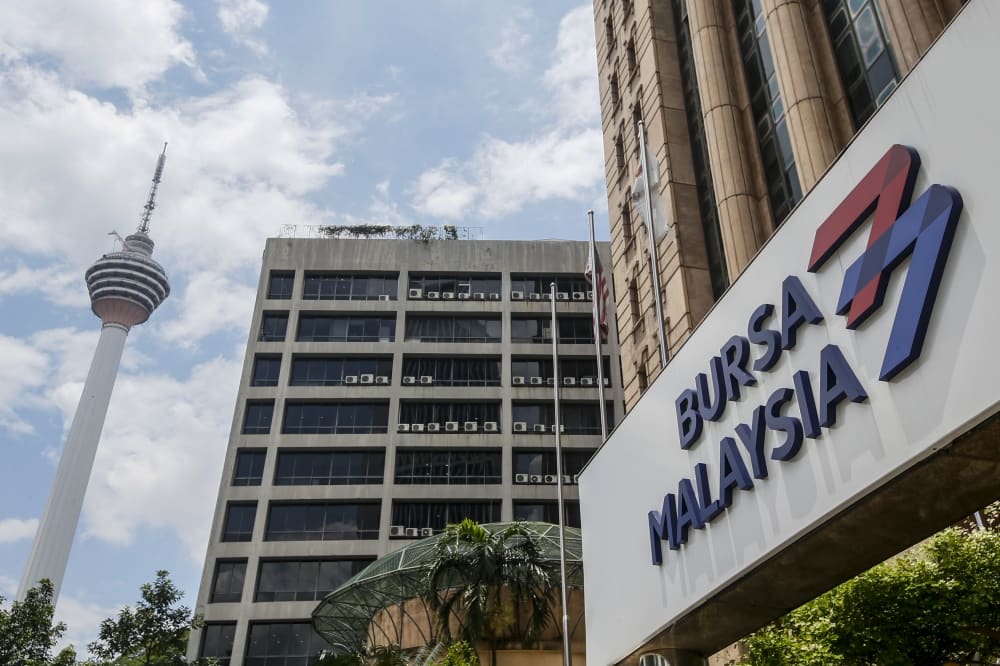
Kuala Lumpur's equity market absorbed fresh trade policy shocks Friday, with the main index sliding 13.57 points to close at 1,701.02. Washington's decision to levy tariffs across six dozen economies rippled through Asian trading floors, though Malaysia's benchmark showed relative stability compared to neighbors.
The FTSE Bursa Malaysia KLCI opened 4.14 points down and spent the session oscillating between 1,697.76 and 1,710.80. Declining stocks outnumbered gainers by more than two to one, with 723 counters in the red against 339 in positive territory. Trading volume contracted to 3.03 billion units worth RM2.30 billion, down from the previous day's 3.19 billion units.
Energy Surge Compounds Investor Caution
Crude oil markets added a second layer of pressure as Brent briefly crossed the $100-per-barrel threshold before settling at $97.28. Attacks targeting Saudi tankers in the Red Sea, combined with renewed American military action against Iran, stoked concerns about West Asian supply chains and inflationary ripple effects.
Rakuten Trade vice-president of equity research Thong Pak Leng highlighted the confluence of factors weighing on sentiment, according to Bernama. He pointed to the new trade restrictions, energy price volatility, and uncertainty surrounding upcoming quarterly results from major US technology firms as key drivers of the selloff.
Defensive Posture Emerges
Despite the downdraft, market participants see evidence of resilience. The benchmark's ability to hold above the 1,700 mark reflects what analysts describe as a more measured response than previous shocks.
IPPFA director and country economist Mohd Sedek Jantan noted the contrast with earlier oil price spikes, according to Bernama. He attributed the relative stability to improved domestic economic fundamentals and sustained institutional buying interest, suggesting investors are not engaging in wholesale risk liquidation.
Thong echoed that view, describing the 1,700 level as both a psychological anchor and a technical floor. He expects bargain hunters to step in after the recent pullback, even as external headwinds keep volatility elevated in the near term.
Sector Divergence
Financial services bore the brunt of selling pressure, with the sector index dropping 153.60 points to 20,057.11. Maybank declined eight sen to RM10.78, Public Bank lost six sen to RM5.11, and CIMB edged down five sen to RM7.68.
The plantation index bucked the trend, surging 60.71 points to 9,300.98. United Plantations climbed 32 sen to RM33.42, while Chin Teck Plantations advanced 28 sen to RM11.34. Utilities and energy indices posted modest declines.
Among heavyweight counters, Tenaga Nasional fell 14 sen to RM14.36, and IHH Healthcare shed nine sen to RM8.30. Technology stocks accounted for 498.38 million shares traded on the main board, the highest sectoral volume.
Broader Index Performance
The FBM Emas Index declined 68.19 points to 12,589.54, while the FBM Top 100 Index lost 69.90 points to 12,411.96. The FBM ACE Index dropped 42.21 points to 4,926.87, reflecting weakness across smaller capitalizations.
The FBM Mid 70 Index provided a bright spot, gaining 23.48 points to 17,890.83. The FBM Emas Shariah Index fell 52.03 points to 12,444.25.
Main market volume declined to 1.73 billion units valued at RM2.06 billion, while warrants turnover tumbled to 745.36 million units worth RM92.85 million. ACE market activity expanded to 556.89 million units valued at RM149.98 million.
Forward View
Analysts expect near-term choppiness to persist as investors digest the trade policy landscape and monitor developments in the Middle East. The combination of tariff uncertainty and energy supply risks creates a challenging backdrop for risk assets across emerging Asia.
Yet the Malaysian market's defensive posture suggests a degree of maturity. Valuations have retreated to levels that may attract opportunistic capital, particularly in sectors insulated from trade headwinds. The question now is whether external shocks will intensify or whether the 1,700 support level marks a floor for consolidation before any recovery attempt.
RELATED STORIES
Malaysia's Benchmark Index Holds Steady Ahead of Holiday and Earnings Season
Priyanka V. Rao · 3 min

Malaysia Hospital Group A1Health Prepares US$1.7 Billion IPO for Early 2027
Tran Quoc Bao · 2 min
CIMB Commits to 55% Dividend Floor as Regional Portfolio Offsets Indonesia Pressure
Priyanka V. Rao · 4 min
Malaysian Palm Oil Giant KLK Swings to RM1.34 Billion Quarterly Loss
Priyanka V. Rao · 3 min
Spot something wrong? Email editor@briefasia.com. We log every correction publicly.