Asia · Business
Malaysia's Perodua Cuts Axia Prices Up to RM4,700 on Efficiency Gains
The country's most affordable compact car sees reductions across all variants as the automaker passes operational savings to consumers amid rising cost pressures
KEY TAKEAWAYS
- ·Perodua reduced Axia prices by RM500 to RM4,700 across all variants, with the entry-level 1.0G now starting at RM33,900 in Peninsular Malaysia.
- ·The cuts stem from manufacturing and supply-chain efficiency gains that allowed cost savings without altering specifications or quality.
- ·The move positions the Axia more competitively as Malaysia phases out pandemic-era sales tax exemptions and cost pressures persist.
Price Cuts Across the Range
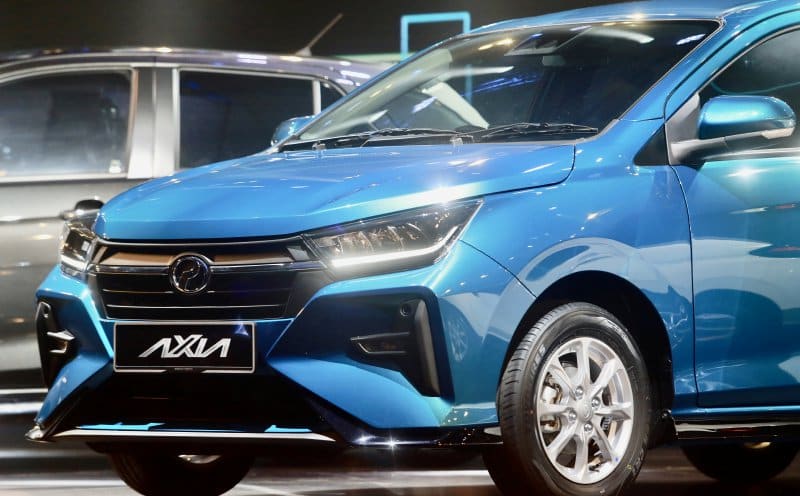
Perusahaan Otomobil Kedua Sdn Bhd (Perodua) has implemented immediate price reductions across its Axia lineup, with cuts ranging from RM500 to RM4,700 depending on variant. The entry-level Axia 1.0G sees the steepest reduction, now priced at RM33,900 in Peninsular Malaysia, down from RM38,600. In Sabah and Sarawak, the same variant drops to RM35,900.
The mid-range 1.0X variant has been reduced by RM1,500 to RM38,500 in Peninsular Malaysia and RM40,500 in East Malaysia. The 1.0SE now carries a price tag of RM43,000 and RM45,000 respectively, reflecting a RM1,000 cut, while the range-topping 1.0AV variant sees a RM500 reduction to RM49,000 in Peninsular Malaysia and RM51,000 in Sabah and Sarawak.
Operational Efficiency Behind the Move
According to Perodua president and CEO Datuk Seri Zainal Abidin Ahmad, the price revision stems from sustained improvements in manufacturing processes and tighter collaboration with local suppliers. The company has managed to extract cost savings without altering the Axia's specifications or build quality, channeling the gains directly to customers.
The automaker framed the decision as part of broader efforts to ease cost pressures facing Malaysian households. Zainal noted that the operational improvements have also translated into reduced service costs and revised pricing for the company's QV-E and battery-as-a-service offerings, suggesting efficiency gains extend beyond the Axia model.
Supply Chain and Dealer Cooperation
The price cuts required coordination across Perodua's ecosystem. Zainal acknowledged the role of vendors and dealers in enabling the reductions, highlighting industry-wide cooperation as essential to delivering more affordable vehicle ownership. The approach reflects a strategy of maintaining tight relationships with local component suppliers, a hallmark of Malaysian automotive manufacturing where domestic content ratios remain high.
For context, Malaysia's automotive sector has faced headwinds from currency fluctuations and global supply-chain disruptions over the past two years. Perodua's ability to reduce prices stands in contrast to regional trends, where automakers in Thailand and Indonesia have largely held prices steady or increased them in response to input cost pressures.
Market Position and Affordability
The Axia occupies a critical niche as Malaysia's most affordable new car, serving as a primary option for first-time buyers and budget-conscious families. The price cuts reinforce Perodua's dominance in the entry-level segment, where competition from imported Chinese electric vehicles has yet to make significant inroads due to infrastructure limitations and higher price points.
With the 1.0G now below RM34,000, the Axia undercuts most regional competitors in the A-segment. The move also comes as Malaysia's government continues to phase out certain sales tax exemptions introduced during the pandemic, making manufacturer-led price reductions more significant for consumers.
What to Watch
The immediate impact will be on sales velocity for the Axia, which has historically accounted for a substantial share of Perodua's monthly volume. Competitors including Proton and imported brands may face pressure to respond, either through their own price adjustments or by sharpening promotional offers.
Longer term, the sustainability of these reductions will depend on whether Perodua's operational improvements continue to yield margin protection even as input costs fluctuate. The company's ability to maintain quality while reducing prices will be tested in customer satisfaction metrics over the coming quarters.
For now, the Axia price cuts signal that Malaysia's largest automaker by volume sees room to compete on affordability without sacrificing profitability, a combination that should keep the model firmly entrenched at the lower end of the market.
RELATED STORIES

Penang Captures 34% of Malaysia's Manufacturing Investment in First Half
Anand Sundaram · 2 min

Selangor Pulls RM70 Billion in Six Months as Services and Manufacturing Drive Malaysia's Richest State
Anand Sundaram · 4 min
Malaysia's Rare Earth Deposits Draw Foreign Interest Ahead of China Export Controls
Priyanka V. Rao · 3 min

Five ASEAN Members Back Regional Oil Stockpile as Study Nears Completion
Tran Quoc Bao · 3 min
Spot something wrong? Email editor@briefasia.com. We log every correction publicly.