Asia · Business
Malaysia's KTMB Posts 13.2 Million Passengers in H1 2026, Revenue Jumps 44 Percent
Electric Train Service drove growth with 55% ridership increase, while cargo volumes rose to 887,000 tonnes as national rail operator rebounds from pandemic lows
KEY TAKEAWAYS
- ·Malaysia's KTMB carried 13.2 million passengers in the first half of 2026, an eight percent increase that lifted revenue to RM296 million from RM206 million year-on-year.
- ·Electric Train Service ridership surged 55 percent to 3.1 million passengers, while KTM Komuter ridership fell four percent due to track closures for the Klang Valley Double Track Phase 2 project.
- ·Cargo volumes rose to 887,000 tonnes and container handling reached 120,000 TEU, with Road-to-Rail freight movements up 16 percent as Malaysia shifts logistics from highways to rail.
National Carrier Rebounds on Premium Services
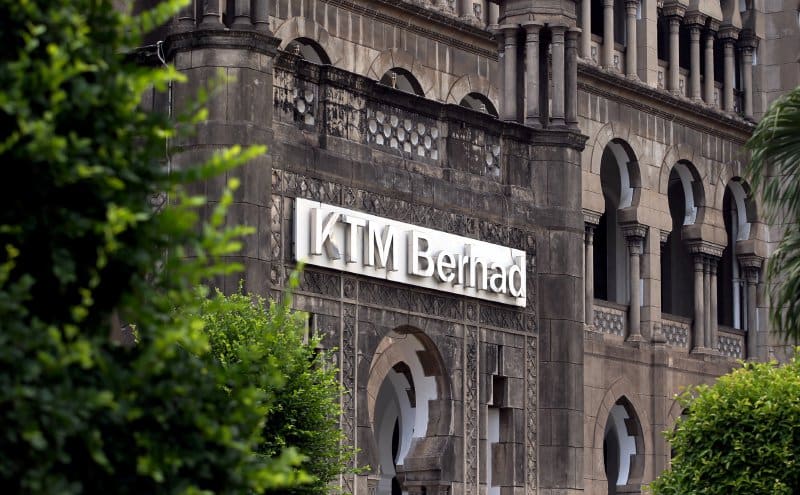
Keretapi Tanah Melayu Berhad carried 13.2 million passengers in the first six months of 2026, an eight percent rise year-on-year that lifted total revenue to RM296 million from RM206 million in the same period of 2025. The jump marks the strongest half-year performance for Malaysia's state-owned rail operator since restructuring began in 2023, driven by premium intercity services even as suburban commuter lines struggled with infrastructure work.
Group chief executive Datuk Azlan Shah Al Bakri attributed the turnaround to the Electric Train Service, which saw ridership climb 55 percent to 3.1 million passengers from two million. Intercity services added another 2.1 million riders. The ETS network, connecting Kuala Lumpur with Penang and now Johor Bahru, has become the flagship of KTMB's recovery strategy, offering speeds up to 160 km/h and competing directly with budget airlines on trunk routes.
The direct KL Sentral to JB Sentral ETS line, launched in December 2025, alone accounted for 638,445 passengers through end-June. KTMB received ten new ETS trainsets during the period, doubling daily frequency from 22 to 44 trips and adding capacity on the high-demand Kuala Lumpur-Ipoh-Butterworth corridor.
Commuter Services Hit by Track Closures
The picture was less rosy for KTM Komuter, the suburban workhorse serving greater Kuala Lumpur. Ridership fell four percent in the first half compared to 2025, a decline Azlan Shah linked to prolonged track closures on the Salak Selatan-Seremban and Port Klang-KL Sentral segments. The closures are part of the Klang Valley Double Track Phase 2 project, a multi-year upgrade to separate freight and passenger traffic and eliminate bottlenecks on Malaysia's busiest urban rail corridor.
Single-track operations during construction forced longer headways and reduced service reliability, eroding commuter confidence and fare revenue at a time when KTMB had been counting on urban transit to anchor cash flow. The operator has not disclosed when full double-track operations will resume, though KVDT2 is scheduled for completion in late 2027.
Azlan Shah acknowledged the company has not yet reached targeted performance levels despite the overall growth. KTMB cut operational disruptions by 27 percent to 1,085 incidents in the first half, down from 1,494 a year earlier, and reduced total delay minutes by 40 percent to 113,431 from 188,525. Still, cable theft, third-party interference, flooding, fallen trees, and utility work near tracks continue to affect punctuality.
Cargo Segment Gains Traction
Freight operations provided a bright spot. KTMB moved 887,000 tonnes of cargo in the first half, up from 724,000 tonnes, while container handling reached 120,000 TEU versus 108,000 TEU in 2025. Cargo revenue rose 12 percent to RM61.2 million from RM54.7 million, with the Road-to-Rail initiative accounting for 85,000 cargo movements, a 16 percent increase from 73,000.
The Road-to-Rail program, which incentivizes shippers to move freight from trucks to trains, has gained momentum as Malaysia seeks to ease highway congestion and lower logistics emissions. KTMB operates dedicated freight corridors linking Port Klang, the country's busiest container gateway, with inland distribution hubs in Ipoh and Padang Besar near the Thai border. The segment remains a fraction of total revenue but offers higher margins than passenger services and requires less capital for rolling stock.
Fleet Expansion and Safety Protocols
To bolster commuter capacity, KTMB expects to receive 12 new trainsets for KTM Komuter Utara, with the first unit arriving in completely knocked-down form in August 2026. The sets will undergo technical testing, authorization, safety certification, and trial runs before entering service, a process Azlan Shah said typically spans several months. The first trainset is slated for commercial operation in February 2027.
KTMB also introduced the Southern Shuttle, offering 14 daily trips linking Kulai, Kempas Baru, JB Sentral, and Pasir Gudang in Johor state. The service recorded 2,712 passengers as of late June. Meanwhile, the EMU Plus service on the Klang-KL Sentral-Ipoh route carried 42,801 passengers through June, targeting price-sensitive travelers willing to trade speed for lower fares.
The operator plans to accelerate signaling system upgrades under KVDT2 and strengthen asset monitoring to curb cable theft, which remains the leading cause of unscheduled delays. Cooperation with police and local authorities has intensified, with several arrests made in recent months for theft of copper wiring along electrified sections.
Regional Rail Revival
KTMB's rebound mirrors a broader revival of rail investment across Southeast Asia. Thailand is extending its high-speed network toward the Malaysian border, Singapore continues to upgrade cross-border links, and Indonesia has opened its first high-speed line on Java. Malaysia's rail sector, long hampered by underinvestment and fragmented operations, is positioning itself as a logistics spine connecting ASEAN's northern and southern corridors.
The challenge for KTMB will be sustaining growth once infrastructure projects wrap up and restoring commuter ridership to pre-pandemic peaks. With urban congestion worsening in Kuala Lumpur and Penang, reliable suburban rail is seen as critical to Malaysia's long-term mobility strategy. The operator's ability to balance premium intercity services with affordable, dependable commuter lines will determine whether the first-half gains translate into a durable turnaround.
RELATED STORIES

Five ASEAN Members Back Regional Oil Stockpile as Study Nears Completion
Tran Quoc Bao · 3 min

Selangor Pulls RM70 Billion in Six Months as Services and Manufacturing Drive Malaysia's Richest State
Anand Sundaram · 4 min
Malaysia's Rare Earth Deposits Draw Foreign Interest Ahead of China Export Controls
Priyanka V. Rao · 3 min

Southeast Asian Firms Overlook Digital Pact Worth USD 2 Trillion
Lim Hui Ying · 4 min
Spot something wrong? Email editor@briefasia.com. We log every correction publicly.