Technology · AI
Malaysia Climbs to 15th in Global Competitiveness on Chip and Data Center Boom
Semiconductor and AI infrastructure investments push the country's data center spending to 18% of GDP, the highest share worldwide, as multinationals expand capacity in Sarawak, Johor, and Penang.
KEY TAKEAWAYS
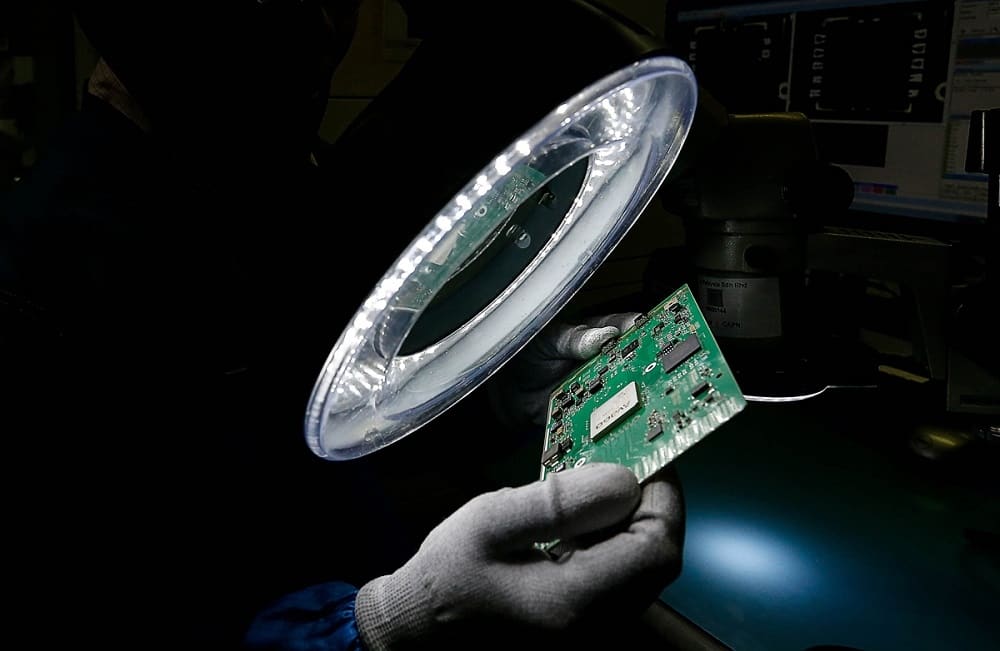
- ·Malaysia posted 5.8 percent GDP growth in Q2 2026, driven by semiconductor and data center investments that now account for nearly 18 percent of GDP, the world's highest share.
- ·Approved data center projects from 2021 to mid-2025 reached RM144.4 billion, with Sarawak alone drawing over RM116 billion in inflows over five years as multinationals expand chipmaking capacity.
- ·The country rose to 15th out of 70 economies in the 2026 IMD World Competitiveness Ranking, but political uncertainty and RM40 billion in fuel subsidies pose fiscal risks ahead.
A Surge in Industrial Investment
Malaysia posted 5.8 percent GDP growth in the second quarter of this year, outpacing analyst expectations and prompting JPMorgan to lift its full-year 2026 forecast to 5.3 percent. The acceleration reflects a wave of capital flowing into semiconductors, artificial intelligence hardware, and hyperscale data centers across the country's three main industrial corridors: Sarawak, Johor, and Penang.
Sarawak alone recorded more than RM116 billion in inflows over the past five years. Approved data center projects nationwide between 2021 and mid-2025 totaled RM144.4 billion, according to official figures. Analysts now estimate that data center investment has reached nearly 18 percent of GDP, the highest ratio in the world.
The country has also become one of the four largest net exporters of AI-related hardware globally, a category that includes advanced chips, server components, and networking equipment used in machine-learning clusters.
Geopolitical Shifts and Manufacturing Relocation
Engineering firms on the ground report a decisive shift in project pipelines. Joel William, a consultant in the sector, noted that geopolitical instability in the Middle East has redirected large-scale manufacturing and infrastructure projects to Southeast Asia, with Malaysia capturing a disproportionate share.
Investors cite the country's stable regulatory environment, existing industrial ecosystems, and proximity to regional supply chains as key factors. Multinationals including Infineon, Nvidia, and ByteDance are either building new chipmaking facilities or expanding existing ones, while Penang's Silicon Island initiative aims to consolidate the state's position as a high-tech manufacturing hub.
Fiscal Metrics and Competitiveness Gains
Malaysia's competitiveness ranking in the IMD World Competitiveness Yearbook rose to 15th out of 70 economies in 2026, up from 34th two years earlier. The jump reflects improvements in infrastructure readiness, business efficiency, and government policy responsiveness.
Domestic firms are scaling rapidly to meet demand. Construction group Gamuda reported a record RM52 billion order book, driven largely by data center projects. Even smaller businesses are expanding: Oriental Kopi, a local coffee-shop chain, is opening new outlets in Johor to serve the influx of workers and business travelers.
Electrical and electronic exports are forecast to exceed RM800 billion this year, underpinning the broader trade surplus. Tourism arrivals remain robust, and the ringgit has held relatively steady against the US dollar despite regional currency volatility.
Risks on the Horizon
Political uncertainty has emerged as a near-term concern. Prime Minister Anwar Ibrahim's coalition suffered losses in recent state elections, raising questions about policy continuity and reform momentum. Analysts caution that a fragmented political landscape could slow decision-making on critical infrastructure approvals and regulatory reforms.
Fiscal pressures are also mounting. Fuel subsidies are projected to reach RM40 billion in 2026, straining the federal budget at a time when capital spending on education, healthcare, and transport infrastructure remains underfunded. The government has signaled it may rationalize subsidies, but the timing and scope of any reform remain unclear.
Despite these headwinds, project pipelines show no sign of contraction. Engineering consultancies report surging inquiries, with some firms scrambling to triple headcount to handle the workload. William's team is expanding from 15 to 80 staff, a pace he describes as unprecedented in his two-decade career.
The Outlook for Asia's New Manufacturing Hub
Malaysia's rise as a semiconductor and AI infrastructure hub reflects broader shifts in global supply chains. Companies are diversifying production away from single-country dependencies, and Southeast Asia is emerging as a primary beneficiary. The country's combination of port infrastructure, power availability, and technical workforce gives it an edge over regional competitors.
The challenge now is execution. Bottlenecks in permitting, land acquisition, and skilled labor could constrain the pace of expansion. Policymakers will need to balance fiscal discipline with the infrastructure spending required to sustain momentum.
For now, the data suggests Malaysia is capturing a structural shift in capital allocation, not just a cyclical uptick. Whether it can sustain that advantage will depend on policy stability, infrastructure delivery, and the ability to scale talent pipelines in step with industrial demand.
RELATED STORIES
OpenAI Secures Multi-Year Malaysia Data Centre Deal with Firmus
Jun-ho Seo · 3 min

Southeast Asia's Data Centre Rush Faces Power Grid Reality
Mariel D. Santos · 4 min
Penang Captures 34% of Malaysia's Manufacturing Investment in First Half
Anand Sundaram · 2 min
Malaysia's Rare Earth Deposits Draw Foreign Interest Ahead of China Export Controls
Priyanka V. Rao · 3 min
Spot something wrong? Email editor@briefasia.com. We log every correction publicly.