Finance · Markets
Malaysia's Benchmark Index Climbs as Energy Stocks Offset Banking Weakness
The FBM KLCI recovered modestly after three sessions of losses, lifted by oil-linked equities while cautious sentiment persists across regional markets
KEY TAKEAWAYS
- ·Bursa Malaysia's FBM KLCI rose 3.22 points to 1,714.59 on Thursday, ending a three-day decline as higher crude oil prices supported energy-related stocks.
- ·Market breadth remained negative with 599 decliners outnumbering 415 gainers, while trading volume fell to 3.19 billion shares worth 2.27 billion ringgit.
- ·Analysts expect consolidation ahead as geopolitical risks in West Asia and ongoing US earnings season shape near-term sentiment, with technical resistance at 1,735 points.
A Modest Recovery in Kuala Lumpur
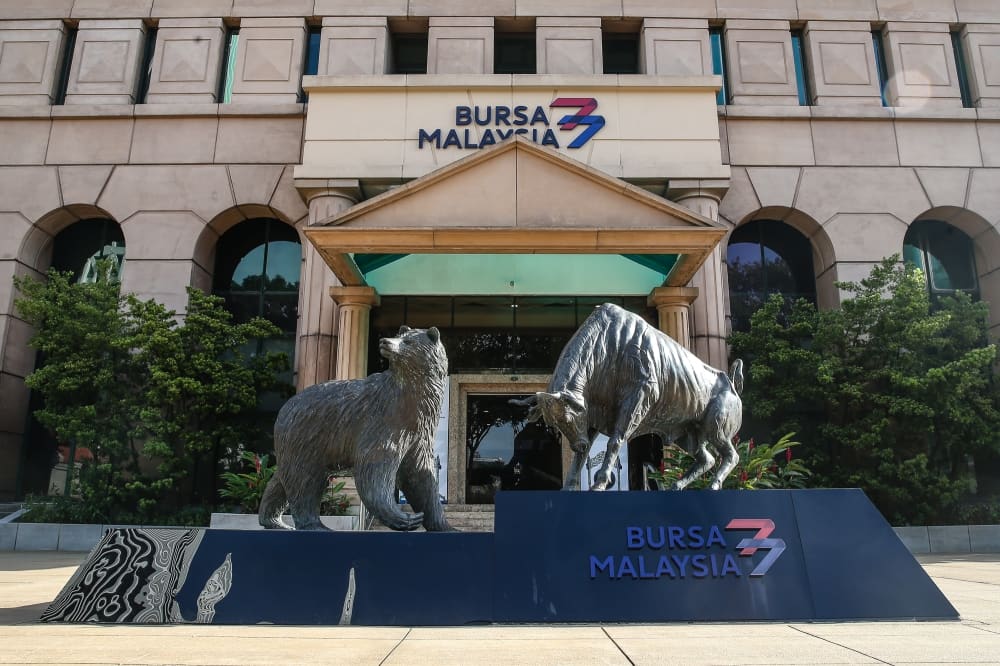
Bursa Malaysia's benchmark gauge ended Thursday in positive territory, halting a three-session decline as climbing crude oil prices provided support for energy-exposed counters. The FBM KLCI finished at 1,714.59, adding 3.22 points or 0.18 per cent from the previous session's close.
The index moved within a narrow band during the trading day, touching an intraday high of 1,716.43 and dipping as low as 1,709.05. Despite the headline gain, market breadth tilted negative: 599 stocks fell compared with 415 gainers, while 600 counters remained unchanged.
Trading activity softened from the prior session. Volume dropped to 3.19 billion shares worth 2.27 billion ringgit, down from 3.43 billion shares valued at 2.50 billion ringgit on Wednesday.
Energy and Utilities Lead, Tech Lags
Mohd Sedek Jantan, director and country economist at IPPFA, noted that buying interest concentrated in oil and gas names alongside utilities, which investors favored for their defensive earnings profiles. Large-cap banking stocks, however, posted mixed results and weighed on the broader index.
The Financial Services Index rose 3.60 points to close at 20,210.71. Among heavyweight financials, Public Bank gained two sen to 5.17 ringgit and CIMB added seven sen to 7.73 ringgit, while Maybank slipped eight sen to 10.86 ringgit.
Tenaga Nasional, the state-controlled power utility, climbed 22 sen to 14.50 ringgit, reflecting appetite for stable earnings amid external uncertainty. IHH Healthcare advanced six sen to 8.39 ringgit.
The Energy Index, by contrast, edged down 0.27 of a point to 774.14, even as oil prices rallied globally. The Plantation Index posted the steepest sectoral decline, tumbling 80.97 points to 9,240.27. United Plantations fell 94 sen to 33.10 ringgit, and Kuala Lumpur Kepong shed 26 sen to 20.66 ringgit.
Divergence from Regional Tech Rally
While regional bourses benefited from renewed enthusiasm around artificial intelligence and a rebound in technology stocks, Malaysia's exposure to the sector remains limited. The FBM KLCI's composition skews heavily toward financials, utilities, and commodities, insulating it from some of the volatility seen in tech-heavy indices elsewhere in Asia.
Mohd Sedek attributed the measured performance to this structural tilt, noting that optimism surrounding AI developments had less direct impact on Malaysian equities than on neighboring markets with deeper technology representation.
Consolidation Expected Ahead
Kenneth Leong, head of research at Berjaya Research, expects the index to enter a consolidation phase following its recent bounce. He pointed to lingering geopolitical risks in West Asia, particularly their influence on crude prices, as a key variable for near-term direction.
"The ongoing US corporate earnings season will be closely watched for further clues on the strength of corporate fundamentals and the broader economic outlook," Leong said. "Elevated geopolitical risks and earnings-related volatility may keep market sentiment guarded in the near term."
From a technical perspective, the FBM KLCI has formed a doji candlestick pattern, suggesting indecision among market participants. Immediate resistance sits at 1,735 points, followed by 1,740 points. On the downside, support levels are located at 1,700 and 1,680 points, according to Leong.
Winners and Losers
Among individual movers, Panasonic Manufacturing led gainers, rising 33 sen to 5.99 ringgit. Ornapaper surged 22.5 sen to 87.5 sen, while Sarawak Plantation added 17 sen to 4.49 ringgit. Sunway Construction and UMS Integration each gained 15 sen, closing at 7.73 ringgit and 8.05 ringgit respectively.
On the losing side, Malaysian Pacific dropped 1.58 ringgit to 46.18 ringgit. Nestle slipped 32 sen to 91.20 ringgit, and Malayan Cement lost 19 sen to 6.14 ringgit.
Among active smaller-cap names, AIMAX and Zetrix AI each fell half a sen to one sen and 71 sen respectively, while Tanco declined 3.5 sen to 27 sen.
Sectoral and Market Breakdown
The FBM Emas Index rose 1.77 points to 12,657.73, and the FBM Top 100 Index advanced 1.89 points to 12,481.86. The FBM ACE Index improved 8.06 points to 4,969.08. However, the FBM Emas Shariah Index shed 1.41 points to 12,496.28, and the FBM Mid 70 Index decreased 89.46 points to 17,867.35.
Main Market volume fell to 1.84 billion shares valued at 2.02 billion ringgit, down from 1.94 billion shares worth 2.22 billion ringgit in the previous session. Warrants turnover also declined, slipping to 902.43 million units worth 117.01 million ringgit. The ACE Market saw volume shrink to 449.60 million shares valued at 132.47 million ringgit.
Technology counters accounted for the largest share of Main Market activity with 596.67 million shares traded, followed by industrial products and services at 334.27 million and property at 276.35 million. Financial services counters saw relatively light volume at 54.03 million shares.
The modest recovery suggests investors are balancing cautious optimism around commodity prices with broader concerns over corporate earnings visibility and geopolitical developments that could disrupt supply chains and energy markets in the months ahead.
RELATED STORIES
Malaysia's Benchmark Index Holds Steady Ahead of Holiday and Earnings Season
Priyanka V. Rao · 3 min
Malaysia Hospital Group A1Health Prepares US$1.7 Billion IPO for Early 2027
Tran Quoc Bao · 2 min
CIMB Commits to 55% Dividend Floor as Regional Portfolio Offsets Indonesia Pressure
Priyanka V. Rao · 4 min
Malaysian Palm Oil Giant KLK Swings to RM1.34 Billion Quarterly Loss
Priyanka V. Rao · 3 min
Spot something wrong? Email editor@briefasia.com. We log every correction publicly.