Finance · Deals
LG Energy Solution Returns to Operating Profit on Storage Battery Pivot
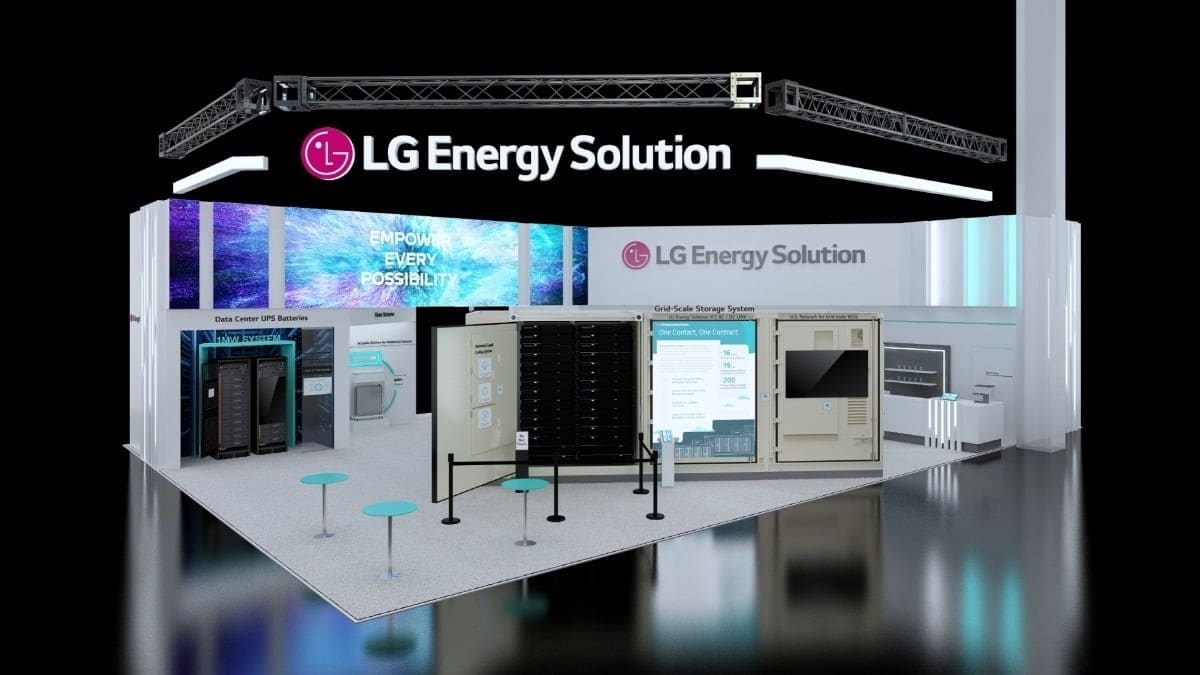
South Korea's battery giant posted 113.3 billion won in operating profit for Q2 2026, ending two quarters of losses as it repurposes EV production lines for energy storage systems
KEY TAKEAWAYS
- ·LG Energy Solution reported 113.3 billion won in operating profit for Q2 2026, reversing a 207.8 billion won loss in the prior quarter by converting idle EV lines to energy storage production.
- ·Revenue rose 24.8 percent year-on-year to 7.56 trillion won, but operating profit fell 77 percent from Q2 2025 due to margin pressure and intense competition from Korean, Chinese, and Japanese rivals.
- ·The company is prioritizing energy storage and North American capacity expansion, where policy support under the Inflation Reduction Act provides production tax credits and clearer demand visibility.
Back in the Black
LG Energy Solution posted an operating profit of 113.3 billion won ($77.8 million) in the second quarter of 2026, breaking a two-quarter losing streak. The Seoul-based battery manufacturer announced Thursday that revenue for the April-June period climbed 24.8 percent year-on-year to 7.56 trillion won, while also rising 15.3 percent from the first quarter.
The turnaround follows consecutive losses that saw the company record a 207.8 billion won operating deficit in the first three months of this year. Though the latest quarterly profit represents a 77 percent drop from the same period in 2025, the shift from red to black marks a critical inflection point for one of Asia's largest battery suppliers.
Repurposing Capacity
The return to profitability stems largely from LG Energy Solution's strategic pivot toward energy storage systems. Facing weaker-than-expected demand for electric vehicle batteries, the company has been converting idle EV production lines to manufacture stationary storage units. These systems serve utility-scale projects, commercial installations, and residential backup power markets that have seen accelerating adoption across North America, Europe, and parts of Asia-Pacific.
Energy storage represents a faster-growing segment than automotive batteries in several key markets. Grid operators in California, Texas, and South Korea have expanded procurement of large-scale battery installations to stabilize renewable energy supply, while data center operators are deploying storage to manage peak loads and improve resilience. LG Energy Solution's ability to redeploy existing manufacturing infrastructure toward this segment has allowed the company to capture incremental revenue without the capital expense of building greenfield capacity.
Margin Pressure Persists
Despite the operational turnaround, margin compression remains evident. The 77 percent decline in year-on-year operating profit reflects persistent headwinds in the broader battery supply chain. Lithium carbonate and nickel prices have stabilized after sharp declines in late 2025, but remain well below the peaks seen in 2022 and 2023. While lower input costs typically benefit manufacturers, intense competition among Korean, Chinese, and Japanese battery makers has forced suppliers to pass savings to automaker customers rather than retain them as margin.
LG Energy Solution competes directly with domestic rival Samsung SDI, China's CATL and BYD, and Japan's Panasonic. Automakers have used this competitive landscape to negotiate more favorable contract terms, particularly as EV sales growth has decelerated in Europe and North America. Several major OEMs have also pushed battery suppliers to shoulder more of the cost risk associated with raw material volatility, further pressuring profitability.
Regional Dynamics
The company's revenue growth was supported by stronger performance in North America, where LG Energy Solution operates joint-venture plants with General Motors and Stellantis. The U.S. Inflation Reduction Act continues to provide tailwinds through production tax credits and manufacturing incentives, making domestically produced cells more cost-competitive. LG Energy Solution has indicated it will prioritize capacity expansion in jurisdictions with clear policy support, a strategy that aligns with broader capital allocation trends among Asian battery makers.
In contrast, demand from European automakers has softened as the region grapples with slower EV adoption and increased imports of lower-cost Chinese vehicles. LG Energy Solution's exposure to European OEMs has weighed on order visibility, prompting the company to explore partnerships with energy utilities and commercial developers in the region.
Outlook
LG Energy Solution has not provided formal guidance for the remainder of 2026, but industry observers expect the energy storage segment to account for a growing share of revenue in the second half. The company is also monitoring the pace of EV demand recovery, particularly in China, where government subsidies have been scaled back and competitive intensity remains high.
Investors will watch whether the shift toward storage can sustain profitability in the third quarter, when seasonal patterns typically see weaker demand in both automotive and stationary segments. The company's ability to maintain positive operating income will depend on its success in securing long-term contracts with grid operators and its effectiveness in managing production costs across a more diversified product portfolio.
RELATED STORIES
Seoul Stocks Drop on Mideast Tensions and Oil Price Surge
Tran Quoc Bao · 3 min
Samsung Electronics Drops 8% as Market Questions Buyback Strategy
Cheng Wei-Lun · 2 min
South Korea Extends Trading Hours to Attract Foreign Capital
Anand Sundaram · 2 min

MBK Partners Chair Questioned Over Homeplus Debt Issuance Ahead of Collapse
Anand Sundaram · 3 min
Spot something wrong? Email editor@briefasia.com. We log every correction publicly.