Travel & Dining · Trends
Japanese Golf Courses Court South Korean Players to Counter Declining Local Demand
Industry looks to affluent neighbor as younger Japanese abandon the sport for more affordable pursuits
KEY TAKEAWAYS
- ·Japanese golf courses are targeting South Korean players to offset declining domestic participation, particularly among younger Japanese who view the sport as too expensive and time-consuming.
- ·Ibaraki Airport and other regional gateways have emerged as key infrastructure for golf tourism, with courses offering packages that compete on cost with South Korea's domestic market.
- ·The strategy's long-term success depends on currency stability, competitive positioning against Southeast Asian destinations, and South Korea's own golf market evolution.
A Strategic Pivot North
Japan's golf industry is placing a substantial bet on South Korean players as it grapples with a structural challenge that has defined the past decade: declining domestic participation. Golf courses across the country, particularly those within reach of Tokyo, are reconfiguring their marketing and operations to capture spending from affluent visitors across the Korea Strait.
The shift represents more than opportunistic tourism promotion. It reflects a fundamental recalibration of the industry's revenue model as younger Japanese increasingly view golf as prohibitively expensive and time-intensive compared to alternative leisure activities. The sport, once a pillar of corporate culture and middle-class aspiration, has struggled to maintain relevance among demographics that prioritize accessibility and convenience.
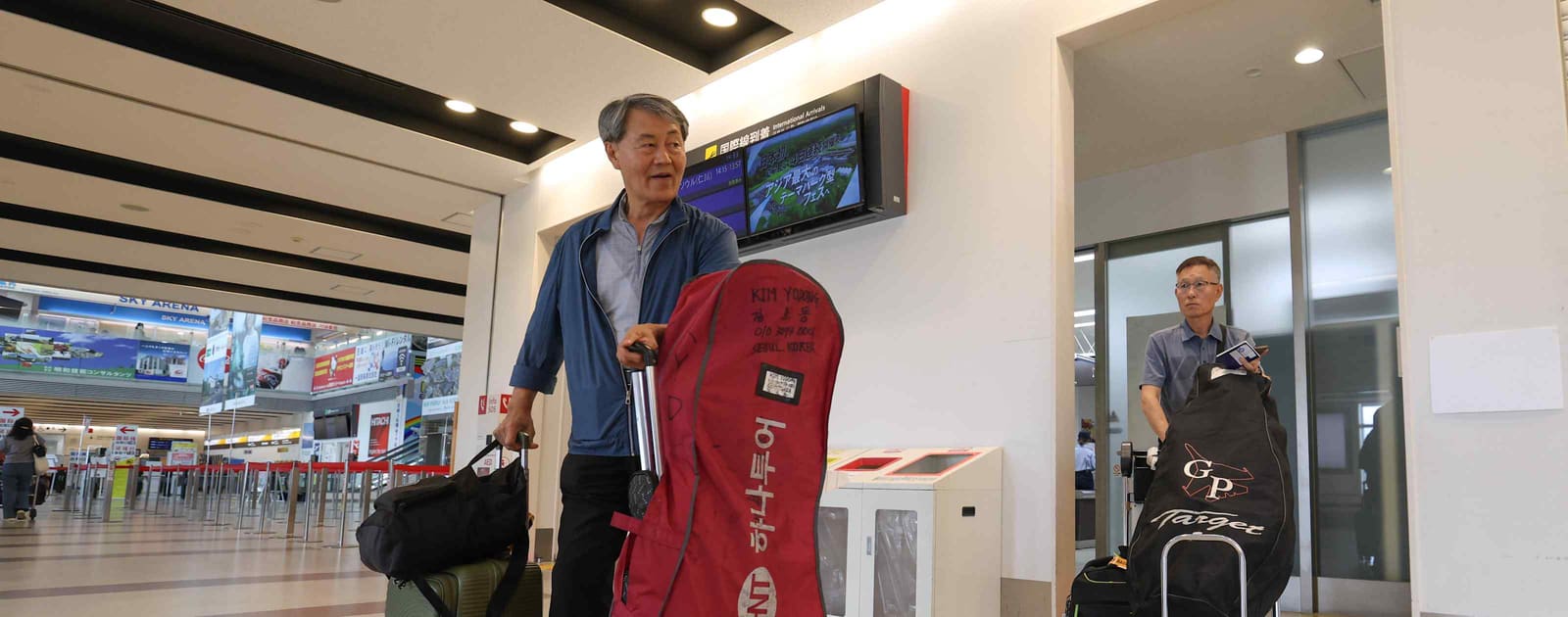
South Korean arrivals at Ibaraki Airport, a regional gateway northeast of Tokyo, signal the tangible progress of this strategy. The airport has emerged as a key node for golf tourism, with courses in the surrounding prefectures actively courting group bookings and package tours from Seoul and Busan.
The Economics of Cross-Border Play
The appeal of Japanese courses to South Korean golfers rests on several converging factors. Membership fees and green fees in South Korea have climbed steadily, making weekend rounds at premium domestic facilities comparable in cost to short-haul international trips that include accommodation and play. Currency dynamics have periodically amplified this arbitrage, though recent yen volatility has introduced friction.
Japanese courses, meanwhile, face excess capacity. Construction booms in the 1980s and early 1990s left the country with more than 2,300 courses, a figure that has remained relatively stable even as the number of active players has contracted. Operators have responded by experimenting with pricing models, membership structures, and amenity upgrades designed to attract both domestic and international play.
South Korean golfers represent a particularly attractive segment. They tend to travel in organized groups, book multi-day packages, and demonstrate higher per-visit spending than budget-conscious domestic players. For courses in regions like Ibaraki, Tochigi, and Chiba, these visitors provide a measurable revenue lift during weekdays and shoulder seasons when local demand is weakest.
Structural Headwinds at Home
The domestic decline in golf participation is not a cyclical downturn but a generational shift. Survey data and industry reports consistently show that Japanese in their twenties and thirties are far less likely to take up the sport than their parents were at the same age. Cost is a primary barrier: equipment, lessons, membership fees, and course charges can easily run into hundreds of thousands of yen annually, placing the sport out of reach for households navigating stagnant wages and rising living costs.
Time commitment is another deterrent. A typical round requires half a day or more, including travel to often-remote courses. Younger workers, facing longer hours and less job security than previous generations, increasingly prioritize hobbies that fit into shorter windows and offer immediate gratification.
The result is an aging player base and declining course utilization. Some facilities have closed, but most have opted to remain operational while seeking new revenue streams. International visitors, particularly from South Korea, have emerged as a logical target.
Regional Airports as Catalysts
Ibaraki Airport's role in this ecosystem is instructive. The facility, which opened in 2010 and initially struggled to attract traffic, has found a niche in low-cost and charter services connecting Japan with regional cities in South Korea and China. Golf tourism has become a core use case, with courses offering shuttle services and multilingual staff to streamline the visitor experience.
Other regional airports in Shizuoka, Niigata, and northern Kyushu have pursued similar strategies, positioning themselves as gateways to clusters of courses that would otherwise be difficult for international visitors to access. The model depends on coordination between airlines, local governments, and course operators, a level of collaboration that has historically been challenging in Japan's fragmented tourism sector.
What Comes Next
The sustainability of this strategy hinges on variables outside the industry's control. South Korea's own golf market is evolving, with new courses and policy changes that could reduce the cost advantage of playing abroad. Exchange rate fluctuations can quickly erode pricing arbitrage, as can shifts in travel restrictions or bilateral relations.
Japanese courses are also competing with destinations like Thailand, Vietnam, and the Philippines, which offer lower costs and warmer climates year-round. Maintaining competitiveness will require continued investment in customer experience, language support, and package innovation.
For now, the sight of South Korean groups disembarking at regional airports and heading to the links represents a lifeline for an industry searching for stable footing. Whether it proves sufficient to offset long-term domestic decline remains an open question, but the industry has made its choice: look outward, or risk irrelevance.
RELATED STORIES
Japan's August Exports Rise 19.3% on Semiconductor Demand
Aiko Nakamura · 3 min
China Imposes Anti-Dumping Measures on Japanese Semiconductor Chemical Imports
Jun-ho Seo · 3 min

Japan Wage Growth Hits 29-Year High, Reinforcing Central Bank Rate Path
Aiko Nakamura · 3 min
SoftBank Prices ¥1 Trillion Retail Bond in Largest Offering Since 2020
Aiko Nakamura · 3 min
Spot something wrong? Email editor@briefasia.com. We log every correction publicly.