Asia · Business
Japanese Automakers Lose Ground in China as EV Shift Accelerates
Toyota's first-half sales fell 17% as consumers pivot to electric vehicles amid rising fuel costs and a rapidly evolving market
KEY TAKEAWAYS
- ·Toyota Motor's China sales dropped 17% in the first half of the year as consumers shifted to electric vehicles amid elevated crude oil prices.
- ·High fuel costs and competitive pricing from domestic Chinese EV makers are eroding market share for Japanese automakers who entered the electric transition later.
- ·Japanese manufacturers face a multi-year product cycle gap before new electric models reach showrooms, leaving them exposed to further volume declines.
The Combustion Engine Retreat
Toyota Motor reported a 17% decline in new vehicle sales across China during the first six months of the year, the company announced Monday. The drop marks one of the steepest half-year contractions for the Japanese automaker in its largest global market, reflecting a structural shift in Chinese consumer preferences toward electrified powertrains.
The sales decline comes as crude oil prices remain elevated following escalating conflict in Iran, making gasoline-powered vehicles increasingly expensive to operate. Chinese buyers, already predisposed to electric vehicles through years of government incentives and infrastructure build-out, are accelerating their move away from internal combustion engines.
Honda faces similar headwinds in the market. The Osaka-based manufacturer has struggled to maintain volume as its traditional sedan and compact offerings lose relevance in a market where battery-electric and plug-in hybrid models now dominate showroom traffic.
Market Dynamics Reshape the Competitive Landscape
China's passenger vehicle market has undergone a fundamental transformation over the past eighteen months. Domestic brands including BYD, Geely, and NIO have captured significant share by offering competitively priced electric vehicles with advanced driver-assistance features and connected services that resonate with younger buyers.
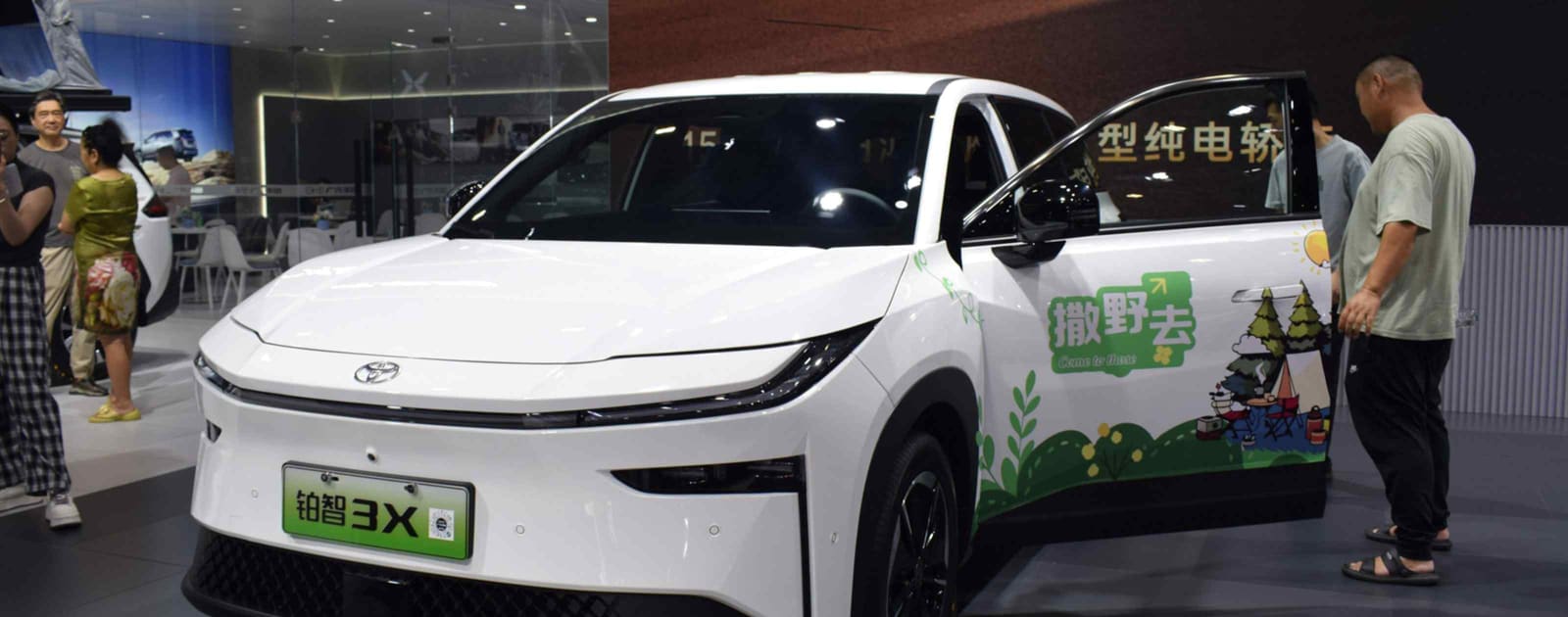
Japanese automakers entered the electric transition later than their Chinese competitors, and the gap in product cadence is now visible in sales figures. While Toyota sells the bZ3X SUV through its GAC Toyota joint venture, the model lineup remains thin compared to the dozens of electric options available from local manufacturers.
The pricing environment has also turned hostile for foreign brands. Chinese EV makers benefit from integrated domestic supply chains, allowing them to undercut imported and joint-venture models by substantial margins. A mid-size electric SUV from a Chinese brand can retail for 30% less than a comparable offering from a Japanese joint venture, even before factoring in provincial purchase incentives.
Oil Prices Amplify the Transition
High petroleum costs have added urgency to the shift. Brent crude has traded above $95 per barrel for much of the year, driven by supply disruptions tied to the Iran conflict. For Chinese consumers, that translates to pump prices near historic highs, making the operating-cost advantage of electric vehicles more pronounced.
The economics are straightforward. A typical gasoline sedan in China now costs approximately 0.85 yuan per kilometer to fuel, while an equivalent electric model runs at roughly 0.15 yuan per kilometer when charged at home overnight. Over a five-year ownership period, the savings can exceed 50,000 yuan, enough to offset much of the price premium that electric vehicles once carried.
Toyota and Honda have both announced plans to expand their electric lineups in China, but product cycles in the automotive industry span years, not quarters. New models currently in development will not reach showrooms until late next year at the earliest, leaving both companies exposed to further share erosion in the interim.
What Comes Next
The first-half results underscore a broader recalibration underway in Asia's automotive sector. Japanese manufacturers built their China strategies around fuel efficiency and reliability in combustion engines, advantages that matter less in a market that has moved decisively toward electrification.
Both Toyota and Honda maintain significant manufacturing footprint in China through joint ventures with state-owned partners. Those investments now require retooling and retargeting toward electric platforms, a capital-intensive process that will weigh on margins even as sales volumes remain under pressure.
The question for Japanese automakers is whether they can regain momentum before their brand equity in China erodes beyond recovery. The market is unforgiving. Chinese consumers show little loyalty to legacy brands when domestic alternatives offer better technology at lower prices, and the window to reverse course is narrowing.
RELATED STORIES
Honda Demands 30% Price Cuts From Suppliers in $9.4 Billion Cost Plan
Cheng Wei-Lun · 3 min
Malaysia's Rare Earth Deposits Draw Foreign Interest Ahead of China Export Controls
Priyanka V. Rao · 3 min
Beijing Warns Domestic EV Makers Against Overseas Price Wars
Cheng Wei-Lun · 3 min
Volkswagen Probes Chinese Supplier After Hundreds of New Graduates Dismissed
Cheng Wei-Lun · 3 min
Spot something wrong? Email editor@briefasia.com. We log every correction publicly.