Finance · Markets
Japan's Yen Hits Four-Decade Low as Policy Gap Pressures Currency
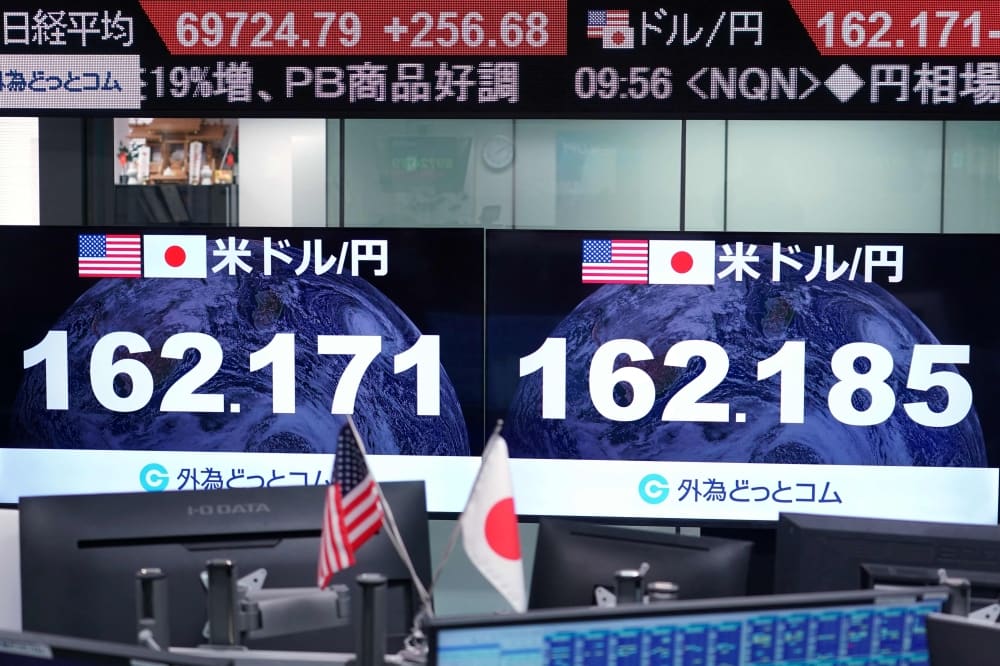
The yen slid to its weakest level since 1986 despite intervention threats, as the widening rate gap with the US fuels capital outflows and complicates the Bank of Japan's next move.
KEY TAKEAWAYS
- ·The Japanese yen fell to 163.24 against the dollar, its weakest level since December 1986, driven by widening interest rate differentials with the United States.
- ·Japan spent 11.7 trillion yen on currency intervention in May, yet the yen remains near four-decade lows, highlighting the limited lasting impact of such measures.
- ·The Bank of Japan meets July 31 and is expected to hold rates steady, with most economists forecasting the next hike in December despite market speculation of faster tightening.
Currency Under Pressure
The Japanese yen reached 163.24 per dollar on Wednesday, marking its weakest level in nearly forty years. The slide comes as Tokyo grapples with a persistent interest rate gap that continues to push capital offshore, despite repeated warnings from officials about possible market intervention.
Finance Minister Satsuki Katayama has signaled readiness to take "decisive actions as needed" to support the currency, echoing statements from recent weeks. Yet analysts question whether such moves can reverse the structural forces weighing on the yen.
The currency edged slightly higher on Thursday after reports emerged that the Bank of Japan might accelerate its rate-hike schedule, responding to inflation pressures amplified by the weaker yen. Still, most economists expect the central bank to hold rates steady at its July 31 meeting, following last month's increase to a 31-year high. The consensus view points to the next hike in December.
The Carry Trade Problem
At the heart of the yen's decline lies a fundamental arbitrage. Investors borrow cheaply in yen and deploy capital in higher-yielding assets abroad, particularly in the United States and other major economies where rates remain elevated. This "carry trade" dynamic drains capital from Japan and exerts continuous downward pressure on the currency.
With market participants pricing in at least one more Federal Reserve rate increase before year-end, the spread between Japanese and US rates is expected to persist or widen further. That outlook keeps the carry trade attractive and the yen vulnerable.
Katayama this month called on Japan's pension funds to raise domestic asset allocations, a move that briefly lifted the yen and eased pressure on government bond yields. But the effect proved short-lived.
Stephen Innes at SPI Asset Management noted that Tokyo's interventions can disrupt trading temporarily but have not convinced markets that policy direction has fundamentally shifted. Japan's own priorities complicate the picture: the government seeks stronger growth, greater investment, and continued fiscal support, all of which lean against a stronger currency.
Limited Impact of Intervention
Japan spent 11.7 trillion yen on currency intervention in May, according to Standard Chartered, yet the yen remains near four-decade lows. Similar efforts in 2024 also failed to produce lasting results.
Standard Chartered economists highlighted that prior interventions have done little to arrest the slide, underscoring the limited durability of such measures. Fabien Yip at IG observed that without a genuine shift in Bank of Japan policy, intervention functions as a circuit-breaker rather than a cure for yen weakness.
The central bank faces a delicate balancing act. Normalizing rates too quickly risks unsettling the Japanese government bond market, raising debt-service costs, and damaging the broader economy. Moving too slowly, however, leaves the yen exposed and inflation pressures unaddressed.
Regional Spillover Risks
Beyond Japan's internal dynamics, external factors are compounding the pressure. Surging oil prices, driven in part by disruptions to Middle East shipments, and rising US Treasury yields add weight to the yen's decline and threaten other Asian currencies.
Lloyd Chan at MUFG pointed out that many regional economies depend heavily on imported energy, including South Korea, Singapore, the Philippines, and Thailand. Elevated oil prices and concerns over fuel shortages could have significant spillover effects, particularly for energy-intensive industries and economies with large external energy needs.
For now, Japanese authorities remain caught between the need to support the currency and the constraints imposed by domestic growth objectives and fiscal realities. Households and institutions continue to find better returns abroad, and until that calculus changes, the yen's slide may prove difficult to reverse.
The Bank of Japan's July 31 decision will offer fresh clues about how aggressively policymakers are willing to tighten, but the underlying tension between Japan's gradual normalization and the rest of the world's higher rates is unlikely to resolve quickly.
RELATED STORIES
Yen Climbs to Eight-Month High as Rate Hike Expectations Shift Sentiment
Jun-ho Seo · 3 min

Bank of Japan Signals Possible Rate Increase This Month
Aiko Nakamura · 3 min

Japan Deploys $96.5 Billion in Currency Intervention to Halt Yen's Slide
Aiko Nakamura · 3 min

Japan Wage Growth Hits 29-Year High, Reinforcing Central Bank Rate Path
Aiko Nakamura · 3 min
Spot something wrong? Email editor@briefasia.com. We log every correction publicly.