Asia · Business
Japan Prepares Diplomatic Push to Help Companies Enter Indian Market
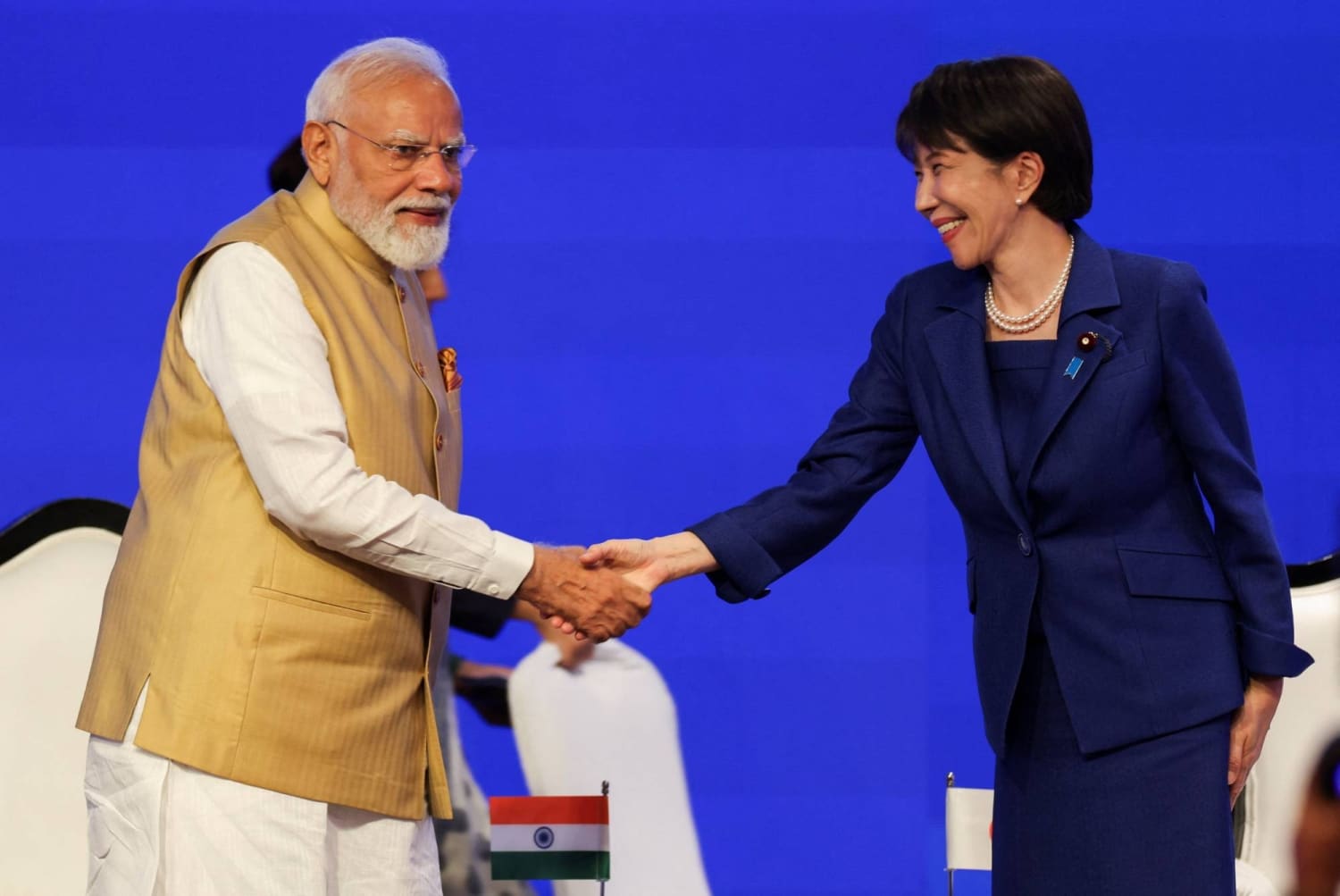
Tokyo plans to leverage bilateral ties with New Delhi to smooth regulatory and business hurdles for Japanese firms eyeing expansion in South Asia's largest economy
KEY TAKEAWAYS
- ·Japan is preparing diplomatic measures to help companies enter India, addressing regulatory complexity and infrastructure gaps that have limited investment despite strong growth.
- ·The framework would provide government coordination on licensing, state-level regulations, and sector incentives, similar to models Japan deployed in Vietnam and Indonesia.
- ·The initiative reflects competition for manufacturing diversification opportunities as Japan, South Korea, and Germany expand economic diplomacy in South Asia's largest economy.
A Strategic Shift in Economic Diplomacy
Japan is preparing to deploy diplomatic resources to help its companies navigate entry into India's complex regulatory landscape, marking a shift in how Tokyo approaches one of Asia's fastest-growing consumer markets. The move comes as Japanese manufacturers and service providers seek alternatives to China-centric supply chains and eye India's 1.4 billion population as a growth opportunity.
The diplomatic support framework would address persistent friction points Japanese firms encounter when establishing operations in India: opaque licensing procedures, inconsistent state-level regulations, and infrastructure bottlenecks that can delay projects by months or years. Tokyo's approach represents a recognition that market access in India often requires government-to-government coordination rather than purely commercial negotiation.
Prime Minister Sanae Takaichi's administration has prioritized economic security, and India features prominently in that calculus. New Delhi offers Japanese electronics, automotive, and pharmaceutical companies a hedge against geopolitical risk concentrated in Northeast Asia while providing a manufacturing base that benefits from lower labor costs than Japan and improving, if still uneven, infrastructure.
The India Opportunity and Its Challenges
India's economy expanded 7.2 percent in the fiscal year ending March 2026, outpacing most major markets. Yet Japanese direct investment remains modest compared to flows into Southeast Asia. Bureaucratic complexity, land acquisition difficulties, and gaps in logistics infrastructure have historically deterred Japanese firms accustomed to predictable regulatory environments.
The planned diplomatic initiative would likely involve seconding trade officials to key Indian states, establishing fast-track consultation channels with ministries in New Delhi, and coordinating with Indian counterparts on sector-specific issues. Japan has used similar models in Vietnam and Indonesia, where government-to-government working groups helped resolve customs and permitting delays.
Japanese automotive suppliers, electronics manufacturers, and pharmaceutical companies are particularly interested in India's production-linked incentive schemes, which offer financial support for local manufacturing. However, navigating these programs requires familiarity with Indian administrative culture and often benefits from diplomatic facilitation.
Regional Implications
The move aligns with broader efforts by Japan, the United States, and European nations to diversify supply chains away from single-country dependencies. India has positioned itself as a manufacturing alternative, though it still lags China in infrastructure quality, ease of doing business, and the density of supplier ecosystems.
For India, deeper Japanese corporate engagement brings technology transfer, manufacturing expertise, and capital. New Delhi has courted Tokyo for years, offering dedicated industrial corridors and streamlined approval processes for Japanese investors. The diplomatic support mechanism would test whether these commitments translate into smoother on-the-ground operations.
The initiative also reflects competitive pressure. South Korea and Germany have expanded economic diplomacy in India, and Chinese firms, despite geopolitical tensions, continue to invest in Indian manufacturing and digital infrastructure. Japan risks ceding market position if its companies remain cautious while competitors move aggressively.
Observers will watch whether Tokyo's diplomatic backing translates into measurable increases in Japanese FDI, joint ventures, and technology partnerships in India. Success would likely encourage other advanced economies to adopt similar frameworks, reshaping how governments support corporate internationalization in complex emerging markets.
RELATED STORIES
China Imposes Anti-Dumping Measures on Japanese Semiconductor Chemical Imports
Jun-ho Seo · 3 min

Berkshire Hathaway Eyes Larger Stakes in Japan's Top Trading Houses
Cheng Wei-Lun · 3 min
Japan's August Exports Rise 19.3% on Semiconductor Demand
Aiko Nakamura · 3 min
Malaysia's Rare Earth Deposits Draw Foreign Interest Ahead of China Export Controls
Priyanka V. Rao · 3 min
Spot something wrong? Email editor@briefasia.com. We log every correction publicly.