Finance · Markets
Japan's Banking Giant MUFG Overtakes Toyota in Market Value
Mitsubishi UFJ Financial Group's valuation hits ¥42 trillion, marking the first time a financial institution has claimed the top spot in Japan's equity rankings
KEY TAKEAWAYS
- ·Mitsubishi UFJ Financial Group reached a market capitalization of ¥42 trillion, surpassing Toyota to become Japan's most valuable publicly traded company for the first time.
- ·The shift reflects improved profitability for Japanese banks as the Bank of Japan normalizes interest rates after years of ultra-low policy that compressed financial sector margins.
- ·Toyota's displacement highlights investor uncertainty around automakers navigating the costly transition to electric vehicles amid rising competition from Chinese manufacturers.
A Historic Shift in Japan's Corporate Hierarchy
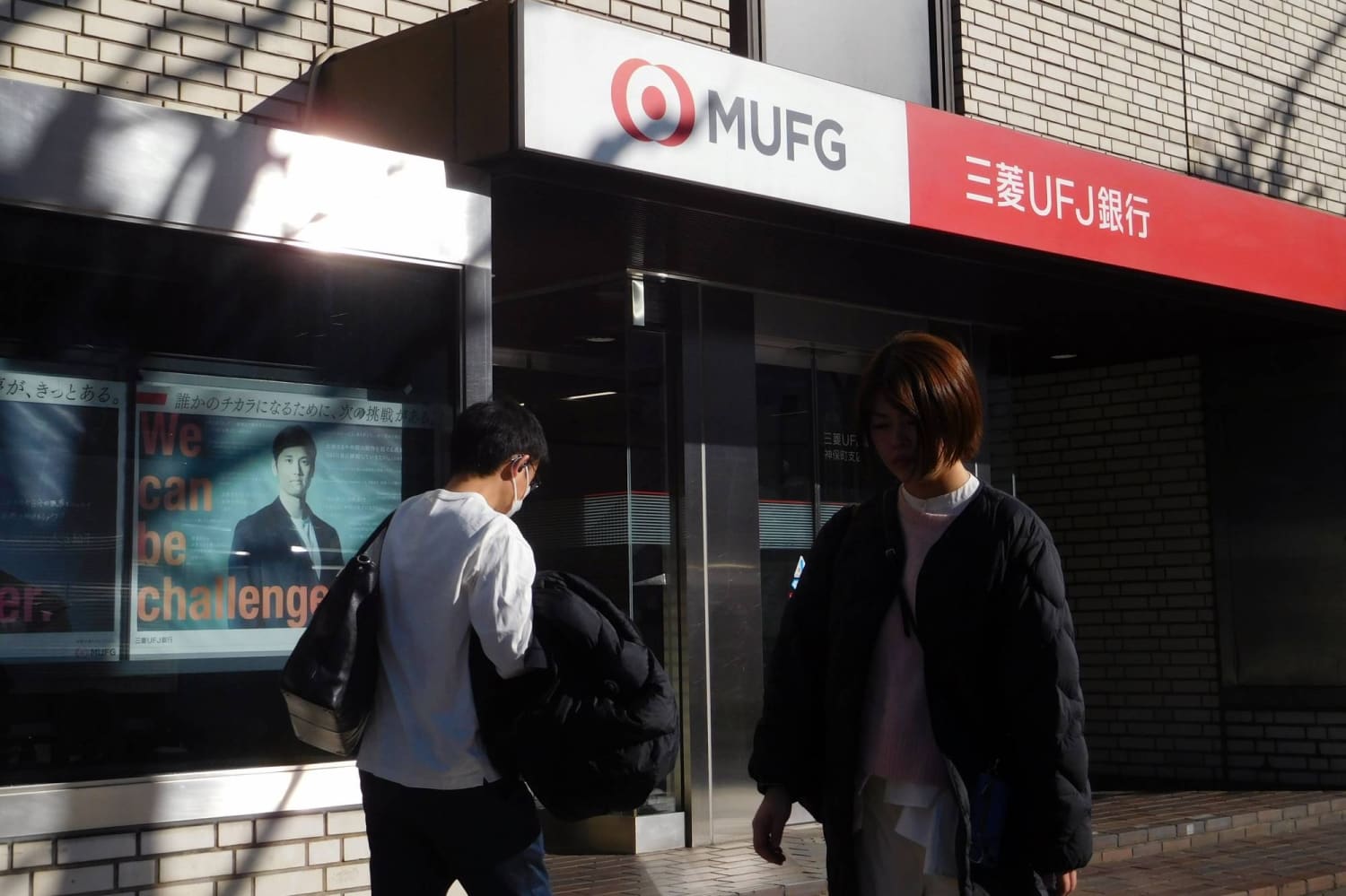
For the first time in its history, Japan's most valuable publicly traded company is not an automaker or electronics conglomerate, but a bank. Mitsubishi UFJ Financial Group has reached a market capitalization of ¥42 trillion (approximately $290 billion), pushing it past Toyota Motor Corporation to claim the top position in the country's equity markets.
The milestone represents more than a simple reshuffling of corporate rankings. It signals a fundamental recalibration of investor sentiment toward Japanese financial institutions, which for decades played second fiddle to the nation's export-driven manufacturing giants. Toyota, which has held the crown as Japan's most valuable firm through much of the past two decades, now finds itself displaced by an institution that embodies the country's financial infrastructure rather than its industrial prowess.
The Rise of Japanese Banking Valuations
MUFG's ascent reflects a broader revaluation of Japanese banks that has been building momentum over the past eighteen months. The shift comes as the Bank of Japan gradually normalizes monetary policy after years of ultra-low and negative interest rates, a regime that compressed bank profitability and kept financial sector valuations depressed.
With interest rates moving into positive territory, net interest margins for Japanese lenders have begun to expand. MUFG, as the country's largest bank by assets, stands to benefit disproportionately from this tailwind. The group's sprawling domestic branch network and its substantial holdings of Japanese government bonds position it to capture improved spreads as the yield curve steepens.
Beyond domestic factors, MUFG has also diversified its revenue base through strategic acquisitions and partnerships across Asia and North America. Its stake in Morgan Stanley and investments in Southeast Asian banking franchises provide earnings streams less dependent on Japan's domestic economic cycles. This geographic diversification has made the institution more attractive to international portfolio managers seeking exposure to Asian financial services without the concentration risk of a purely domestic player.
What This Means for Japan's Industrial Identity
The displacement of Toyota carries symbolic weight. For generations, Toyota represented Japan's post-war economic miracle, its global competitiveness, and its manufacturing excellence. The company's production system became a case study taught in business schools worldwide, and its hybrid vehicle technology positioned it as a leader in the automotive industry's transition.
Yet the automotive sector now faces profound uncertainty. The transition to electric vehicles demands massive capital investment, reconfigured supply chains, and new technological capabilities. Chinese competitors have moved aggressively into battery electric vehicle production, while legacy automakers navigate the costly pivot away from internal combustion engines. Toyota's relatively cautious approach to full battery electric vehicles, favoring hydrogen and hybrid technologies, has drawn skepticism from some investors even as the company defends its multi-pathway strategy.
MUFG's rise, by contrast, reflects confidence in the stability and predictability of financial intermediation in a rising rate environment. Banks are not immune to disruption, but the path forward for a well-capitalized, diversified financial institution appears clearer to equity markets than the road ahead for automakers.
Regional Context and Implications
Japan's equity market dynamics increasingly mirror broader trends across Asia's developed economies. In South Korea, financial and technology conglomerates have long dominated market capitalization rankings. In Hong Kong, banks and financial services firms have historically held outsized positions. Japan, with its unique industrial structure and export orientation, remained an outlier where manufacturing giants commanded the highest valuations.
The shift toward financial sector leadership brings Japan more in line with market structures seen in other advanced economies, where banks, technology platforms, and healthcare firms typically occupy the top tier. It also raises questions about the future trajectory of Japan's industrial policy, which has historically favored manufacturing and export sectors with subsidies, tax incentives, and government coordination.
For investors, the reordering suggests a maturation of Japan's equity markets and a willingness to reward financial performance and shareholder returns over legacy industrial prestige. MUFG has returned capital to shareholders through dividends and buybacks, a practice that has become more common among Japanese firms under pressure from domestic pension funds and foreign institutional investors to improve capital efficiency.
The Road Ahead for Both Giants
Whether MUFG can sustain its position atop Japan's market capitalization rankings depends on several variables. Interest rate policy, credit quality, and the health of Japan's domestic economy will all influence the bank's profitability and valuation. Any reversal in monetary policy, or a deterioration in loan performance, could quickly erode investor confidence.
Toyota, meanwhile, retains formidable strengths: a global production footprint, a reputation for quality and reliability, and deep cash reserves to fund its transition strategy. The company's hybrid vehicle lineup continues to sell well in markets where charging infrastructure for pure electric vehicles remains underdeveloped. A successful execution of its electrification roadmap could restore investor enthusiasm and propel its valuation higher.
For now, the changing of the guard atop Japan's corporate rankings offers a snapshot of an economy in transition, where the old pillars of industrial might face new competitive pressures and the institutions that manage capital have found renewed relevance in a shifting monetary landscape.
RELATED STORIES

Japan Wage Growth Hits 29-Year High, Reinforcing Central Bank Rate Path
Aiko Nakamura · 3 min
ABN Amro Clearing to Break Into Japan's Power Futures Market
Tran Quoc Bao · 3 min
Bank of Japan Signals Possible Rate Increase This Month
Aiko Nakamura · 3 min

Japan Deploys $96.5 Billion in Currency Intervention to Halt Yen's Slide
Aiko Nakamura · 3 min
Spot something wrong? Email editor@briefasia.com. We log every correction publicly.