Technology · Startups
Japan Channels $125 Million Into Fusion and Recycling Startups
GX Acceleration Agency's investment in Kyoto Fusioneering and JEPLAN marks early progress in Tokyo's ambitious $2.3 trillion industrial transformation plan through 2040.
KEY TAKEAWAYS
- ·Japan's GX Acceleration Agency invested in Kyoto Fusioneering and JEPLAN, generating 20 billion yen ($125 million) in combined public-private funding for fusion and plastics recycling technologies.
- ·The investment is part of a government plan to mobilize 370 trillion yen ($2.3 trillion) across 17 strategic sectors by fiscal 2040 to reshape Japan's industrial base.
- ·Tokyo's selective startup funding model contrasts with South Korea's conglomerate focus and China's broader subsidy approach, emphasizing technical depth and export competitiveness.
Public Capital Meets Private Innovation
Japan's Green Transformation Acceleration Agency has deployed capital into two domestic startups, catalyzing a combined 20 billion yen ($125 million) in public-private funding across nuclear fusion technology and advanced plastics recycling. The recipients, Kyoto Fusioneering and JEPLAN, represent the kind of hard-tech bets Tokyo is making as it pursues industrial decarbonization at scale.
The agency's move forms part of a broader government commitment to mobilize 370 trillion yen ($2.3 trillion) in public and private investment across 17 strategic sectors by fiscal 2040, according to the GX Acceleration Agency. The framework targets industries ranging from hydrogen infrastructure to carbon capture, with an emphasis on technologies that can reshape Japan's energy mix and manufacturing base.
Two Startups, Two Pathways
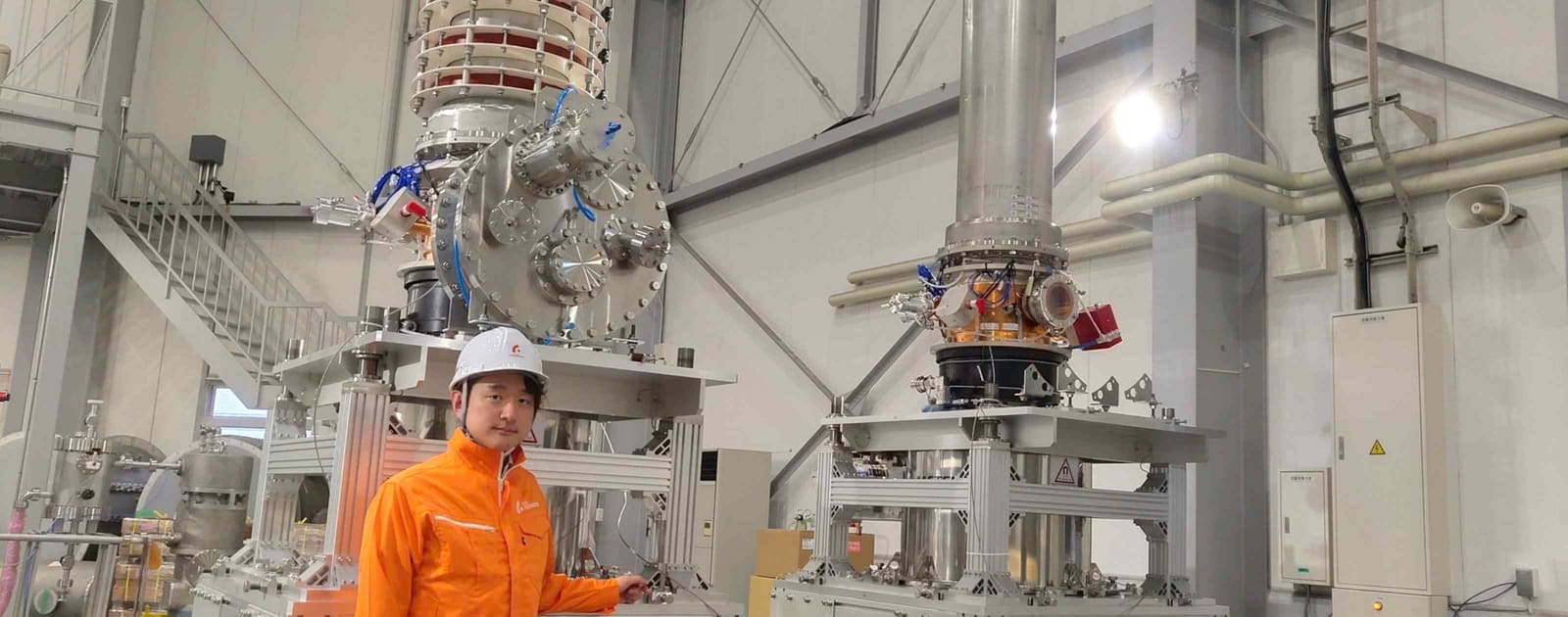
Kyoto Fusioneering develops auxiliary equipment for nuclear fusion reactors, a sector that has attracted renewed attention as governments and investors search for scalable low-carbon baseload power. The company's focus on the engineering layer, rather than reactor physics alone, positions it within the supply chain that will be necessary if fusion moves from lab to grid.
JEPLAN operates in chemical recycling, breaking down plastics into feedstock that can re-enter manufacturing loops. The technology addresses a persistent challenge in Asia's petrochemical-heavy industrial landscape: converting post-consumer waste into virgin-equivalent material without the energy penalty of mechanical recycling.
Both companies operate in capital-intensive domains where patient funding and policy alignment matter as much as technical execution. The GX Acceleration Agency's involvement signals that Tokyo views these sectors as strategic, not speculative.
Why the GX Push Matters Now
Japan's industrial policy has shifted from passive incentives to active capital deployment. The GX Acceleration Agency, established under Prime Minister Sanae Takaichi's administration, operates as a state-backed investment vehicle designed to de-risk early-stage technologies that align with national decarbonization goals.
The 370 trillion yen target is not a direct government outlay but a combination of public seed funding, loan guarantees, and private co-investment. The structure aims to leverage state capital to pull in corporate and institutional money, particularly in sectors where return timelines exceed typical venture horizons.
The agency's selection criteria emphasize scalability, alignment with Japan's net-zero commitments, and potential for export competitiveness. Fusion and chemical recycling both meet those thresholds, though neither has reached commercial maturity at the scale required to move national emissions metrics.
Regional Context and Capital Flows
Japan's approach contrasts with other Asian industrial strategies. South Korea has concentrated green funding on established conglomerates with existing manufacturing scale, while China has deployed subsidies across a broader base of firms, prioritizing volume and speed over selectivity.
Tokyo's model sits between these poles: it backs startups but within a centralized framework, and it prioritizes sectors where Japan holds technical depth or supply chain position. Kyoto Fusioneering's reactor equipment expertise and JEPLAN's polymer chemistry both build on decades of Japanese R&D in materials science and precision engineering.
The challenge is execution speed. Japan's startup ecosystem has historically lagged peers in scaling companies from prototype to production. The GX framework attempts to address this by bundling policy support, procurement commitments, and capital access, but the test will be whether these firms can reach commercial milestones before international competitors do.
What Comes Next
The GX Acceleration Agency is expected to announce additional investments across other strategic sectors in the coming quarters. Priority areas include offshore wind component manufacturing, next-generation battery materials, and carbon capture equipment, all of which require multi-year capital commitments and coordinated policy support.
For Kyoto Fusioneering and JEPLAN, the funding provides runway to advance pilot projects and attract follow-on private investment. Whether these bets deliver returns, however, depends on factors beyond capital: regulatory frameworks, procurement pipelines, and the willingness of industrial customers to adopt unproven technologies at scale.
Japan's $2.3 trillion ambition is as much about reshaping domestic industry as it is about decarbonization. The fusion and recycling investments are early markers in a longer campaign to rebuild competitiveness in sectors where Japan once led but now competes with faster-moving rivals across Asia and beyond.
RELATED STORIES
Itochu and Taiwan IT Leader Back Taiwanese Chip Firms' Kyushu Push
Cheng Wei-Lun · 3 min
Japanese Chipmaker Plans Southeast Asia Production Expansion
Cheng Wei-Lun · 3 min
Tokyo Summit Pushes Trilateral Tech Alliance Among Taiwan, Japan, and US
Cheng Wei-Lun · 3 min
Japan Approves Securities License for Unlisted Stock Trading Platform
Cheng Wei-Lun · 3 min
Spot something wrong? Email editor@briefasia.com. We log every correction publicly.