Asia · Politics
Indonesia Weighs BRICS Partners for First Spaceport Project
Russia and India compete to anchor Jakarta's spacefaring ambitions as regulatory gaps threaten to delay equatorial launch advantage
KEY TAKEAWAYS
- ·Russia and India have submitted competing proposals to build Indonesia's first commercial spaceport, with technology transfer terms expected to influence Jakarta's decision.
- ·Indonesia's incomplete space regulatory framework creates uncertainty for foreign partners, with no comprehensive legislation yet passed on liability, frequency allocation, or orbital debris management.
- ·The country's equatorial geography offers fuel cost advantages for geostationary orbit launches, but regional competitors including Australia and Malaysia are advancing their own spaceport plans.
Two Giants, One Launch Site
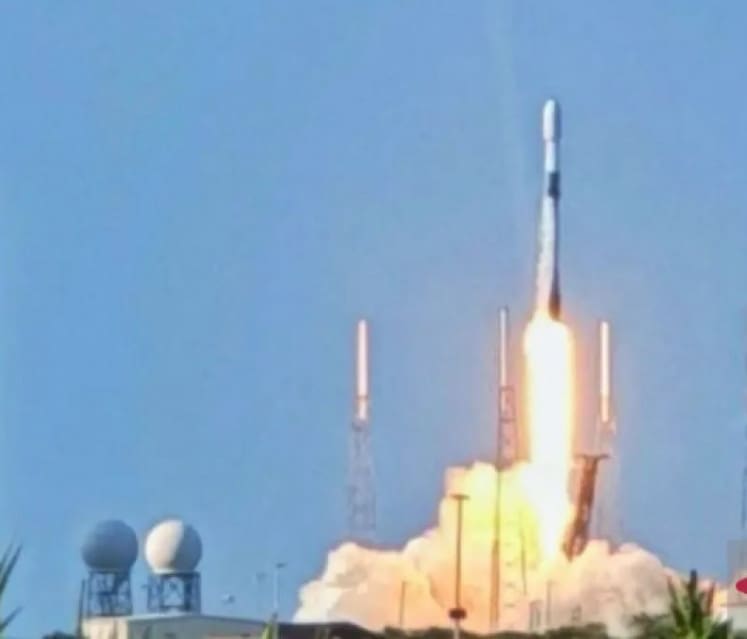
Indonesia is navigating competing proposals from Russia and India to build its first commercial spaceport, a project that could position the archipelago nation as a critical player in Asia's expanding satellite launch market. Both countries have submitted technical blueprints to Jakarta, each offering distinct advantages in financing, technology sharing, and operational timelines.
The spaceport would exploit Indonesia's equatorial geography, which reduces fuel costs and increases payload capacity for geostationary orbit missions. Locations near the equator require less energy to reach orbit, a factor that has long made the region attractive to global launch operators. Indonesia's territorial span across the equator gives it a natural edge over higher-latitude competitors in Japan, China, and South Korea.
Russia's proposal centers on established launch vehicle families and decades of operational experience, while India's pitch emphasizes cost efficiency and a proven record of commercial satellite deployment through the Indian Space Research Organisation. Neither country has disclosed financial terms publicly, but industry observers note that technology transfer clauses will likely shape Jakarta's final decision.
Regulatory Vacuum Slows Progress
Indonesia's space policy framework remains incomplete, creating uncertainty for potential partners and investors. The country lacks comprehensive legislation governing liability, frequency allocation, orbital debris management, and foreign partnership terms. Parliamentary committees have debated draft space laws since early 2025, but no bill has reached a final vote.
This regulatory gap complicates negotiations with Moscow and New Delhi. International space commerce requires clear legal structures for insurance, dispute resolution, and intellectual property rights. Without binding statutes, foreign partners face ambiguity over contract enforcement and long-term operational guarantees.
The National Institute of Aeronautics and Space, Indonesia's primary space agency, has urged lawmakers to accelerate the legislative process. Agency officials argue that regulatory clarity is essential to attract not only spaceport construction but also downstream industries such as satellite manufacturing, ground station networks, and data analytics services.
Technology Transfer as Strategic Lever
Jakarta has signaled that any spaceport agreement must include substantial technology transfer provisions. Indonesian officials want more than a turnkey facility; they seek the technical know-how to operate, maintain, and eventually expand launch capabilities independently.
Russia has historically been cautious about sharing sensitive propulsion and guidance technologies, though it has offered training programs and joint mission opportunities in past collaborations with emerging space nations. India, by contrast, has built partnerships across Southeast Asia that include capacity-building initiatives and shared satellite programs.
The technology transfer question extends beyond hardware. Indonesia aims to develop indigenous expertise in trajectory optimization, telemetry systems, and launch safety protocols. Whichever partner can credibly commit to knowledge-sharing alongside infrastructure construction will gain a decisive advantage.
Regional Competition and Market Dynamics
Indonesia's spaceport ambitions unfold against a backdrop of intensifying regional competition. Australia is expanding its launch facilities in the Northern Territory, while Malaysia and Thailand have announced feasibility studies for their own spaceports. The Philippines has explored partnerships with private launch providers.
The global small satellite market is projected to grow significantly through the end of the decade, driven by demand for Earth observation, telecommunications, and Internet of Things constellations. A functioning Indonesian spaceport could capture a share of Asian and Oceanian launch contracts, particularly for missions targeting equatorial and low-inclination orbits.
Commercial operators in Singapore and Hong Kong have expressed interest in using Indonesian launch services if regulatory and logistical conditions prove favorable. The spaceport's success will depend not only on construction and technology but also on competitive pricing, turnaround times, and integration with regional supply chains.
Clock Ticking on Strategic Window
Indonesia's window to capitalize on its equatorial advantage may be narrowing. Private launch companies are diversifying their global footprint, and other equatorial nations are courting similar partnerships. Kenya, Ecuador, and Brazil have all explored spaceport development in recent years, though none has yet achieved full operational status.
Jakarta's ability to finalize its regulatory framework, secure favorable technology transfer terms, and move swiftly from proposal to construction will determine whether the country becomes a spacefaring hub or watches the opportunity pass to competitors. The BRICS partnership offers a pathway, but only if Indonesia can translate geographic advantage into institutional readiness and sovereign capability.
RELATED STORIES

Indonesia Charges Toba Pulp Lestari in $113 Million Tax Fraud Probe
Siti Nuraini · 3 min
Indonesia Faces Critical Choice Between Resource Control and Industrial Growth
Tran Quoc Bao · 3 min

Indonesia Unveils Bid to Become Global Commodity Price-Setter
Priyanka V. Rao · 3 min
Indonesia's Record Current Account Deficit Threatens Rupiah Stability
Siti Nuraini · 3 min
Spot something wrong? Email editor@briefasia.com. We log every correction publicly.