Sustainability · Energy
Indonesia and Singapore Push Cross-Border Power Trade to Test Public Support
As Jakarta and Singapore formalize clean energy agreements, the real challenge lies in converting diplomatic handshakes into commercially viable projects that deliver economic gains to both nations.
KEY TAKEAWAYS
- ·Indonesia and Singapore signed 26 bilateral agreements in July 2026, with clean energy and cross-border electricity trade forming a core pillar of the partnership.
- ·Singapore must import approximately 6 GW of low-carbon electricity by 2035 to meet climate targets, while Indonesia aims for renewables to reach 19 to 23 percent of its energy mix by 2030.
- ·Success hinges on converting diplomatic commitments into commercially viable projects that deliver tangible jobs, investment, and infrastructure benefits to both nations.
A Diplomatic Milestone With Execution Hurdles Ahead
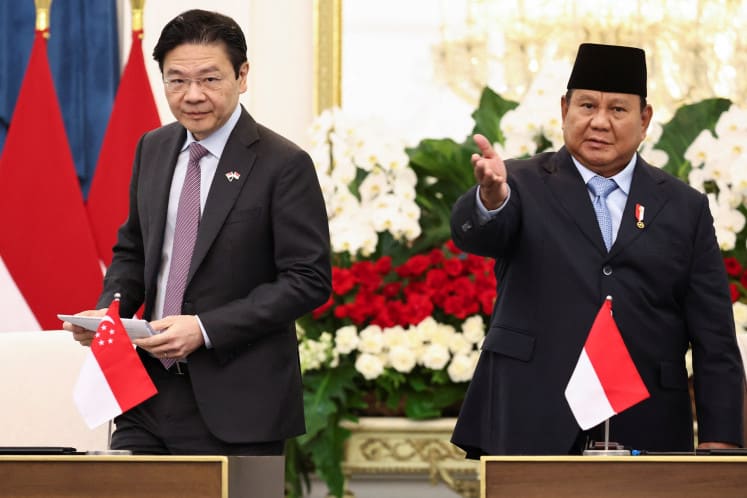
The July 6 Leaders' Retreat in Jakarta produced 26 bilateral agreements between Indonesia and Singapore, marking a significant diplomatic step as the two countries approach the 60th anniversary of relations in 2027. President Prabowo Subianto and Prime Minister Lawrence Wong oversaw deals spanning government and business tracks, with clean energy emerging as a central theme.
Among the outcomes: a carbon-credit framework aligned with Article 6 of the Paris Agreement, a road map for cross-border electricity trade, and commercial agreements designed to advance projects from energy memorandums signed in 2025. The agreements signal that power sector cooperation is no longer a side agenda but a pillar of bilateral ties.
Yet the harder work begins now. Translating these commitments into functioning projects, demonstrating tangible socioeconomic returns, and building public confidence will determine whether the partnership becomes a regional model or stalls in implementation.
Singapore's Energy Security Imperative
Singapore's motivation is straightforward. The city-state has pursued aggressive decarbonization targets despite severe land and resource constraints. Domestic solar capacity reached 2 gigawatt-peak (GWp), with a 2030 target of 3 GWp, but rooftop and floating arrays cannot meet grid needs alone.
To achieve climate goals, Singapore must import approximately 6 GW of low-carbon electricity from neighboring countries by 2035. Regional power trade is not optional; it is foundational to energy security and the path to net zero.
Indonesia presents a natural counterpart. The archipelago offers vast land, abundant natural resources, a large domestic market, and significant renewable energy potential. These assets align with Singapore's import requirements and create the basis for complementary trade.
Indonesia's Domestic Transition Pressures
Jakarta also faces internal drivers for the energy transition. Government Regulation No. 40/2025 on the National Energy Policy sets a target for new and renewable energy to comprise 19 to 23 percent of the primary energy mix by 2030, rising to 70 to 72 percent by 2060.
The regulation emphasizes domestic priorities: energy security, affordability, job creation, local value addition, and national resilience. Cooperation with Singapore should therefore function as more than an export channel. It must serve as a catalyst for inbound investment, skills development, and industrial growth within Indonesia.
This framing is critical. If cross-border power trade is perceived solely as serving Singaporean demand without generating Indonesian employment or infrastructure upgrades, public support will erode quickly.
The Commercial Viability Question
The agreements signed in July set the policy architecture. What remains uncertain is whether the projects underpinning them can achieve commercial scale and financial sustainability.
Cross-border electricity trade involves complex infrastructure: generation capacity, transmission lines, interconnectors, regulatory alignment, and tariff structures. Projects require substantial capital, long lead times, and coordination across multiple government agencies and private entities.
For Indonesia, the value proposition must extend beyond revenue from electricity exports. Domestic stakeholders will scrutinize whether projects create local jobs, transfer technology, and improve energy access in underserved regions. If benefits accrue primarily to foreign investors or Singapore's grid, political resistance will grow.
For Singapore, the challenge is securing reliable, affordable, and genuinely low-carbon power. The city-state's 2035 import target hinges on projects reaching financial close and delivering electrons on schedule. Delays or cost overruns could undermine energy security and climate commitments.
Building Public Trust Through Transparency
The next phase demands more than technical execution. It requires clear communication of benefits, transparent project governance, and mechanisms for public input.
In Indonesia, communities near proposed generation sites or transmission corridors will want assurances on environmental impact, land use, and compensation. Civil society groups will scrutinize whether projects align with national development priorities or serve external interests.
In Singapore, taxpayers and businesses funding the energy transition will expect accountability on costs and supply reliability. Any perception that imported power is more expensive or less secure than domestic alternatives will invite criticism.
Both governments must articulate how cooperation advances mutual interests, not just diplomatic optics. This means publishing project timelines, cost structures, employment data, and environmental assessments. It also means creating channels for stakeholder feedback and addressing concerns proactively.
Regional Blueprint or Bilateral Experiment
If Indonesia and Singapore succeed in operationalizing their clean energy agreements, the model could extend across Southeast Asia. Other ASEAN members with renewable resources, such as Laos and Cambodia, are exploring similar export arrangements with Thailand and Vietnam.
However, failure or protracted delays in the Indonesia-Singapore partnership would signal to the region that cross-border power trade faces insurmountable political and commercial obstacles. That outcome would set back decarbonization efforts across multiple countries.
The stakes extend beyond bilateral relations. The success or failure of this cooperation will shape investor confidence, regulatory frameworks, and public sentiment on regional energy integration for years to come.
Execution, transparency, and demonstrated socioeconomic gains will determine whether the July agreements mark the start of a new energy era or remain aspirational documents gathering dust in government archives.
RELATED STORIES
Southeast Asian Firms Race to Raise Green Debt as Region Falls Behind on Renewables
Priyanka V. Rao · 3 min

CIMB Commits to 55% Dividend Floor as Regional Portfolio Offsets Indonesia Pressure
Priyanka V. Rao · 4 min

Singapore Targets High-Value Data Centre Workloads as Neighbors Scale Up Capacity
Cheng Wei-Lun · 3 min

Singapore Captures Two-Thirds of Southeast Asian EV Startup Capital
Priyanka V. Rao · 3 min
Spot something wrong? Email editor@briefasia.com. We log every correction publicly.