Finance · Markets
Indian Rupee Slides to 95.75 as Middle East Tensions Push Oil Higher
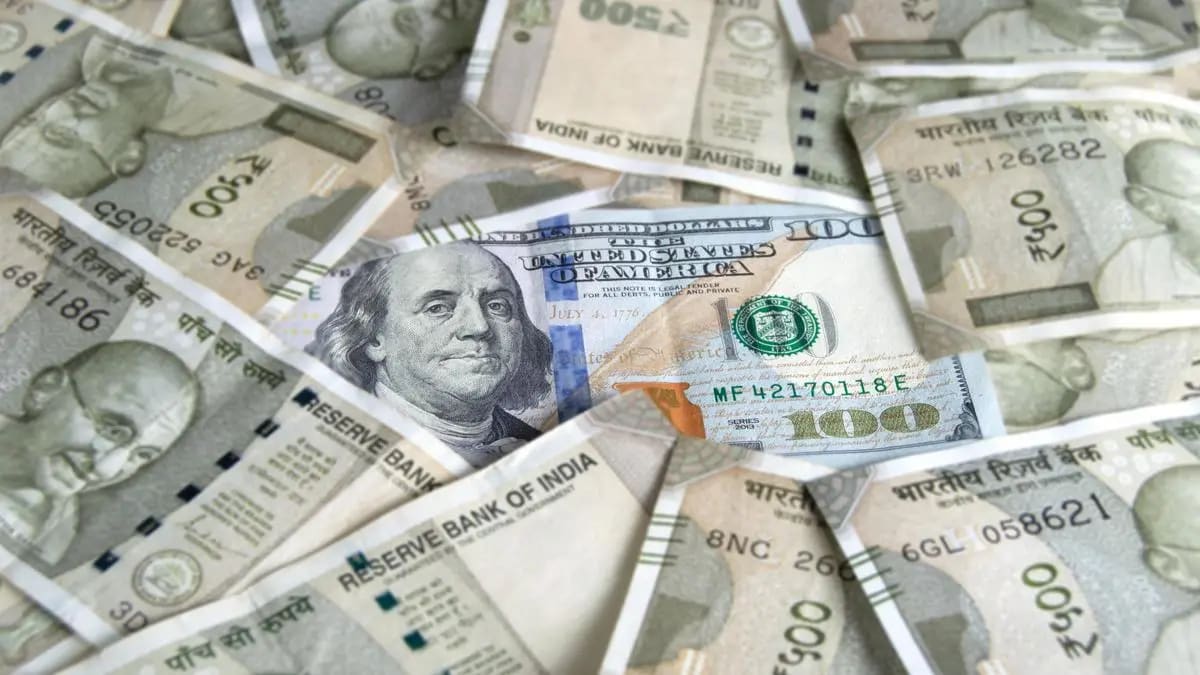
The currency dropped 39 paise at opening amid renewed conflict in West Asia, with technical indicators pointing to further weakness ahead
KEY TAKEAWAYS
- ·The Indian rupee opened at 95.72 per US dollar, down 39 paise, as Middle East tensions pushed Brent crude from $76 to $78 per barrel.
- ·The currency shows asymmetric behavior, falling sharply when oil rises but recovering only modestly when prices ease, reflecting structural import dependence.
- ·Technical resistance at 95.80 to 96.00 is expected to break soon, with analysts forecasting a move toward 96.30 to 96.50 in coming days.
Opening Weakness
The Indian rupee opened Monday at 95.72 against the US dollar, down 39 paise from Friday's close of 95.33, and continued trading near 95.75 through morning hours. The decline came as renewed military escalation in West Asia sent shockwaves through commodity markets, lifting Brent crude from last week's $76 per barrel to $78.
Equity benchmarks mirrored the pressure. The BSE Sensex shed 0.82 percent while the NSE Nifty declined 0.75 percent in early trading, reflecting investor caution as geopolitical risk premiums rose across Asian markets.
The rupee's move underscores India's persistent vulnerability to energy price shocks. As one of the world's largest crude importers, any uptick in oil markets widens the country's current account deficit and drains foreign exchange reserves, creating immediate downward pressure on the currency.
Asymmetric Response to Oil
What stands out in Monday's session is not simply the correlation between oil and the rupee, but the lopsided nature of that relationship. When crude traded around $73 per barrel earlier this year, the rupee held near 91. As tensions flared and oil spiked to $120, the currency weakened all the way to 96.80.
Yet when crude retreated to $76 last week, the rupee recovered only about 1.6 rupees, lingering near 95. The pattern reveals a structural imbalance: the currency reacts sharply to rising oil but recovers sluggishly when prices fall. Monday's fresh spike to $78 fits squarely into that framework, according to Amit Pabari, managing director at CR Forex Advisors.
This asymmetry stems from several factors. Import demand for oil remains constant regardless of price, so higher costs translate immediately into dollar outflows. When prices ease, however, the Reserve Bank of India often uses the breathing room to rebuild foreign exchange reserves rather than allowing the rupee to appreciate fully. That policy choice dampens upside momentum for the currency.
Additionally, portfolio flows remain sensitive to global risk sentiment. When oil surges on geopolitical uncertainty, foreign investors tend to pull back from emerging market equities, compounding rupee weakness. The reverse process, when oil falls and sentiment improves, unfolds more gradually and is often interrupted by other macro headwinds.
Technical Picture Deteriorates
On the charts, the 95.80 to 96.00 zone represents a significant resistance band. Pabari noted that this level is expected to break soon, and once it does, the next 50 to 80 paise of depreciation could unfold rapidly. Technical momentum suggests the rupee is likely to drift toward 96.30 to 96.50 in coming days.
That forecast aligns with the broader set of pressures now in play. Crude is rising, the dollar index has firmed, and the central bank continues to prioritize reserve accumulation over currency stability. Each of these factors tilts the balance toward further rupee weakness.
The 96.00 threshold carries psychological weight as well. A sustained breach would mark the currency's weakest level in several months and could trigger stop-loss selling by corporate hedgers and leveraged traders, accelerating the decline.
Regional Implications
India's currency challenge mirrors broader pressures across energy-importing economies in Asia. Indonesia, Thailand, and the Philippines all face similar dynamics: rising oil prices widen trade deficits, drain reserves, and pressure exchange rates. The difference lies in the scale of exposure. India's crude import bill runs into tens of billions of dollars annually, making even modest price swings material.
For policymakers in New Delhi, the current episode highlights the limits of intervention. The Reserve Bank has spent much of the past year rebuilding reserves after heavy defense operations in prior quarters. That stockpile now provides a buffer, but deploying it aggressively to support the rupee would mean abandoning the reserve-building objective.
The trade-off is stark. Allowing the rupee to weaken helps exporters and discourages non-essential imports, but it also lifts inflation by raising the cost of energy, electronics, and other dollar-denominated goods. With consumer price growth already a concern, further currency depreciation complicates the central bank's inflation-targeting mandate.
What Comes Next
Market participants are now watching two variables closely. The first is the trajectory of West Asia tensions. If the conflict escalates further, oil could test $80 or higher, putting the rupee under additional strain. Conversely, any diplomatic breakthrough or supply response from major producers could ease pressure quickly.
The second variable is the dollar index. Recent firmness in the greenback reflects shifting expectations around US monetary policy. If the Federal Reserve signals a prolonged pause on rate cuts, the dollar could strengthen further, creating headwinds for all emerging market currencies, including the rupee.
In the near term, traders are positioning for a test of 96.00 and preparing for potential moves toward 96.50. Corporate treasurers with dollar liabilities are reassessing hedge ratios, while importers are accelerating payment schedules to lock in current levels before further depreciation.
For India's broader economy, the rupee's path will depend heavily on how long oil stays elevated and whether global risk appetite stabilizes. The currency has shown resilience in past episodes, but the asymmetric response to oil price swings remains a structural challenge that no amount of intervention can fully offset.
RELATED STORIES

Temasek Defends SIA's Air India Stake as Loss-Making Carrier Seeks $1.5 Billion
Priyanka V. Rao · 3 min

Singapore Airlines Confronts $375 Million Capital Call From Air India
Priyanka V. Rao · 3 min
Navi Secures $100 Million From Prosus Ahead of India IPO Push
Priyanka V. Rao · 2 min

Sembcorp Pours Cold Water on Indian Green Energy IPO Reports
Priyanka V. Rao · 3 min
Spot something wrong? Email editor@briefasia.com. We log every correction publicly.