Finance · Deals
IGB REIT Posts 51% Profit Jump as Johor Mall Boosts Portfolio
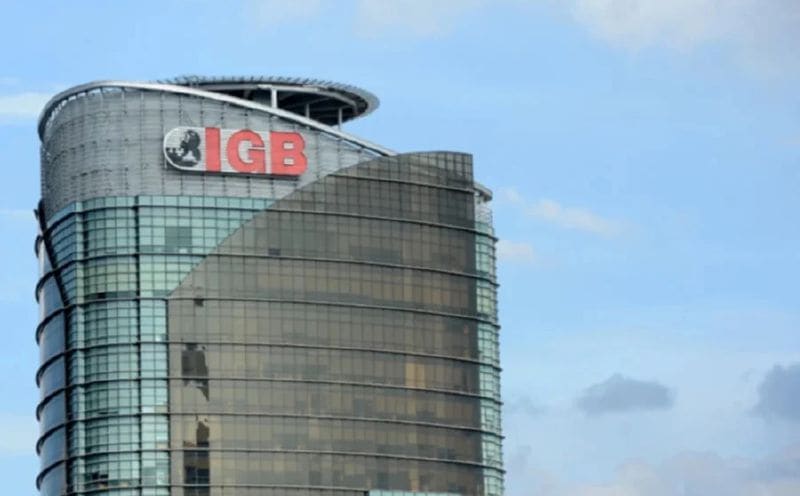
Malaysia's retail trust reported second-quarter net income of RM139 million, driven by Mid Valley Southkey's first full contribution and strengthening demand at flagship properties
KEY TAKEAWAYS
- ·IGB REIT reported second-quarter net profit of RM139.27 million, a 51 percent increase from RM92.50 million a year earlier, with revenue rising to RM240.95 million.
- ·Mid Valley Southkey in Johor Bahru contributed its first full quarter of income, while Mid Valley Megamall and The Gardens Mall in Kuala Lumpur posted higher rental collections.
- ·The trust declared a distribution of 3.44 sen per unit payable in August, maintaining its strategy of high occupancy and proactive leasing to support long-term value.
Strong Quarter Reflects Portfolio Expansion
IGB Real Estate Investment Trust delivered a second-quarter net profit of RM139.27 million for the three months ending June 30, 2026, marking a 51 percent increase from the RM92.50 million recorded in the same period last year. Revenue for the quarter reached RM240.95 million, up 51 percent from RM160.09 million a year earlier, according to the trust's filing with Bursa Malaysia.
Net property income rose to RM181.2 million, a 51 percent gain compared with RM119.9 million in the second quarter of 2025. The trust attributed the performance to Mid Valley Southkey, its Johor Bahru retail asset, which began contributing a full quarter of income for the first time, alongside improved rental collections at Mid Valley Megamall and The Gardens Mall in Kuala Lumpur.
The results underscore a broader trend across Southeast Asian REITs, where portfolio diversification into secondary cities has become a hedge against concentration risk in capital markets. Johor Bahru, positioned at the southern tip of Peninsular Malaysia and adjacent to Singapore, has attracted significant retail and residential investment as cross-border travel resumes and infrastructure projects such as the Rapid Transit System link progress.
First-Half Performance Outpaces 2025
For the six months through June 2026, IGB REIT posted net profit of RM302.08 million, a 52 percent rise from RM199.08 million in the first half of 2025. Revenue for the period widened to RM502.29 million, compared with RM331.53 million in the prior-year period.
The half-year figures reflect not only the Southkey addition but also resilient tenant demand at the trust's anchor assets. Mid Valley Megamall, one of Kuala Lumpur's largest retail complexes, has maintained occupancy above 95 percent, while The Gardens Mall, a premium shopping destination, continues to attract luxury and lifestyle brands seeking exposure to Malaysia's high-net-worth consumer segment.
Malaysia's retail sector has benefited from a rebound in domestic consumption and inbound tourism, particularly from China and Southeast Asian neighbors. Visitor arrivals to Malaysia surpassed pre-pandemic levels in early 2026, according to government data, with Kuala Lumpur and Johor Bahru among the top destinations. This recovery has translated into higher foot traffic and sales per square foot for mall operators, supporting rental rate negotiations during lease renewals.
Regional Context and Competitive Positioning
IGB REIT's performance places it among the better-performing retail trusts in the region. Across Asia, retail REITs have faced headwinds from e-commerce growth and changing consumer behavior, but prime assets in gateway cities and secondary hubs with strong demographics have held up. Singapore's CapitaLand Integrated Commercial Trust and Hong Kong's Link REIT have similarly reported stable or growing distributions, driven by tenant mix optimization and experiential retail formats.
The addition of Mid Valley Southkey, which opened in phases starting in 2023, gave IGB REIT a strategic foothold in a market with limited supply of institutional-grade retail space. Johor Bahru's population has grown steadily, supported by state government initiatives to attract manufacturing and logistics investment, and the city's proximity to Singapore creates a cross-border retail catchment that few Malaysian cities can replicate.
Retail rents in Johor Bahru have risen modestly over the past year, though they remain below Kuala Lumpur levels on a per-square-foot basis. The trust's ability to lock in long-term leases with anchor tenants at Southkey, including supermarkets, department stores, and entertainment operators, provides a stable income base that complements the higher but more variable specialty retail rents at its Kuala Lumpur properties.
Distribution and Capital Discipline
IGB REIT declared an income distribution of 3.44 sen per unit for the second quarter, comprising 3.38 sen in taxable income and 0.06 sen non-taxable. The distribution is payable on August 21, 2026. The payout ratio remains in line with the trust's historical practice of distributing substantially all available income to unitholders, a structure that appeals to income-focused investors in a low-yield environment.
Malaysian REITs are required to distribute at least 90 percent of taxable income to maintain tax transparency status, and most trusts exceed that threshold. IGB REIT's distribution yield, based on recent trading prices, hovers in the mid-single digits, competitive with regional peers and attractive relative to Malaysian government bond yields.
The trust emphasized its focus on maintaining high occupancy, pursuing sustainable rental growth through proactive leasing strategies, and preserving cost discipline. Management also highlighted efforts to enhance the retail experience for shoppers and tenants, including digital engagement tools, event programming, and tenant support initiatives.
Outlook and Strategic Priorities
Looking ahead, IGB REIT's performance will hinge on its ability to sustain occupancy and rental reversions at its existing properties while extracting full value from Mid Valley Southkey. The Johor asset is still ramping up, with some retail space undergoing tenant fit-out and marketing campaigns aimed at drawing traffic from both local residents and Singaporean shoppers.
The trust has not announced plans for further acquisitions, but Malaysia's retail property market offers selective opportunities. Several older malls in Kuala Lumpur and Penang are undergoing repositioning, and developers of new mixed-use projects may seek REIT partnerships to recycle capital. Any acquisition would need to meet IGB REIT's return thresholds and align with its strategy of owning dominant retail assets in high-barrier-to-entry locations.
Broader macroeconomic factors will also play a role. Malaysia's central bank has maintained a cautiously accommodative monetary stance, with interest rates steady after a modest tightening cycle in 2024 and 2025. Inflation has moderated, and consumer confidence indices have trended upward, supporting discretionary spending. However, global economic uncertainty, particularly around trade policy and China's growth trajectory, could dampen sentiment if conditions deteriorate.
For now, IGB REIT's second-quarter results signal that its portfolio strategy is delivering. The trust's combination of established Kuala Lumpur assets and a newer Johor property positions it to capture both stable income and incremental growth, a balance that few retail REITs in the region have achieved at scale. Management's stated commitment to long-term resilience and value creation suggests a steady-as-she-goes approach, prioritizing operational execution over aggressive expansion.
RELATED STORIES
Malaysia's KLCI Index to Add 20 Stocks in Phased Expansion
Jun-ho Seo · 2 min
Malaysian Ringgit Strengthens on Strong US Jobs Data
Tran Quoc Bao · 3 min
Malaysian Banks Face Tighter Lending as Deposit War Squeezes Margins
Jun-ho Seo · 4 min
Malaysia Hospital Group A1Health Prepares US$1.7 Billion IPO for Early 2027
Tran Quoc Bao · 2 min
Spot something wrong? Email editor@briefasia.com. We log every correction publicly.