Real Estate · Offices
Hysan Development Posts 7.4% Earnings Gain on Bamboo Grove Sales
Hong Kong's largest Causeway Bay landlord reports HK$1.11 billion first-half profit as residential project delivers returns amid flat retail portfolio performance
KEY TAKEAWAYS
- ·Hysan Development reported HK$1.11 billion underlying profit for the first half of 2026, a 7.4% increase driven by residential unit sales at its Bamboo Grove project.
- ·Revenue stayed flat at HK$1.73 billion, reflecting stable rental income from the company's dominant commercial portfolio in Hong Kong's Causeway Bay district.
- ·The profit gain highlights Hysan's reliance on one-off residential sales to supplement core rental earnings amid uneven recovery in Hong Kong's retail and office markets.
Residential Assets Drive Profit Growth
Hysan Development reported underlying profit of HK$1.11 billion for the six months ended June 30, 2026, according to the company's Hong Kong stock exchange filing. The 7.4 per cent increase from the same period in 2025 came primarily from realised gains on residential units sold at Bamboo Grove, the company's residential project.
Revenue remained essentially unchanged at HK$1.73 billion, down just 0.1 per cent year-on-year. The figures reflect the dual nature of Hysan's portfolio: a substantial commercial property base in one of Asia's most expensive retail districts, paired with selective residential developments that provide liquidity and earnings volatility.
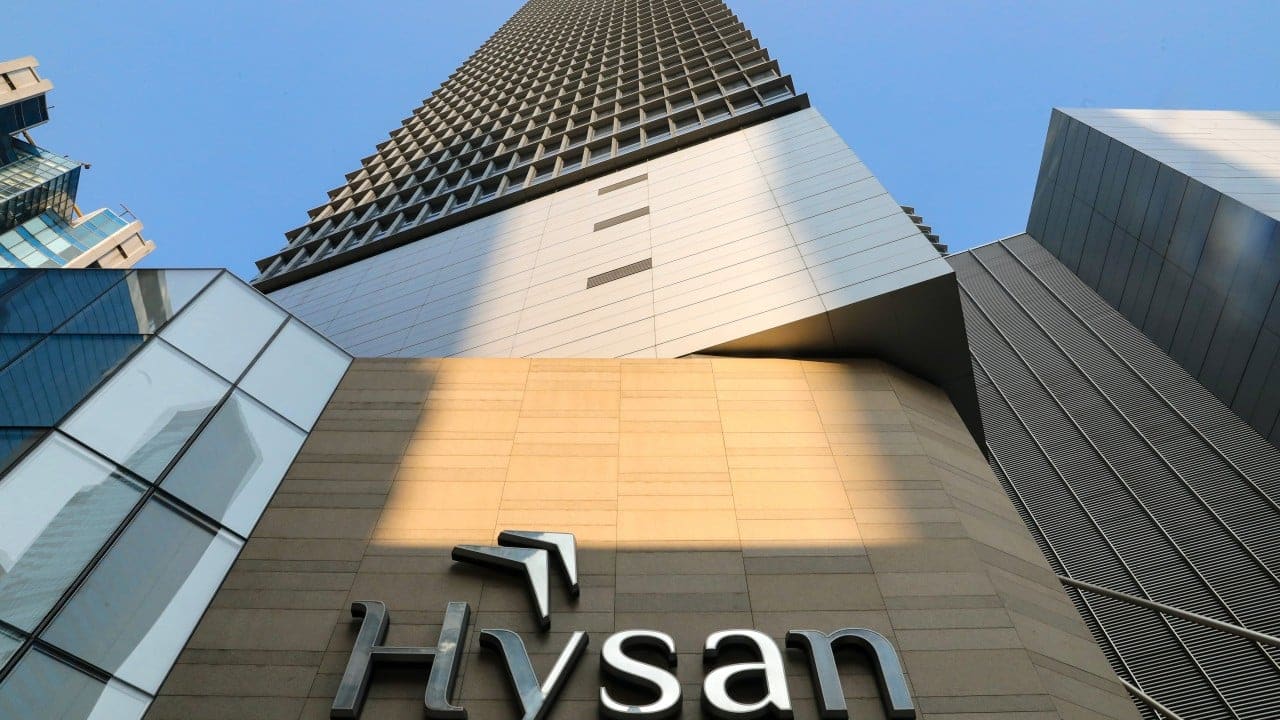
Hysan holds the largest commercial footprint in Causeway Bay, a district that competes with New York's Fifth Avenue and Tokyo's Ginza for the world's highest retail rents. The company's portfolio includes office towers, shopping centres, and street-level retail space across roughly 4 million square feet in the neighbourhood.
Revenue Composition Holds Steady
The flat revenue performance suggests Hysan's core rental income from its Causeway Bay holdings remained stable despite broader challenges in Hong Kong's retail market. Visitor arrivals to the city have recovered unevenly since pandemic restrictions lifted, with mainland Chinese tourists returning in smaller numbers than pre-2020 levels.
Luxury retail tenants, which dominate Causeway Bay's tenant mix, have faced headwinds from China's slowing consumer spending and a shift toward domestic consumption. Yet prime landlords like Hysan have maintained occupancy by adjusting tenant composition and lease terms rather than accepting steep rent cuts.
The Bamboo Grove contribution marks a departure from Hysan's traditional income model. While the company built its reputation on long-term commercial property ownership, residential sales provide one-off gains that can smooth earnings during periods when rental growth stalls.
Capital Deployment and Market Position
Hysan's strategy of holding rather than flipping commercial assets has historically set it apart from more development-focused peers. The company rarely sells investment properties, preferring to extract value through rent escalation and asset enhancement projects.
That approach has insulated Hysan from the transaction-driven volatility that affects developers reliant on residential pre-sales. But it also means the company's earnings growth depends heavily on rental market conditions and the performance of occasional residential projects like Bamboo Grove.
Hong Kong's office market has softened over the past two years as financial services firms consolidate space and mainland Chinese companies reduce their city footprint. Retail rents in premium districts have held up better, supported by luxury brands maintaining flagship presence despite weaker sales.
The Causeway Bay district benefits from its position as a cultural and transport hub, not just a shopping corridor. That diversification provides some insulation from pure retail trends, though the area remains sensitive to tourist flows and local consumption patterns.
Outlook and Strategic Considerations
Hysan's first-half performance positions the company to navigate a challenging Hong Kong property market. The residential sales contribution will not recur at the same scale unless the company launches additional projects, making second-half performance dependent on rental portfolio stability.
The company has not announced major new residential developments, suggesting it will lean on its commercial portfolio for baseline earnings. Any improvement in visitor arrivals or corporate leasing activity would flow directly to the bottom line given Hysan's concentrated exposure to prime retail and office space.
Hong Kong's property developers face a structural question: whether to maintain traditional business models focused on the city, or to diversify geographically as competitors have done in mainland China and Southeast Asia. Hysan has remained committed to its Causeway Bay concentration, a bet that Hong Kong's role as a regional gateway will reassert itself as economic conditions stabilise.
The 7.4 per cent profit increase offers a modest validation of that strategy, though the residential sales contribution highlights the limits of rental income growth in the current environment. For investors watching Hong Kong's property sector, Hysan's results serve as a proxy for premium retail and office fundamentals in the city's core districts.
RELATED STORIES
Hong Kong Renters Weigh Homeownership as Rents Climb 5.2 Percent
Lim Hui Ying · 3 min

China's Offshore Tax Push Threatens Hong Kong Property Market Recovery
Cheng Wei-Lun · 3 min

CK Hutchison Profit Jumps Over 3,000 Percent in Turbulent First Half
Cheng Wei-Lun · 3 min

Hong Kong's Wealthy Prioritize Travel Over Property as Real Estate Falls to Seventh Place
Lim Hui Ying · 3 min
Spot something wrong? Email editor@briefasia.com. We log every correction publicly.