Asia · Trade
Hong Kong and Shenzhen to Launch Five-Minute Border Clearance
New joint inspection model at upgraded crossing aims to slash wait times by 83 percent as cities deepen integration
KEY TAKEAWAYS
- ·Hong Kong has gazetted legislation for a joint inspection border system with Shenzhen that targets five-minute clearance, down from 30 minutes currently.
- ·The model co-locates immigration officers from both jurisdictions in a single facility, compressing sequential exit and entry queues into one parallel process.
- ·If successful at the initial upgraded crossing, the joint inspection approach may expand to additional checkpoints along the 30-kilometer Hong Kong-Shenzhen boundary.
A New Clearance Standard
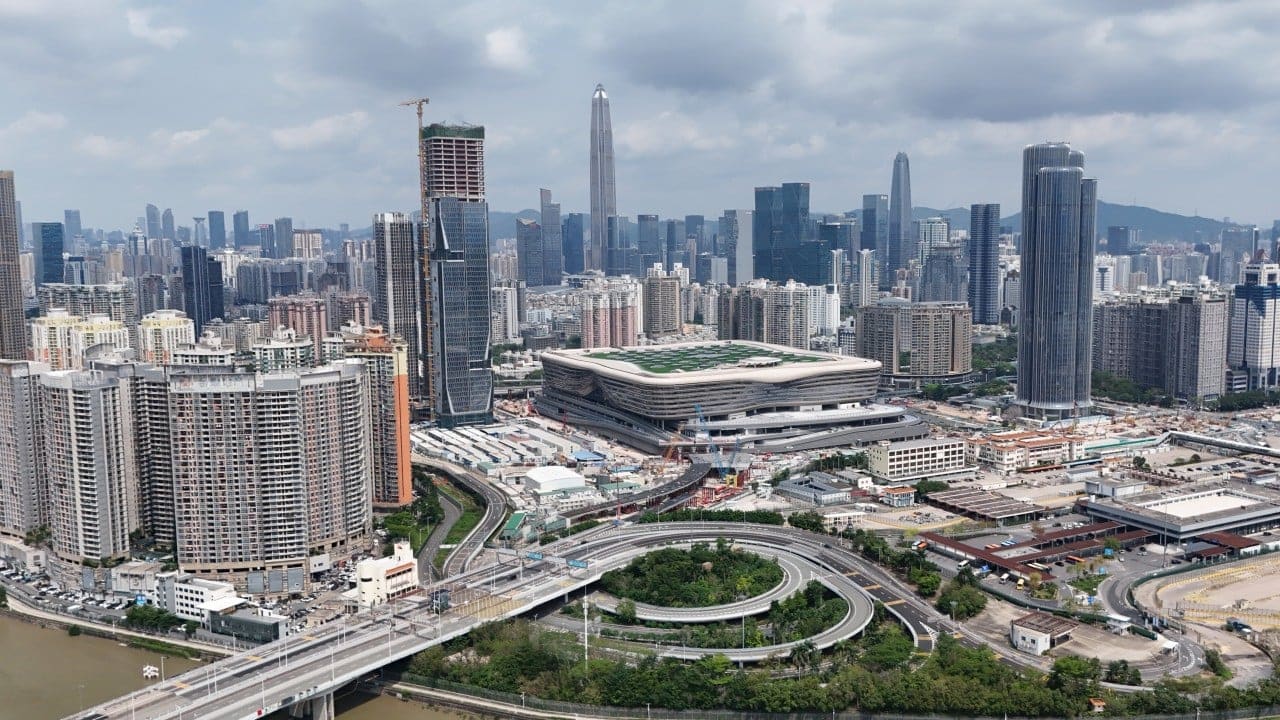
Hong Kong authorities gazetted legislation last week to regulate an upgraded border crossing with Shenzhen, introducing a joint inspection model that promises to reduce clearance times from 30 minutes to five. The move addresses a long-standing friction point: despite the city's reputation for frictionless global connectivity, crossing into neighboring mainland China has often taken longer than boarding an international flight.
The joint inspection approach represents a departure from the current double-queue system, where travelers clear Hong Kong immigration, cross a buffer zone, then queue again for mainland checkpoints. Under the new framework, both jurisdictions will staff a single clearance area, allowing passengers to complete exit and entry procedures in one pass.
The regulation comes as Hong Kong works to recalibrate its role within the Greater Bay Area, the 11-city cluster that includes Shenzhen, Guangzhou, and Macau. Daily cross-border flows between Hong Kong and Shenzhen alone exceeded 600,000 before the pandemic, with business travelers, supply chain managers, and dual-city residents forming the bulk of traffic. Restoring and accelerating that flow has become a priority as the territory seeks to anchor itself more firmly in regional manufacturing, innovation, and financial circuits.
Shenzhen's Pull
Shenzhen has emerged as a critical counterpart. The city houses over 14,000 national high-tech enterprises and accounted for roughly 3 percent of China's total exports in 2024. For Hong Kong-based venture funds, private equity shops, and multinational regional headquarters, Shenzhen offers factory floors, engineering talent, and pilot markets that the territory itself cannot supply. Conversely, Shenzhen firms rely on Hong Kong for offshore capital raising, legal arbitration under common law, and access to international banking rails.
Yet the border has remained a bottleneck. Peak-hour queues at major crossings such as Lok Ma Chau and Shenzhen Bay regularly stretch beyond 45 minutes. The new joint inspection model, initially deployed at one upgraded facility, is designed to serve as a proof of concept. If successful, Hong Kong officials have indicated the approach could be rolled out to additional crossings along the 30-kilometer boundary.
Regulatory Groundwork
The legislation gazetted last Tuesday establishes the legal basis for mainland immigration officers to operate within Hong Kong territory and vice versa, a sensitive arrangement that required coordination between the Hong Kong government, the Guangdong provincial authorities, and Beijing's State Council. Each side will retain jurisdiction over its own nationals and apply its own legal standards, but the physical co-location compresses what were previously sequential processes into a parallel workflow.
The model draws on precedents set at the Hong Kong-Zhuhai-Macau Bridge port, where a similar co-location clearance system has been in operation since 2018. That facility demonstrated the technical and legal viability of joint inspection zones, though it handles primarily vehicular traffic. The new Shenzhen crossing will focus on pedestrian and light passenger flows, a higher-volume, higher-frequency segment.
Integration or Friction
The five-minute target is ambitious. Achieving it will depend not only on staffing and technology but also on passenger compliance with streamlined document checks, biometric verification, and customs declarations. Hong Kong's Immigration Department has said it will deploy automated e-gates and facial recognition systems, while Guangdong authorities are expected to integrate the crossing into the national immigration database that already covers major mainland ports.
For investors and executives, the calculus is straightforward: time saved at the border translates into more face-to-face meetings, tighter supply chain oversight, and the ability to maintain dual offices without prohibitive commute friction. For Hong Kong as a whole, the stakes are broader. The city's value proposition within the Greater Bay Area hinges on its ability to serve as both a gateway and a participant, a role that becomes harder to sustain if the border remains a choke point.
The legislation is expected to pass without significant opposition, with the upgraded crossing slated to begin trial operations in the fourth quarter of this year. If the joint inspection model delivers on its promise, it will mark a tangible step toward the kind of seamless regional mobility that policymakers have long discussed but rarely operationalized.
RELATED STORIES
Hong Kong Awards First Northern Metropolis Land to Mainland-Local Consortium
Cheng Wei-Lun · 3 min

Hong Kong Debuts Robot-Run Convenience Store in Commercial Automation Push
Cheng Wei-Lun · 3 min

Hong Kong Wealth Hub Resilient Despite Beijing Investment Restrictions
Cheng Wei-Lun · 3 min
China's Social Security Fund Doubles Offshore Holdings to $86 Billion
Jun-ho Seo · 3 min
Spot something wrong? Email editor@briefasia.com. We log every correction publicly.