Asia · Business
Hong Kong Seeks $4.6 Billion Lifeline for Struggling Postal Service
Eight straight years of deficits push Hongkong Post to request government bailout as digital shift erodes traditional mail revenue
KEY TAKEAWAYS
- ·Hongkong Post has requested HK$4.6 billion in government funding after accumulating HK$2.9 billion in losses over eight consecutive years.
- ·The deficit reflects declining traditional mail revenue and intense competition from private logistics firms in the parcel delivery segment.
- ·Legislative Council approval is expected in coming weeks, with scrutiny on the postal service's strategic plan and performance benchmarks.
Mounting Losses Force Intervention
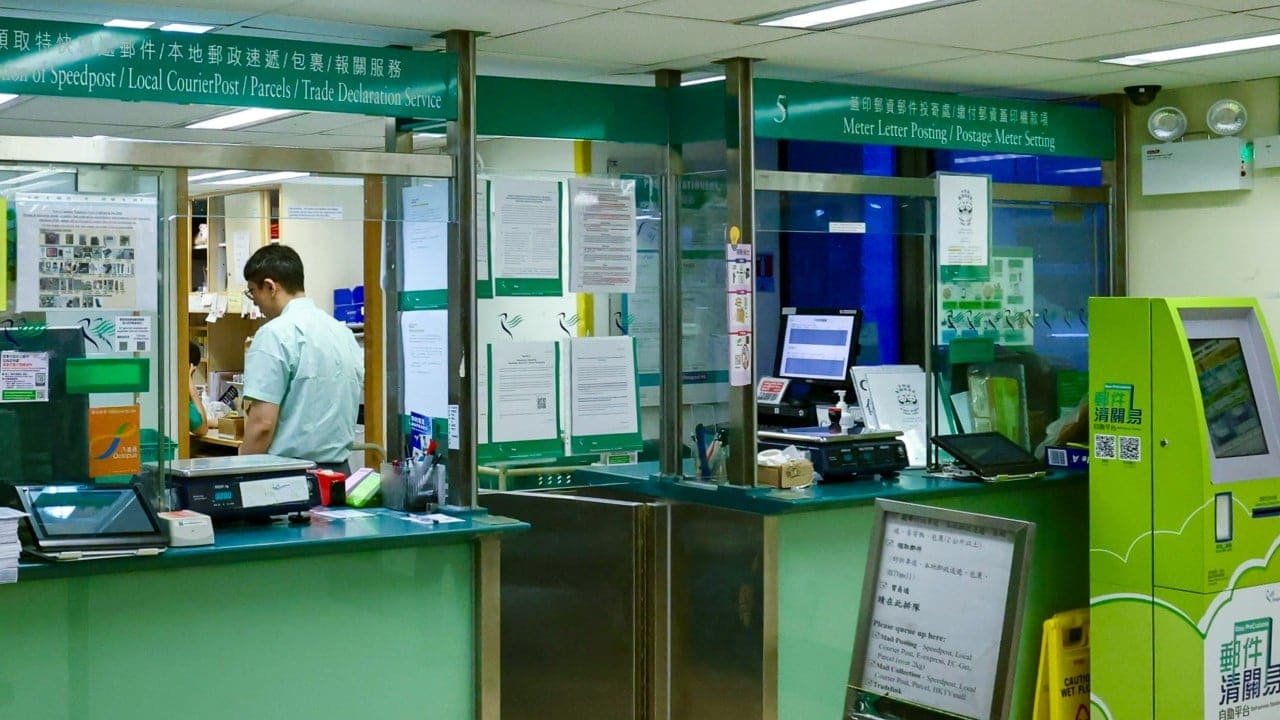
Hongkong Post has requested HK$4.6 billion in government funding to stabilize operations after recording eight consecutive years of financial losses totaling HK$2.9 billion, according to a proposal submitted to the Legislative Council. The postal operator, which once posted a peak profit of HK$1.23 billion, now faces the same headwinds battering state-owned mail services across the region.
The bailout request underscores a structural challenge confronting postal infrastructure throughout Asia. Traditional letter mail volumes have plummeted as consumers and businesses shift to digital communication, while e-commerce parcel delivery has grown increasingly competitive with private logistics firms capturing market share. Hongkong Post's deficit trajectory mirrors struggles at Singapore Post, Japan Post, and Korea Post, all of which have pursued diversification strategies with mixed results.
Pressure from Private Competitors
The funding application comes as Hongkong Post contends with aggressive competition in the parcel segment, where margins remain thin and customer expectations around speed and tracking have risen sharply. Private courier services operating in the city have invested heavily in automation and same-day delivery capabilities, raising the bar for service standards that legacy postal operators find expensive to match.
Revenue from conventional mail services has declined steadily as Hong Kong's businesses adopt electronic invoicing, digital marketing, and cloud-based correspondence. The postal service has attempted to offset this erosion by expanding into e-commerce logistics, but established players like SF Express and Kerry Logistics already command substantial footprints in the territory.
Regional Parallels
Hong Kong's postal woes reflect a broader pattern across developed Asian markets. Singapore Post reported a net loss of SGD 17 million in its postal segment for the fiscal year ending March 2025, prompting a restructuring that included workforce reductions and branch consolidations. Japan Post Holdings has pivoted toward financial services and real estate to compensate for shrinking mail volumes, while Korea Post has experimented with logistics partnerships and last-mile delivery tie-ups with e-commerce platforms.
Postal operators in emerging Southeast Asian economies face a different calculus. In markets where digital penetration remains uneven and rural coverage is sparse, state postal services still fulfill a public-service mandate that justifies subsidies. Hong Kong's dense urban geography and near-universal internet access, however, leave less room for that argument.
Innovation Pressure
The HK$4.6 billion injection is intended to maintain service continuity while Hongkong Post explores new revenue streams. The organization has tested initiatives including smart lockers, cross-border e-commerce facilitation, and partnerships with mainland logistics networks, but none has yet generated the scale needed to replace lost mail income.
Observers note that successful postal transformations in other markets have required bold moves beyond incremental adjustments. Estonia's national post rebranded as a logistics and technology company, investing in parcel automation and data analytics. Australia Post carved out a profitable identity in financial services and retail agency operations, leveraging its branch network as a distribution channel for third-party products.
For Hongkong Post, the question is whether the funding approval will buy time for genuine reinvention or simply delay a reckoning. The Legislative Council review process will likely scrutinize the postal service's strategic plan and demand accountability measures tied to performance benchmarks.
What Comes Next
If approved, the bailout would stabilize Hongkong Post's balance sheet and provide breathing room to pilot new business models. The operator has signaled interest in expanding warehousing services for cross-border sellers and deepening integration with the Greater Bay Area's logistics corridors, where freight volumes between Hong Kong, Shenzhen, and Guangzhou continue to grow.
Yet the underlying dynamics remain unfavorable. Postal operators worldwide are discovering that the infrastructure built for an analog economy does not easily adapt to digital-first commerce. High fixed costs, unionized workforces, and regulatory obligations constrain the speed at which legacy players can pivot, even as nimble startups and tech-enabled couriers reshape customer expectations.
Hong Kong's Legislative Council is expected to deliberate on the funding request in the coming weeks. The outcome will signal whether the city views its postal service as a public utility worth preserving at a subsidy, or whether market forces will be allowed to reshape the sector more radically.
RELATED STORIES

Crude Surges Past $90 as Hormuz Talks Stall
Cheng Wei-Lun · 3 min
Cathay Pacific Cargo Reports 9% Tonnage Growth in First Half
Cheng Wei-Lun · 3 min

Hong Kong Regulator Steps Up Scrutiny of Concentrated Shareholdings
Cheng Wei-Lun · 3 min

Asian Central Banks Drive Gold Demand as Hong Kong Eyes Trading Hub Role
Cheng Wei-Lun · 3 min
Spot something wrong? Email editor@briefasia.com. We log every correction publicly.